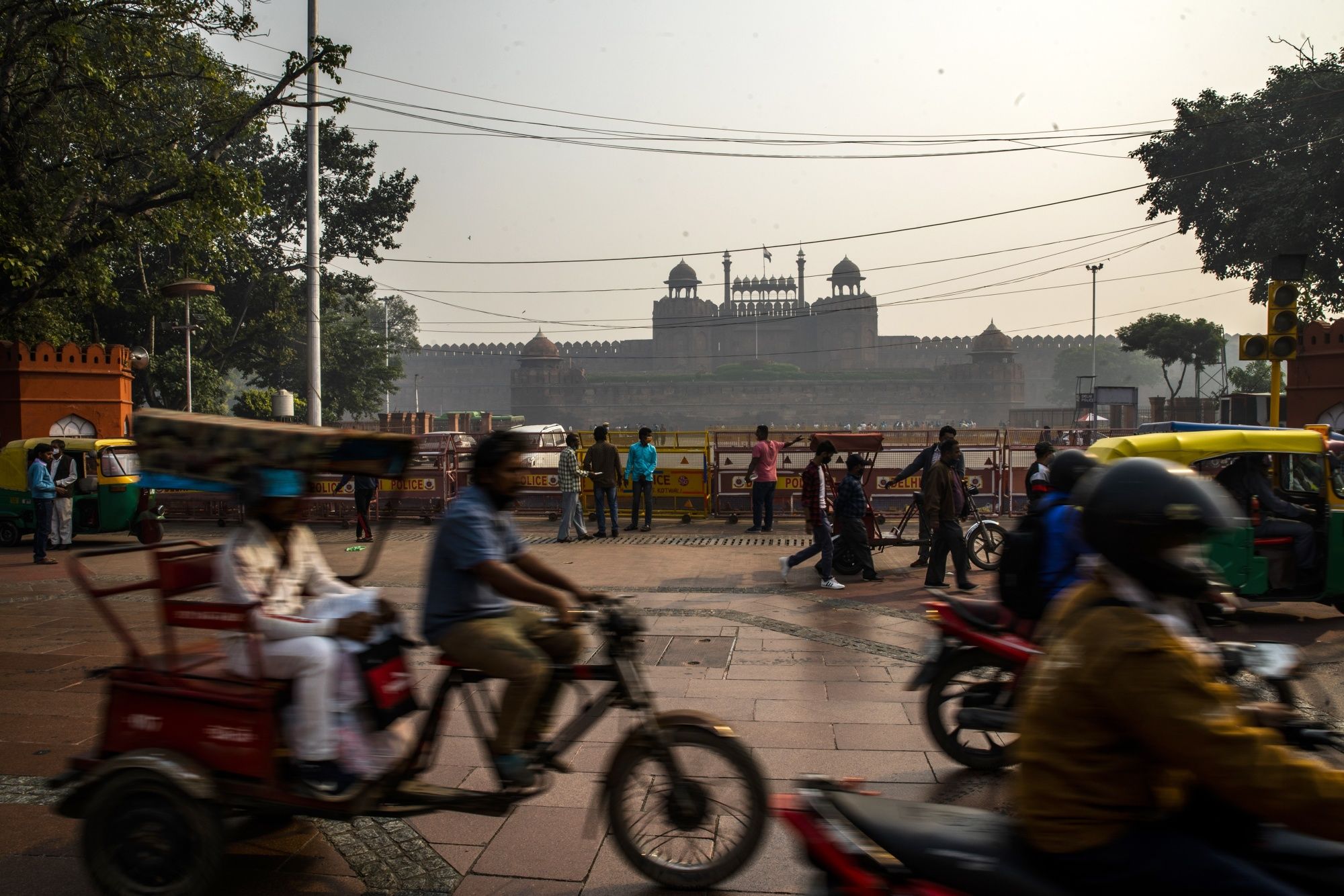
(Bloomberg) -- India's capital has recorded the world's most toxic air as seasonal fires to clear farmland added to pollution from vehicles, construction and coal-fired power plants.
New Delhi's air quality index climbed to as high as 346 early on Monday, the most among 110 global cities tracked by Swiss company IQ Air. The same reading in Mumbai rose to as high as 177.
The current poor air quality is due to a drop in temperatures and slow wind speeds, said Anju Goel, an air quality research fellow at The Energy and Resources Institute, a Delhi based think-tank. That's hampered the dispersal of pollution, she said.
The Indian capital also recorded a concentration of fine particulate matter (PM2.5) of 296 micrograms per cubic meter of air, almost 20 times World Health Organization's recommended level of 15, according to IQ Air. Fine particulate air pollution shortens an average Indian's life expectancy by 5.3 years, a University of Chicago study shows.
India's central and state governments have introduced a raft of policies to try and tackle air pollution but their efforts have so far proved ineffective.
Read More: India's Coal Pits Fuel the Heat Waves That Threaten Millions
While agricultural fires in areas around Delhi have fallen significantly over the past five years, other sources of pollution including those from construction and inefficient cooking stoves are getting worse due to population growth, according to Sunil Dahiya, an analyst at the Centre for Research on Energy and Clean Air.
Power plants operating around the capital were supposed to have installed pollution controls, but poor enforcement means that most haven't yet done so, he said. The situation is likely to get worse unless there's better regulation and compliance, Dahiya said.
--With assistance from Pratik Parija.
More stories like this are available on bloomberg.com
©2023 Bloomberg L.P.
Essential Business Intelligence, Sharp Market Insights, Practical Personal Finance Advice, Daily Fuel, Gold and Silver Prices and Latest Stories — On NDTV Profit.