1% Tax Deductible At Source May Lead To Liquidity Crunch, Say Crypto Experts
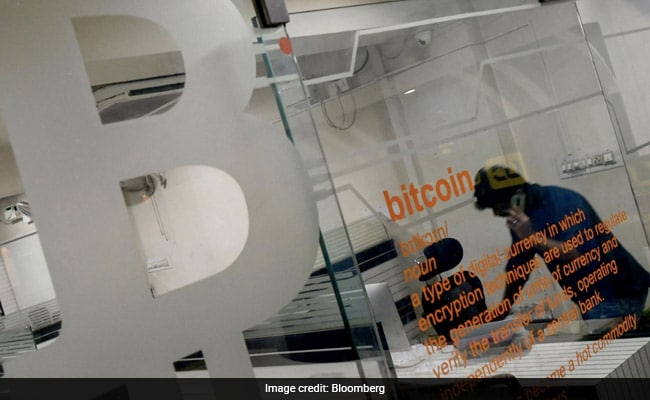
When India's government unveiled a plan to tax crypto assets in February, it was the 30% rate on income from digital-asset investments that grabbed headlines. But it's a different levy that has the industry warning of a potentially destabilizing liquidity crunch.
Along with the capital gains charge, the finance ministry announced a 1% tax deductible at source, or TDS, on all digital-asset transfers above a certain size, starting July 1. No other country imposes such a tax on crypto, according to Anoush Bhasin, founder of crypto asset tax advisory firm Quagmire Consulting.
Crypto-exchange executives, lawyers and tax analysts warn that the TDS will suck liquidity out of the market by forcing high-frequency traders to dramatically curtail their trading. Combined with the government's decision not to permit offsetting of trading losses in digital assets, it threatens to accelerate an exodus of crypto companies and workers from India, they say.
Nischal Shetty, chief executive officer of WazirX, India's biggest crypto exchange, called the TDS “the worst-case scenario for the industry.”
“There will be no liquidity left in the markets,” said Manhar Garegrat, executive director of policy at crypto exchange CoinDCX. “Trades placed by buyers will not get executed as efficiently as they do today, and such inefficiency will eventually dwindle the whole ecosystem.”
Bleeding Talent
The tax package and the ban on offsetting losses — which only applies to crypto — represents the latest salvo by a government that still hasn't clearly stated that it will allow cryptocurrencies. India, with an estimated 15 million active crypto users, has been stuck in regulatory limbo since the Supreme Court in 2020 overturned a central bank directive banning regulated entities from working with digital-assets companies.
Sandeep Nailwal, the co-founder of Indian blockchain startup Polygon, warned this month that thousands of developers, investors and entrepreneurs are decamping for more crypto-friendly destinations as a result of the uncertainty.
When the government first unveiled the crypto levies, the announcement was met with relief because it was interpreted as a sign that there wouldn't be an outright ban on cryptocurrency trading. That changed as the industry digested the details of the TDS.
Under the new regime, the buyer of a crypto asset must deduct the 1% TDS on behalf of the seller if a transaction exceeds 10,000 rupees (about $132). Smaller trades would also be taxed if they top a cumulative 50,000 rupees in a financial year, according to Bhasin.
Investors will be entitled to a refund if the total amount set aside for TDS during a fiscal year exceeds their overall tax liability for the period.
Capital Gets Choked
When done over a centralized exchange, it's the bourse's responsibility to deduct the TDS for a trade, Bhasin said. On a decentralized trading platform where the buyer and seller interact without an intermediary, people typically trade anonymously, which makes collecting TDS complicated.
While a capital gains tax reduces the appeal of crypto for investors, the TDS poses a threat to the very underpinnings of the market, critics say. India doesn't impose such a levy on stock trading.
The typical high-frequency trader could see 60% of their capital blocked for TDS payments after just 100 trades, estimates Garegrat, who is also a member of India's Blockchain and Crypto Assets Council.
“The way the tax has been worked out will lead to people moving out of the country,” said Dinesh Kanabar, CEO of Dhruva Advisors, a tax and regulatory advisory firm.
A TDS like 1% for every trade could make any speculative instrument become illiquid fast! This will go against the fair market prices for those instruments and can push trading underground. So taxing more is bad! #reducecryptotax #faircryptotax Day-31 #IndiaWantsCrypto @Unocoin
March 4, 2022Speaking in the Lower House of Parliament on March 25, Finance Minister Nirmala Sitharaman said the TDS will allow the government to track transactions and doesn't represent an additional levy. But executives and experts counter that if that's the sole intention, it could have been accomplished just as well with a much smaller rate without disrupting trading.
Like with decentralized exchanges, enforcing the TDS system will be almost impossible when it comes to offshore trading platforms, Garegrat said. So the tax will mainly serve to push trading off the locally-based exchanges over which the Indian government has the most visibility, he added.
The system gets even more onerous for traders in crypto pairs, like Bitcoin/Ether, according to Quagmire's Bhasin. That's because each trade involves two separate transactions — for example, buying Bitcoin from one counterparty, then selling it and purchasing Ether from another.
“At one stage you will liable to lose 1% because you are selling BTC and at the next step you will be liable to deduct 1% TDS because you are buying ETH from another seller,” he said. “The accounting will be super crazy for this.”

-
High US Salaries, No Green Card Certainty: The Financial Calculation Facing Indian H-1B Families

The suspension of PERM processing at eight technology employers does not cancel existing H-1B visas. What it does is force a question many Indian families have been avoiding: is the US salary worth tying your career and family plans to one employer?
-
Swiggy vs Eternal: Food Delivery's Two Rivals Are No Longer In The Same Race
Eternal is building a private AI assistant, dark.ai. Swiggy is still working out how to make Instamart pay, with an operating loss of Rs 895 crore in the July-September quarter while Blinkit stayed profitable.
-
Where You Live Shapes How You Get To Work | The Reason Why
Two-wheelers are the most popular way to get to work in India, accounting for nearly 43% of workplace commutes.
-
Unhedged Position: Can India See An Indonesia-Style Time Correction?
The Nifty is trading below levels it first clocked in 2024. Is there, then, as I have suggested in the headline, potential that the current time correction drags on painfully for the next three-five, even ten years?
-
Navigating Friction And Energy Realities: An Analysis Of Marco Rubio's October Visit To India
Occurring at a critical juncture marked by stalled trade negotiations and escalating geopolitical pressures over global energy supplies, the visit offers a profound window into modern US-India relations.
-
India Exports Capital. Why Not Export Trusteeship?
The big question, then, is whether India can build an institution that global borrowers, investors, banks, and lawyers can trust, even without an Indian connection.
-
France's Economy & Politics Are In Crisis | The Reason Why
Let's look at how the French economy and politics evolved under Nicolas Sarkozy, Franois Hollande and Emmanuel Macron.
-
You May Inherit The Business. You Must Earn Its Credibility.
Succession tests the founder's ability to share authority as much as it tests the next generation's readiness to assume it.
-
Signing Deals Is One Thing; Making Them Work Is Another | The Week In Whys
Sometimes, things don't turn out as planned. Indian companies have lost some bids to rivals, some projects won't produce until 2030.
-
FOMC Wall, PERM Suspension, Hospital Stocks | Talking Points This Week
A PERM suspension would directly affect green-card sponsorship rather than H-1B visas, so the near-term earnings impact could remain relatively limited. The key question is whether this marks a new phase in US scrutiny of Indian IT.