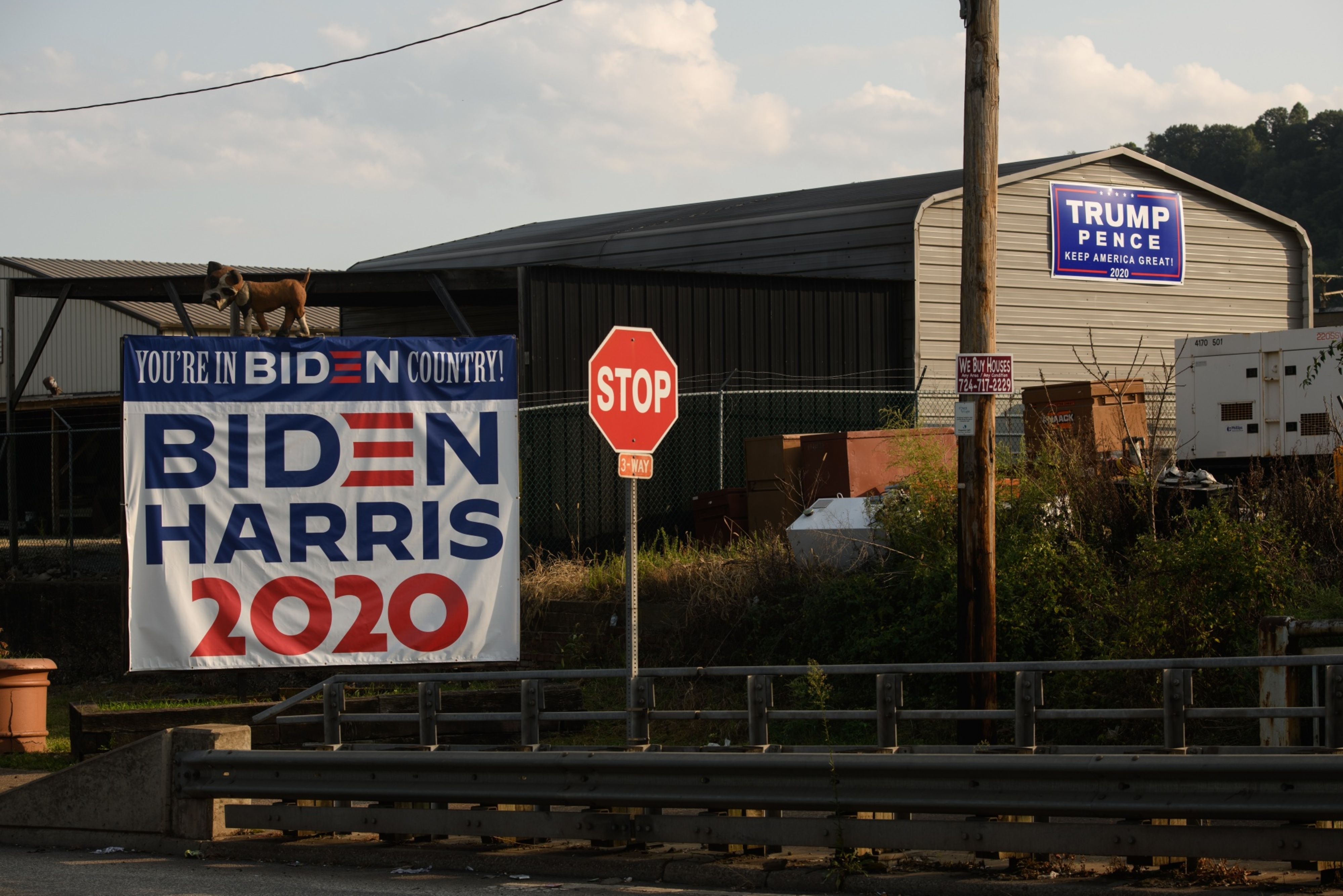
As the previous two On Point columns chronicle, a Biden-Harris Administration likely would forge an ‘Enlightened Trade Policy', the tools of which would be consensus and integrity, and the goals for which would be peace and sustainability. Now let's consider what would this policy mean for India.

The Democratic Party platform offers direct evidence to answer: “we will continue to invest in our strategic partnership with India.” That's smart. The world's largest free-market democracy is projected to be the world's most populous nation by 2027, the penultimate year of a possible two-term Democratic Presidency.
Also Read | Layoffs Are Rising In Tech, But These Skills Are Helping People Unlock Better Pay
Expect Change
From circumstantial evidence (plus the audacity of hope), the most succinct answer is: change. America's approach to India will not change under a second-term Trump-Pence Administration. That's because this ticket is running on its 2016 “America First” platform. Indo-American trade relations will follow the contractual model President Donald Trump and Prime Minister Narendra Modi arranged during the President's February 2020 visit to India. The U.S. will not press for free or managed trade, but will seek episodic, sectoral deals, emphasising defense procurement.
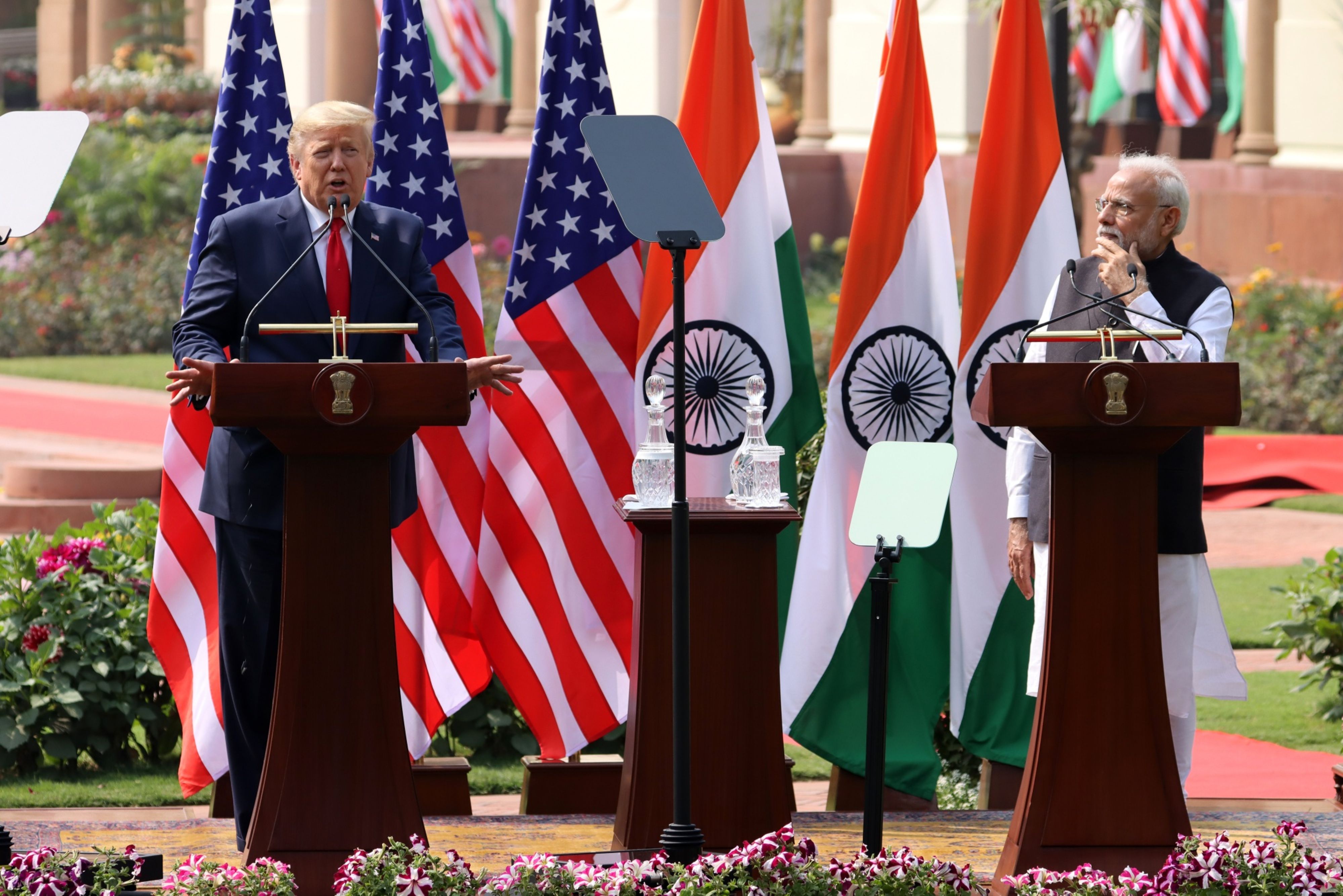
For two reasons, conceptualising trade as an amalgam of business contracts won't satisfy Joe Biden or Kamala Harris.
First, pragmatically, that approach has proved fruitless. Despite seven months of negotiations since February 2020, there's no signed trade agreement. America insists India purchase $6 billion of farm goods if India is to see its “developing” country status restored for purposes of zero- or low-tariff treatment under the Generalized System of Preferences scheme, plus remove non-tariff barriers to (inter alia) American medical equipment. India counters it is a bona fide developing country, and the hallmark of GSP treatment is non-reciprocity (i.e., rich countries aren't supposed to demand concessions from poor ones). Moreover, why should India compromise access to low-cost health care for hundreds of millions of its citizens to protect American multinational corporate profits?
Second, culturally, there's the Kamala factor. Her mom, Dr Shyamala Gopalan, is from Madras. She spent many happy holidays with her grandfather, PV Gopalan, on the beach in Chennai. She's an Indian cuisine fan, as her charming and funny video with Mindy Kaling shows. She's likely to be more empathetic to Indian concerns, without (tough prosecutor that she is) compromising America's core trade interests. And, empathy seems to be in the Catholic DNA of her would-be boss, Joe.
You can't know who @KamalaHarris is without knowing who our mother was. Missing her terribly, but know she and the ancestors are smiling today. #BidenHarris2020 pic.twitter.com/nmWVj90pkA
August 12, 2020Tool #1: Consensus
Assuming a Biden-Harris Administration rebuilds the traditional American bipartisan consensus in favour of trade liberalisation by transcending the present paralysing “free-versus-fair trade” dialectic, India can look forward to a balanced discussion of all its concerns.
Rather than having to navigate a polarised Congress, concerned about which officials salivate at India as a massive market for American goods and services exporters and foreign direct investors, and which ones fear India as black hole of cheap labor-intensive goods and back office service providers that sucks away American jobs, India will benefit from a three-pronged Congressional synthetic understanding.
- Economically, sectors in which India holds a comparative advantage entail jobs Americans generally aren't willing to do.
- Politically, America needs to reinvigorate its trade agreement program to catch up with Canada, the EU, and Mexico.
- Strategically, there's no better counterweight to China than India.
Expect the consensus to be extra-territorial, that is, for a Biden-Harris Administration to rebuild it overseas as well as in Congress. That will serve India's interests.
Because the biggest trade-related challenges India and America face transcend sovereign boundaries, their joint efforts, even if memorialised in a free trade agreement or through the Comprehensive and Progressive Agreement for Trans-Pacific Partnership, are second-best solutions to multilateral outcomes. India traditionally has promoted international organisations as first-best outcomes for developing countries amidst superpower rivalries.
In the World Trade Organization, the top-most areas for an Indo-American collaborative push would be two plurilateral agreement that Administration might entertain: on fishing subsidies and Appellate Body reform.Tool #2: Honesty
Because a Biden-Administration may level with Americans about trade theory and practice, and differentiate two causes of job loss (technology versus unfair competition from China), India can expect an honest discussion about an American problem that affects Indians: which U.S. industries can be saved through WTO-compliant support, such as Trade Adjustment Assistance, meaning no trade remedies against India, and which ones are candidates for orderly contraction through selected safeguards under Section 201 of the Trade Act of 1974, which is a trade remedy against fair foreign competition. In this discourse, the risks that India suffers the false accusation of causing of rust in American industry are reduced.
Rather, the technology and human capital India can provide to the U.S. may be regarded as a source of American economic renaissance. Lessons from the Indian experience in health care, including manufacturing and distributing affordable pharmaceuticals to one billion people, and in education, such as providing online education to tens of millions of poor, rural youngsters, are ones a Biden-Harris Administration could see as valuable.
It will have to cope with those same issues afflicting a greying population and digital divide in America. Some of the teachers may be Indian professionals and graduate students, meaning India can expect an end to the ‘raise visa fees, cut-back on H-1B visas for high-skilled workers, suspend new green card issuances, and kick-out-the-foreign students' policies of the Trump Administration.
But, honesty also will mean a Biden-Harris Administration will articulate its discomfort with powerful, favored local monopolies that ringfence India's market.The Trump Administration has cozied with oligarchs world-wide, accepting the carving up of economies into spheres of influence. A change in the White House would see India pushed to reform its de jure and de facto preferences in sectors like banking, e-commerce, and telecommunications, and on issues such as data localisation, equity limits, and corporate board operations.
Goal #1: Peace
It's inconceivable a Biden-Harris Administration will regard India as a national security threat. Hence, no more actual or threatened use against India of Section 232 of the Trade Expansion Act of 1962. That's the statute that has bedeviled Indian steel and aluminum producer-exporters and put its auto and auto product companies on edge. Conversely, it's entirely conceivable that a Biden-Harris Administration will support an Indian trade policy shift to Aggressive Regionalism. Why?
China.
A Biden-Harris Administration will be under enormous pressure to rejoin TPP, an outcome all TPP 11 have graciously left open, suspending only about 20 provisions tailor-made for the U.S., but leaving the rest of the nearly 6,000-page text intact. Vice President Biden is well aware of the China-containment benefits of this FTA: he was Veep when his boss negotiated TPP.
He and his running mate also appreciate that the Trump Administration approach – hitting approximately 67.3% of all Chinese imports with four waves of tariffs of up to 25% – has not fundamentally altered China's IP practices, reformed its state-owned enterprises, or cut its industrial subsidies. Even the easiest goal, cutting the bilateral trade deficit, is not likely to be reached. China probably neither can, nor will, meet all of its obligations to buy American goods under the January 2020 Phase One Agreement.
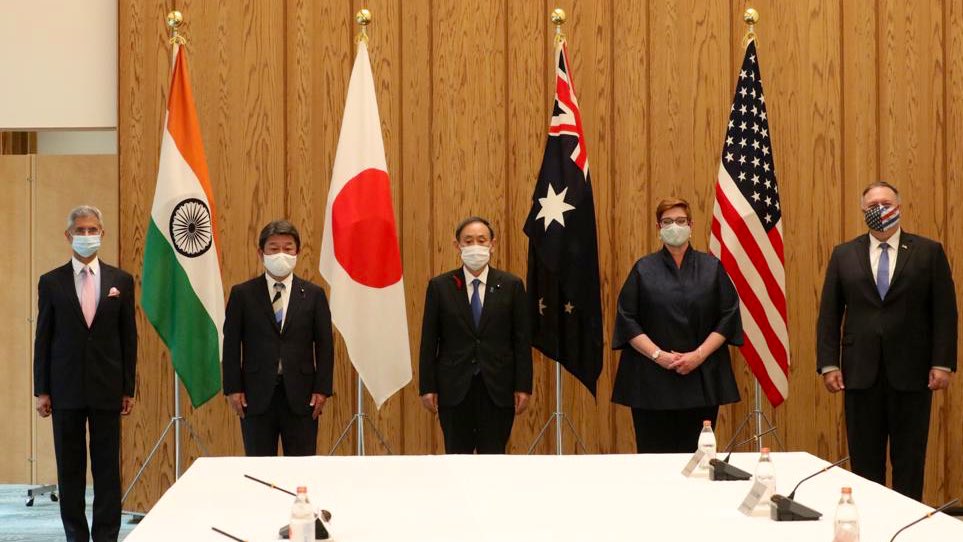
So, India can expect a Biden-Harris Administration to call its number in America's strategic competition with China.A bilateral FTA would be the second biggest, and could be a step to the biggest, deal of the century: India, plus U.S. re-entry, in CPTPP. That is, an aggressive Indian regionalist approach will accord with the instincts of a President Biden to rebuild alliances in the Indo-Pacific region and shift focus from a growth-inhibiting Sino-American Trade War to an opportunity-generating FTA. It also will press “pause” on a Cold War, holding open to the Chinese Communist Party the chance to reverse course and enter CPTPP on terms India, America, and the entire TPP 13 set.
Goal #2: Sustainability
Prime Minister Modi seeks to rationalise Indian businesses measures. The Goods and Services Tax – replacing many taxes with one – is an example. He's inclined to inclusive, pro-growth rules that are not so complex as to be disregarded. He can expect a Biden-Harris Administration, with two lawyers at the top, when negotiating with India, to eschew the cult of complexity. Collaboratively, they can write comprehensible, executable obligations, unburdened by Dickensian transition rules. Such obligations sustain labour interests.
Also in line with a Biden-Harris Administration is Modi's engagement in the 2016 Paris Agreement within the United Nations Framework Convention on Climate Change.The Trump Administration withdrew from it in November 2019. India's always been in, with a pledge to reduce the greenhouse gas emission intensity of its gross domestic product by 33-35% by 2030 compared to the 2005 level. Shepherding America back is a certainty in a Biden-Harris Administration.
The Prime Minister can expect that Biden-Harris would seek parallel environmental sustainability commitments on GHG emissions mitigation, adaptation, and finance in any Indo-American trade deals, i.e., would use FTAs as an instrument in their shared existential battle to limit the average global temperature rise to 2 degrees (preferably 1.5 degrees) Celsius in the 21st century. That's good for India, which is on track to meet its Paris obligations. India accounts for 4.1% of GHG emissions, but the U.S. for 17.89%.
Galbraith's Foresight
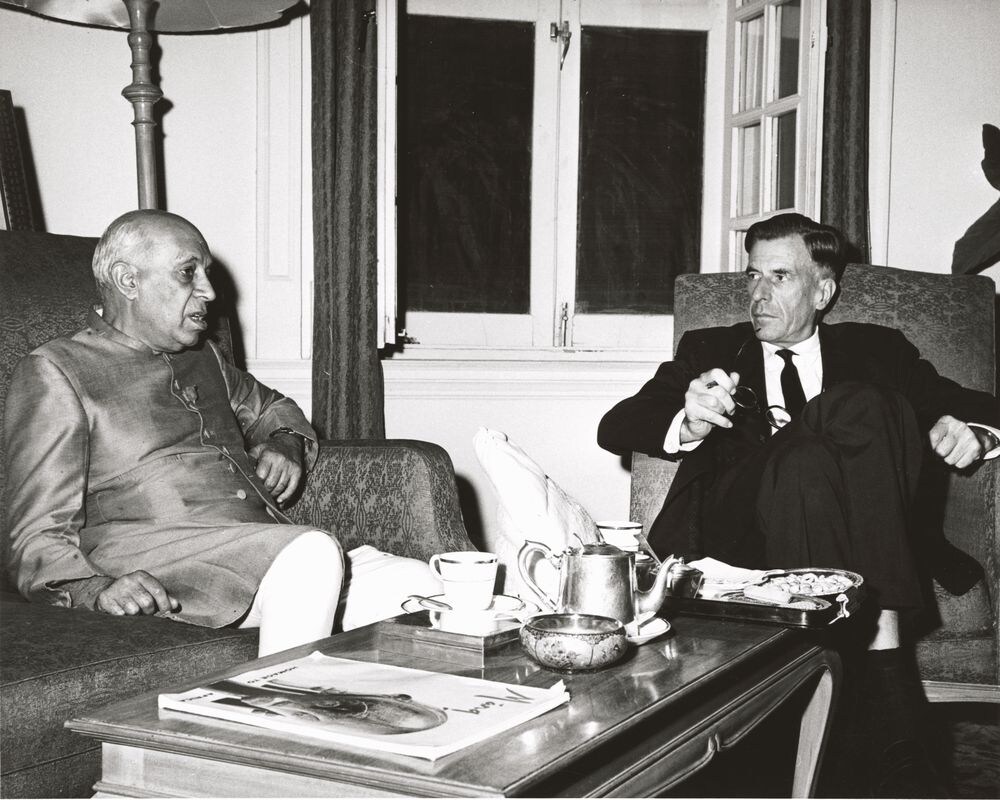
John Kenneth Galbraith was the most influential U.S. Ambassador to India, serving for President John F. Kennedy from 1961 to 1963 as the Nehru era drew to a close.
His Ambassador's Journal (1969) suggests why he is credited as first identifying “the possibility of an India-U.S. strategic partnership.” Over one half century later, the key implication for India of an Enlightened Trade Policy might be that possibility is authentically realised.
Raj Bhala is the inaugural Brenneisen Distinguished Professor, The University of Kansas, School of Law, Senior Advisor to Dentons U.S. LLP, and Member of the U.S. Department of State Speaker Program. The views expressed here are his and do not necessarily represent the views of the State of Kansas or University, Dentons or any of its clients, or the U.S. government, and do not constitute legal advice.
The views expressed here are those of the author, and do not necessarily represent the views of BloombergQuint or its editorial team.
Essential Business Intelligence, Sharp Market Insights, Practical Personal Finance Advice, Daily Fuel, Gold and Silver Prices and Latest Stories — On NDTV Profit.