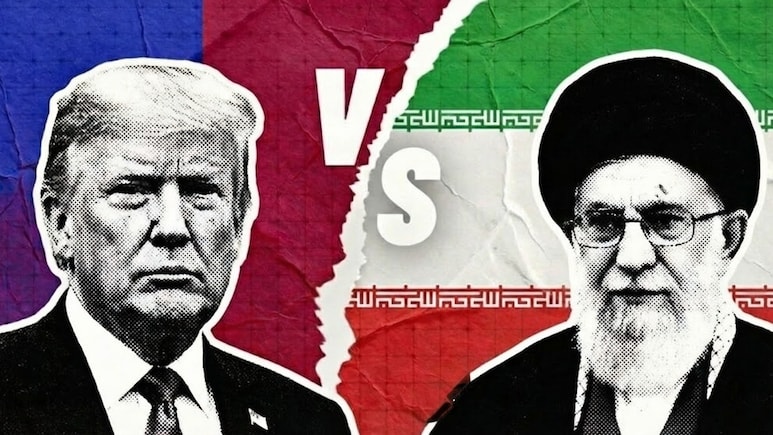
The third round of talks between Washington and Tehran will begin today in Geneva, amid a military buildup by the United States (US) in the Middle East, the biggest in decades.
Over the past week, Iran has been reiterating that it was ready to reach an agreement with the United States in this third round of talks. More recently, on February 25, the Iranian Minister of Foreign Affairs, Abbas Araghchi has said that a deal with the US to avert conflict was “within reach”. He said the “historic opportunity to strike an unprecedented agreement” would depend on whether “diplomacy is given a priority”, in a veiled reference to President Donald Trump's relentless threats against Iran.
Trump has been quite vocal about his stance and has repeatedly threatened Iran with consequences if they fail to reach an agreement in Geneva. “It is proven over the years, not easy to make a meaningful deal with Iran, and we have to make a meaningful deal,” Trump said last week, “Otherwise bad things happen”
Also Read | Layoffs Are Rising In Tech, But These Skills Are Helping People Unlock Better Pay
Amid the rhetoric, Iran also said it will use its right to retaliate if any “act of aggression” is directed towards the country.
The Pentagon, meanwhile, is not waiting for the talks to resume or an agreement to be reached. It has already built up the largest force of American warships and aircraft in the Middle East in decades, the Associated Press (AP) has reported.
The Buildup:
As per the AP report, the aircraft carrier USS Abraham Lincoln and three guided-missile destroyers have already been in the Arabian Sea, which has now been joined by the world's largest aircraft carrier, the USS Gerald R. Ford, along with 3 destroyers and more than 5,000 additional service members. The naval presence in the region will now be at least 16 ships.
Also Read: US Levels New Sanctions On Iran's Missile Program, Shadow Fleet
In addition to that, numerous additional U.S fighter jets and support aircraft have touched down in the Middle East and at some bases in Europe. More than 100 fighter jets, including F-35s, F-22s, F-15s, and F-16s, have left the bases in the US and Europe and are heading towards the Middle East.
Will Iran retaliate in a bigger way?
The experts, AP has quoted, say that while Trump will have multiple military options at his disposal, Iran could also retaliate in ways it had not following the bombing of Tehran by Israel last June.
“It will be very hard for the Trump administration to do a one-and-done kind of attack in Iran this time around,” Ali Vaez, an Iran expert at the International Crisis Group, was quoted by the AP as saying, “Because the Iranians would respond in a way that would make all-out conflict inevitable.”
Vaez added that Iran has now concluded that the only way to stop this cycle is to draw blood and to inflict significant harm on the US and Israel, “even if it comes at a very high price for themselves.”
Seth Jones, a defence expert at the Centre for Strategic and International Studies, has told the Associated Press that Iran could go bigger and broader, especially if its leadership feels targeted.
Also Read: 'Professional Liars Create Illusion Of Truth': Iran Slams Trump Over Nuclear, Protest Claims
Essential Business Intelligence, Sharp Market Insights, Practical Personal Finance Advice, Daily Fuel, Gold and Silver Prices and Latest Stories — On NDTV Profit.