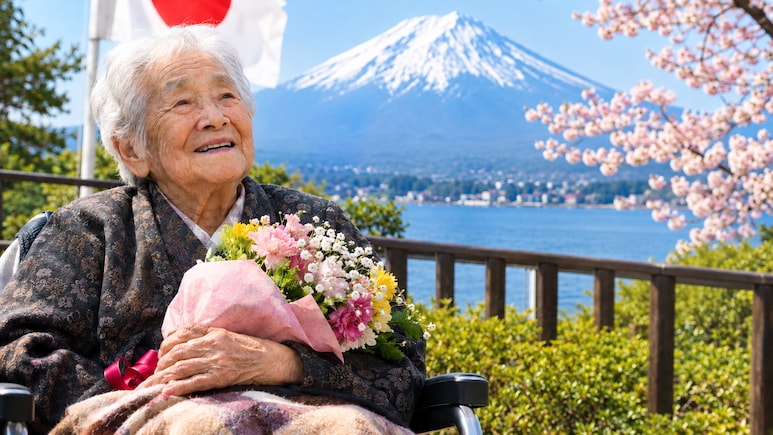
Japan now has more than 1 lakh people aged 100 and above, a new record for the country as it contends with a population that is ageing and shrinking all over the world.
Figures released by Japan's Health and Welfare Ministry on Tuesday showed that the number of centenarians has risen to 1,07,677, up 7,914 from a year earlier. Women make up nearly 88 per cent of the total.
Fuyo Kishimoto, 114, from Kyoto is Japan's oldest woman, while 112-year-old Hikaru Kato of Kumamoto is the country's oldest man.
Also Read | Layoffs Are Rising In Tech, But These Skills Are Helping People Unlock Better Pay
The figures were released ahead of Japan's annual Respect for the Aged Day on September 15. People turning 100 are traditionally honoured by the government with a letter from the prime minister and a silver sake cup.
Health Minister Kenichiro Ueno linked Japan's long life expectancy to better medical care, healthy lifestyles and dietary habits.
The country's food culture is often cited as one reason for its longevity, with traditional meals featuring fish, vegetables and rice and generally less saturated fat than many Western diets. Older people also tend to remain active, with walking, cycling and public transport forming part of everyday life for many.
ALSO READ: Canada Could Become EU's First 'Associate Member': Ursula Von Der Leyen
Japan's Population Continues To Shrink
The rise in the number of centenarians comes as Japan reverses a major demographic challenge. People aged 65 and above currently account for around 30% of the country's population, a figure expected to approach 40% by 2070.
Meanwhile, Japan's fertility rate has continued to fall. The total fertility rate dropped to a record low of 1.14 last year, far below the replacement level of about 2.1 children per woman.
The National Institute of Population and Social Security Research estimates that Japan's population could fall to around 87 million by 2070, a decline of about 30% from its peak of 128 million in 2008, quoted by NBC report. Falling marriage rates, the rising cost of raising children and changing social and economic patterns have been cited among the factors behind the declining birth rate.
Japan's centenarian population has risen sharply over the decades. When the government began its survey in 1963, there were just 153 people aged 100 or older. The figure crossed 1,000 in 1981 and reached 10,000 in 1998.
As Japan celebrates more people reaching 100, the milestone also brings into focus the challenge of ensuring its ageing population can live longer lives with adequate care and support.
Essential Business Intelligence, Sharp Market Insights, Practical Personal Finance Advice, Daily Fuel, Gold and Silver Prices and Latest Stories — On NDTV Profit.