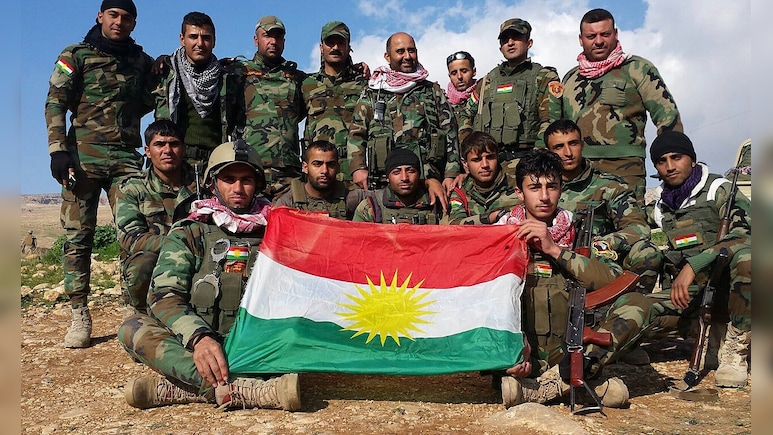
Iranian Kurdish militias have held discussions with the United States in recent days over whether and how to launch attacks against Iran's security forces in the country's western regions, three sources familiar with the matter told Reuters.
The coalition of Iranian Kurdish groups, based along the Iran-Iraq border in Iraq's semi-autonomous Kurdistan region, has reportedly been training for a potential offensive aimed at weakening Tehran's military capabilities, as the US and Israeli forces continue striking Iranian targets.
According to two of the sources, the objective would be to “create space” for Iranians opposed to the Islamic regime to mobilise, following the reported killing of Supreme Leader Ali Khamenei and other senior officials in the US-Israel assault that began on Saturday.
Also Read | Layoffs Are Rising In Tech, But These Skills Are Helping People Unlock Better Pay
A final decision on whether to proceed and the timing of any such operation has not yet been taken, the sources said, speaking on condition of anonymity due to the sensitivity of the discussions.
Also Read: Adir Vs Yak-130: Inside The First Air Fighter Duel Of The Israel-Iran Conflict
Request For US Support
The Kurdish groups have sought US military assistance, including potential CIA support to supply weapons, two sources told Reuters. CNN first reported on the CIA's possible involvement, while Axios said President Donald Trump held a phone call this week with two senior leaders from Iraq's Kurdistan region.
Reuters said it could not independently verify the extent of CIA involvement, whether weapons had been provided, or whether US forces would accompany Kurdish fighters into Iranian territory.
The CIA declined to comment. The White House and the Pentagon did not immediately respond to requests for comment. The Kurdish Regional Government in Erbil also did not respond.
The Pentagon has previously said that two US bases in Erbil support the international coalition against Islamic State militants.
Complex Regional Fallout
Any cross-border operation from Iraq would likely require substantial US military and intelligence backing, according to the sources.
Kurdish factions in Iraqi Kurdistan have a long history of cooperation with Washington, including during the Iraq War and the campaign against ISIS. However, shifting alliances and internal ideological divisions have at times complicated relations.
It remains unclear how effective Iranian Kurdish fighters would be inside Iran, as their combat experience varies significantly.
A source cited by CNN said the plan would involve Kurdish armed units confronting Iranian security forces, potentially easing pressure on unarmed protesters in major Iranian cities.
However, such a move could have far-reaching consequences. An armed Kurdish uprising may intensify separatist sentiments among Iran's ethnic Baluch minority, which maintains links with militants in Pakistan's volatile Baluchistan province. Analysts note that Islamabad is unlikely to tolerate any momentum toward Baluch independence.
Turkey's position could also prove pivotal. Ankara, which has worked to integrate Kurdish forces into Syria's central command structure and has long battled the outlawed Kurdistan Workers' Party (PKK), is unlikely to support expanded Kurdish militarisation near its borders.
Turkey has previously threatened military action against Kurdish groups in northern Syria if they did not submit to Damascus' authority and has been pursuing renewed efforts to stabilise its own long-running conflict with the PKK.
The potential Kurdish operation inside Iran, if approved, would therefore carry significant geopolitical risks, adding another volatile layer to an already widening regional conflict.
Essential Business Intelligence, Sharp Market Insights, Practical Personal Finance Advice, Daily Fuel, Gold and Silver Prices and Latest Stories — On NDTV Profit.