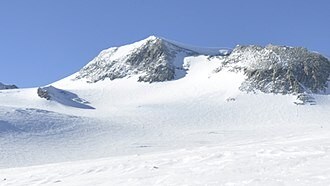
Ice melting in Greenland and Antarctica, driven by global warming, is affecting timekeeping the world over by slowing down the Earth's rotating speed, according to a new research.
As a result, a second might need to be deducted from the Coordinated Universal Time three years later than otherwise, it found.
The study author, Duncan Agnew, explained that because the Earth doesn't always rotate at the same speed, the UTC consists of discontinuities.
Since 1972, all discontinuities have required that a 'leap second' be added, because many networked activities like computing and financial markets require the consistent, standardised and precise timescale provided by the UTC, he said.
Agnew is a geophysicist at Scripps Institution of Oceanography at University of California San Diego, US.
Using mathematical modelling, Agnew showed that the rate at which the Earth's liquid core rotates -- angular velocity -- has been slowing down. To compensate for this, the rotating speed of the solid Earth has steadily increased.
The compensatory effect comes from the fact that for a closed system such as the Earth, angular momentum -- the rate at which rotating speed changes -- is a conserved quantity and doesn't change, he explained.
His study has been published in the journal Nature.
He found that the effect of the solid Earth rotating faster has resulted in fewer leap seconds being needed to be added to the UTC in recent decades.
When extrapolated to the future, he predicted that a leap second will need to be deducted from the global primary standard of timekeeping as early as the year 2026.
However, Agnew also found that the increased melting of ice caps in Greenland and Antarctica has slowed down the Earth's rotation more rapidly than ever before and therefore, he estimated that the leap second will not need to be deducted until the year 2029.
The ice melting was measured by satellite gravity.
The findings suggested a possible problem for computer network timing, and thus, changes in the policy of aligning UTC to the Earth's rotation may need to be made earlier than currently planned, Agnew said.
He noted that if the melting of polar ice caps had not recently accelerated, the turning back of the UTC by a leap second would be required three years earlier - in 2026.
He also said that global warming and global timekeeping have become 'inextricably linked' and may become more so in the future.
Essential Business Intelligence, Continuous LIVE TV, Sharp Market Insights, Practical Personal Finance Advice and Latest Stories — On NDTV Profit.