International silver prices have steadied after an epic bout of turbulence, but supplies in China are still being pinched as investment and industrial demand drain stockpiles.
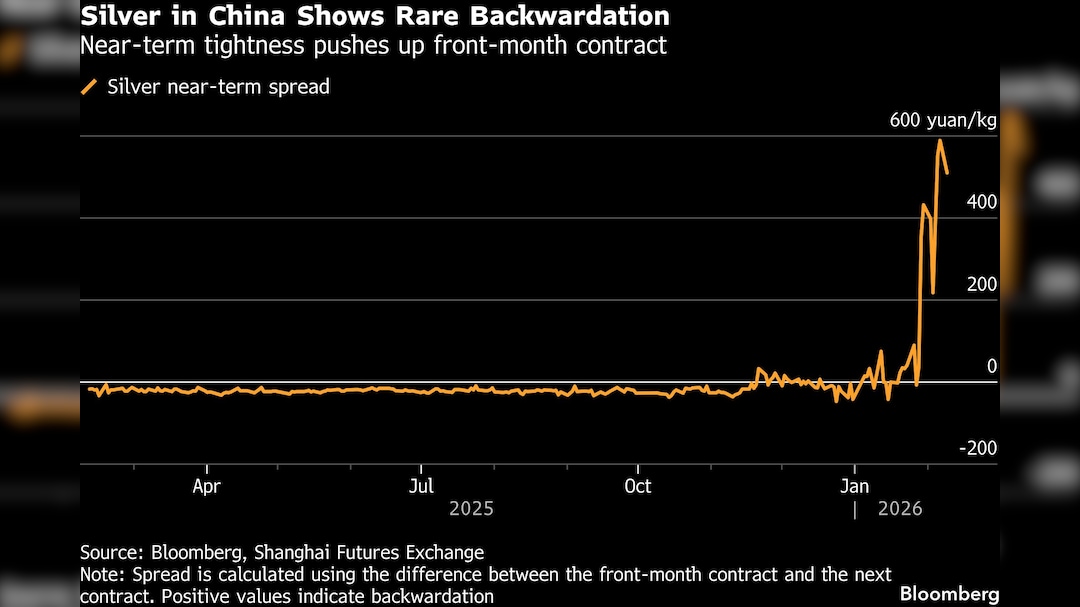
Domestic producers and traders are struggling to fill a backlog of orders, pushing up near-term prices and leaving the market heavily backwardated. The front-month contract on the Shanghai Futures Exchange has surged to a record premium, indicating the market's overwhelming preference for prompt deliveries of the metal.
“Such a large backwardation is driven by an inventory crisis and the depletion of deliverable material,” said Zhang Ting, senior analyst at Sichuan Tianfu Bank Co. “Institutions still have incentives to continue squeezing the market for profit.”
Meanwhile, short sellers on the Shanghai Gold Exchange, who bet that silver prices would fall, have been paying long-holders deferral fees since late December to avoid having to make deliveries, highlighting a scarcity of metal to close positions.
The silver market's historic selloff since the end of January has erased most of the 61% gain made in the first weeks of the year. That rally was supercharged by a wave of speculative buying in China and elsewhere, as the white metal briefly overtook gold as a repository of fears over the dollar, the Federal Reserve's independence and spiraling geopolitical confrontations.
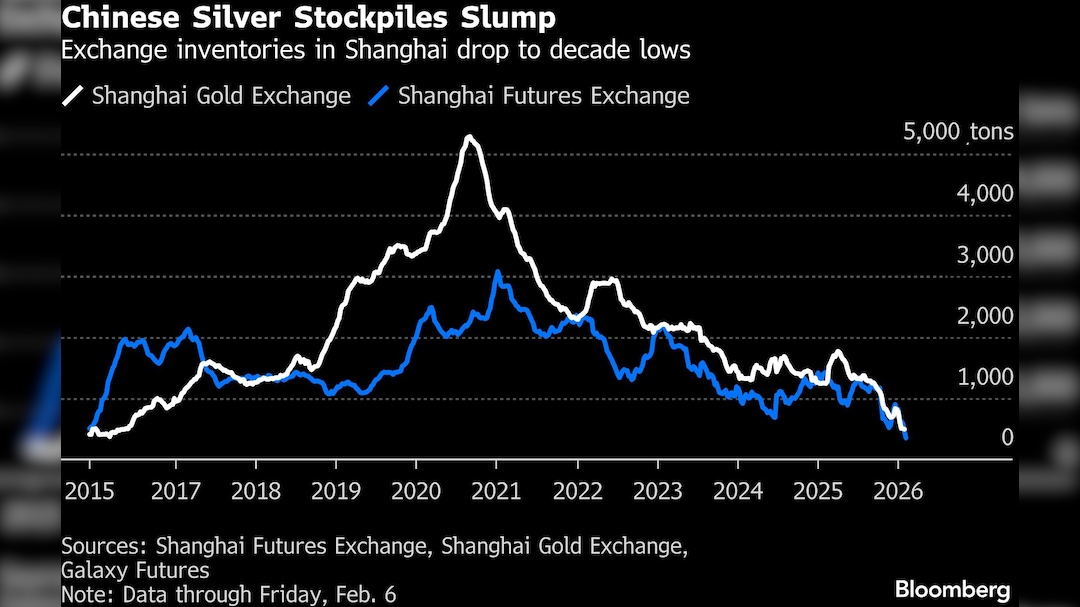
The relatively illiquid silver market is no stranger to extreme moves, including a worldwide squeeze on supplies in the autumn. That left Chinese inventories already depleted when investment demand spiked in December. Since then, stockpiles at warehouses linked to the SHFE and SGE have dropped to levels last seen more than a decade ago.
Demand for investment bars has stayed high. In Shuibei market in Shenzhen, the country's biggest bullion hub, merchants can easily find buyers for bars at premium prices. “Whenever there are stocks, they're sold off quickly,” said Liu Shunmin, head of risk at Shenzhen Guoxing Precious Metals Co.
Industrial needs are also contributing to the tightness. China's solar manufacturers, which use silver in panels, are front-loading production to meet demand ahead of the loss of export tax rebates on April 1. Many firms have taken advantage of the recent price collapse to buy the dip, said Jia Zheng, head of trading at Shanghai Soochow Jiuying Investment Management Co.
The only way to ease the market's immediate tightness in supply is if smelters can ramp up production during the week-long Lunar New Year break, said Jia, although that's a time of year when activity typically tails off.
There are signs, though, that the speculative fervor is cooling. Aggregate open interest on SHFE has fallen to its lowest in more than four years as investors lighten their positions ahead of the holiday, which begins Feb. 16.
On the Wire
Chinese miners will accelerate fundraising amid a metals supercycle, said Bloomberg Intelligence. Aluminum prices have shifted from tracking China's PMI to aligning more closely with copper, driven by substitution and shared macro factors, BI said.
The US sees no letdown in China's aggressive stockpiling of crude in 2026 with a gradual slowing next year, a strategy that could continue to propel oil prices even in the face of a global glut.
The US Department of Agriculture acknowledged Tuesday that China could buy more American soybeans but held back on raising its forecast for exports.
ALSO READ: Goldman's India Push Bears Fruit In Crowded Wall Street Field
Essential Business Intelligence, Sharp Market Insights, Practical Personal Finance Advice, Daily Fuel, Gold and Silver Prices and Latest Stories — On NDTV Profit.