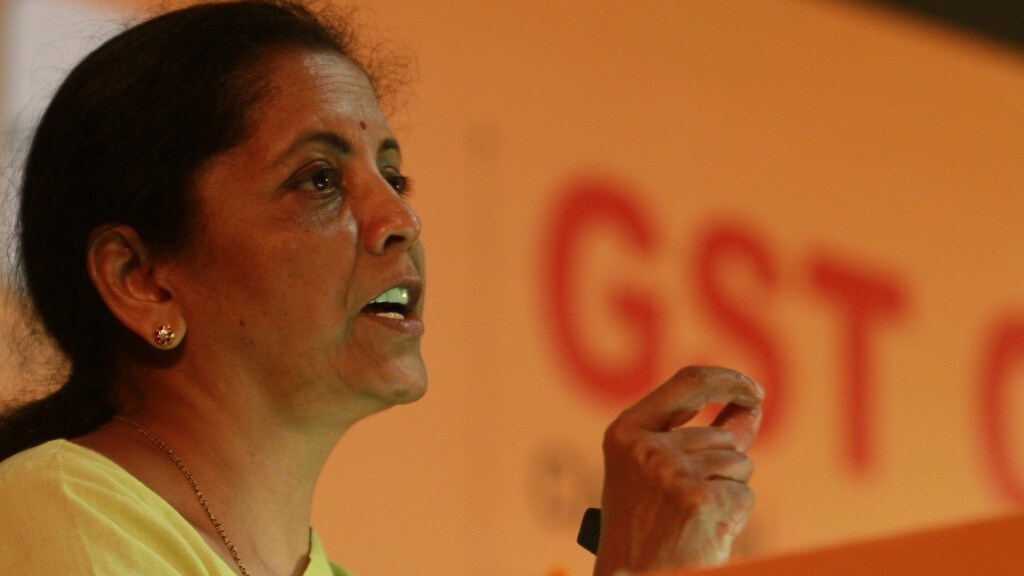
FInance Minister Nirmala Sitharaman presented the Union Budget 2019 in Parliament today. Here's what finance ministry officials think of her budget speech.
The Central Board of Indirect Taxes and Customs has increased custom duty on certain products where it saw the room for an increase, its Chairman Pranab Kumar Das said. When asked about the possibility of leading to a tariff war, he said that the effort is to support domestic industries and not intensify any trade disagreements.
"Effort is to make sure that we are not taken for granted that way. We waited for the negotiations to take place, we didn't get a preference under GSP and the government had to take a call as a sovereign nation. We waited for almost two years,”he said.
This comes on the back of recent trade discussions between India and U.S.
Pranab Kumar Das, chairman of the Central Board of Indirect Taxes and Customs agreed with Mody, saying that this year’s revenue targets are realistic and achievable.
The CBIC target has been fixed at Rs 11.19 lakh crore.
This year’s revenue targets are much more realistic than last year’s said Pramod Chandra Mody, chairman of the Central Board of Direct Taxes.
“If you see the last year's figures of revenue collection, we fell short of the budget targets very marginally. The revenue estimate was a very ambitious target showing a 23-24 percent growth which was unrealistic and you would appreciate that particular realialism in fixation of targets has come in this year,” he said.
This year the direct taxes target is around Rs 13.35 lakh crore which translates to about 17.5 percent.
“If you see the history of tax collection in the past three years, that's a very realistic target,” he added.
The customs duty hikes announced by Finance Minister Nirmala Sitharaman were not a reaction to the U.S. withdrawing the Generalised System of Preferences for India, said Revenue Secretary Ajay Bhushan Pandey.
The duty hikes are only on those products that are being manufactured in India, he said, adding that he doesn’t see the move triggering a reaction from the U.S.
The government didn't burn its fingers by trying a strategic sale of Air India and instead learn important lessons, divestment secretary Chakraborty said. “There were certain lessons and we have factored them.”
“The macroeconomic environment at that time, crude oil and exchange rate volatality, is why last year's effort had to be abated and retaken. We have gotten back into dialogue with the buyers and the intent is conducive.”
The government has previously achieved a divestment target of Rs 1 lakh crore before in 2017-18, Divestment Secretary Atanu Chakraborty said when asked if the target will be challenging.
“(Our target is based) considering certain very major decisions that have been in the budget this year. We are very confident,” he said.
Clarity on the sovereign bond issue should emerge by the second half of the calendar year, Garg said. He added that there will be no reckless expenditure on any borrowing, domestic or internal and the adequate appetite for the India bond issue will be determined.
“We expect to get a good price (for the bond issue). We have launched some initial conversation with global managers for the same.”
India is in a position of strength to launch a sovereign bond issue but will need to manage global risk, according to Economic Affairs and Finance Secretary Subhash Chandra Garg. We’ll have to assess global demand for sovereign bond and the share of borrowing abroad, he said.
Garg said that global borrowing has to go toward investment expenditure and not towards revenue expenditure.
It’s not accurate to say government is the only player in investment activity, Expenditure Secretary Girish Chandra Murmu said, emphasising that private investment needs to complement government action. The government is a catalyst to the investment activity, not the driver, he said.
There was a 13 percent growth in expenditure over FY19 revised estimates. He pointed out that capital goods growth was healthy even as the overall economy slowed in the last quarter.
Whatever liability we are taking today, we actually may have to pay less. It’s actually a simple cardinal rule that our liability should be in currency that is going to go down.
Speaking about concerns about a possible NPA crisis in the Mudra scheme, CEA KV Subramanian said that we are “barking at the wrong tree”.
There is a saying "If you borrow Rs 2 lakh, it is your problem to repay. But if you borrow Rs 2,000 crore, it is the bank's problem to recover the money,”he said adding that it is illustrated in the NPA numbers.
“The real problem was on the corporate side where the survey has tapped into our culture as well to make sure wilful default does not happen. NPAs are really only a bother on that side, not on the retail side, not on Mudra. We are barking at the wrong tree there,” he said.
The government doesn't intend to make public the break-up of minority stake sales and strategic sale targets, says DIPAM secretary Atanu Chakraborty after Finance Minister Nirmala Sitharaman announced a Rs 1.05 lakh crore government disinvestment plan in her budget speech.
"Whether profit-making or not is not a criteria for strategic sale consideration," added Chakraborty.
Finance Minister Nirmala Sitharaman presented the Union Budget 2019 earlier today, proposing a number of changes, ranging from an ambitious revenue target, higher income tax on India’s super rich, policies for the MSME sector, a structural change where the government can borrow foreign currency bonds to assistance for the non-banking finance companies’ sector.
As the country reads into the fineprint of the budget, finance ministry officials are now gathering in New Delhi where they are expected to speak about their views on the fiscal document.