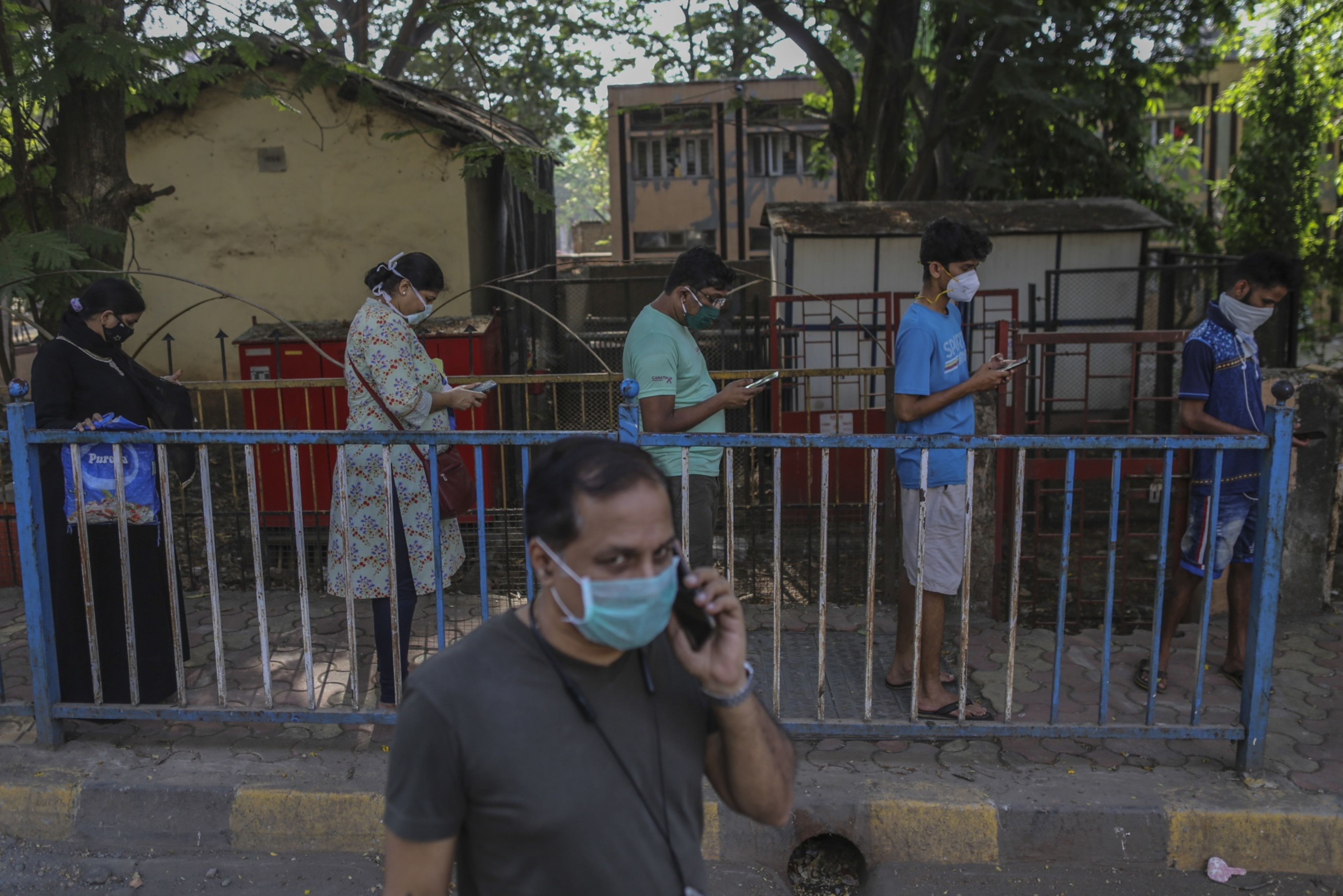
A survey by economic policy think tank National Council of Applied Economic Research suggests that majority of people are in favour of lockdown extension in the country by another two weeks despite facing hardships on multiple fronts.
The Delhi National Capital Region Coronavirus Telephone Survey was conducted during April 3-6, 2020, by the National Council of Applied Economic Research and is based on responses from 1,750 people.
It also suggests that about 29.3 percent of households were affected by shortages in supplies of food, cooking fuel and medicine and the problem was more severe in rural areas in the wake of 21-day coronavirus lockdown, which is coming to an end on April 14.
" In spite of facing difficulties and challenges, the majority of respondents supported the idea of extending the lockout period, if needed. As many as 86.7 percent of respondents expressed support for an extension of the lockdown for two more weeks after April 14, 2020, with 62.5 percent strongly supporting the extension, and 24.2 percent supporting it," said the survey.
The NCAER said the survey results point to the considerable success in communicating the dangers of the coronavirus and the importance of social distancing among respondents.
"An estimated 94.9 percent of respondents reported the virus to be highly dangerous, with an additional 3.2 percent considering it to be moderately dangerous," it said.
On access to essential items in the two weeks prior to the survey, about 29.3 percent of households were affected by shortages in supplies of food, cooking fuel and medicine, it said.
There were significant differences between rural (32.6 percent) and urban (25.3 percent) households in their experience of supply shortages, the survey said.
On the impact of the virus on the livelihoods of people, the vast majority of the DCVTS respondents reported a reduction in their income or wages in the two weeks before the survey (since March 20), with the reduction being the lowest for salaried workers and farmers, and the most for casual workers.
Only 15.5 percent of households reported that the coronavirus outbreak has not reduced their income or wages in the two weeks preceding the survey, the NCAER said.
Established in 1956, the NCAER focuses on generating and analysing empirical evidence to support and inform policy choices.
Essential Business Intelligence, Continuous LIVE TV, Sharp Market Insights, Practical Personal Finance Advice and Latest Stories — On NDTV Profit.