Yes Bank Q1 Results: Profit Up 46.4% On Lower Provisions
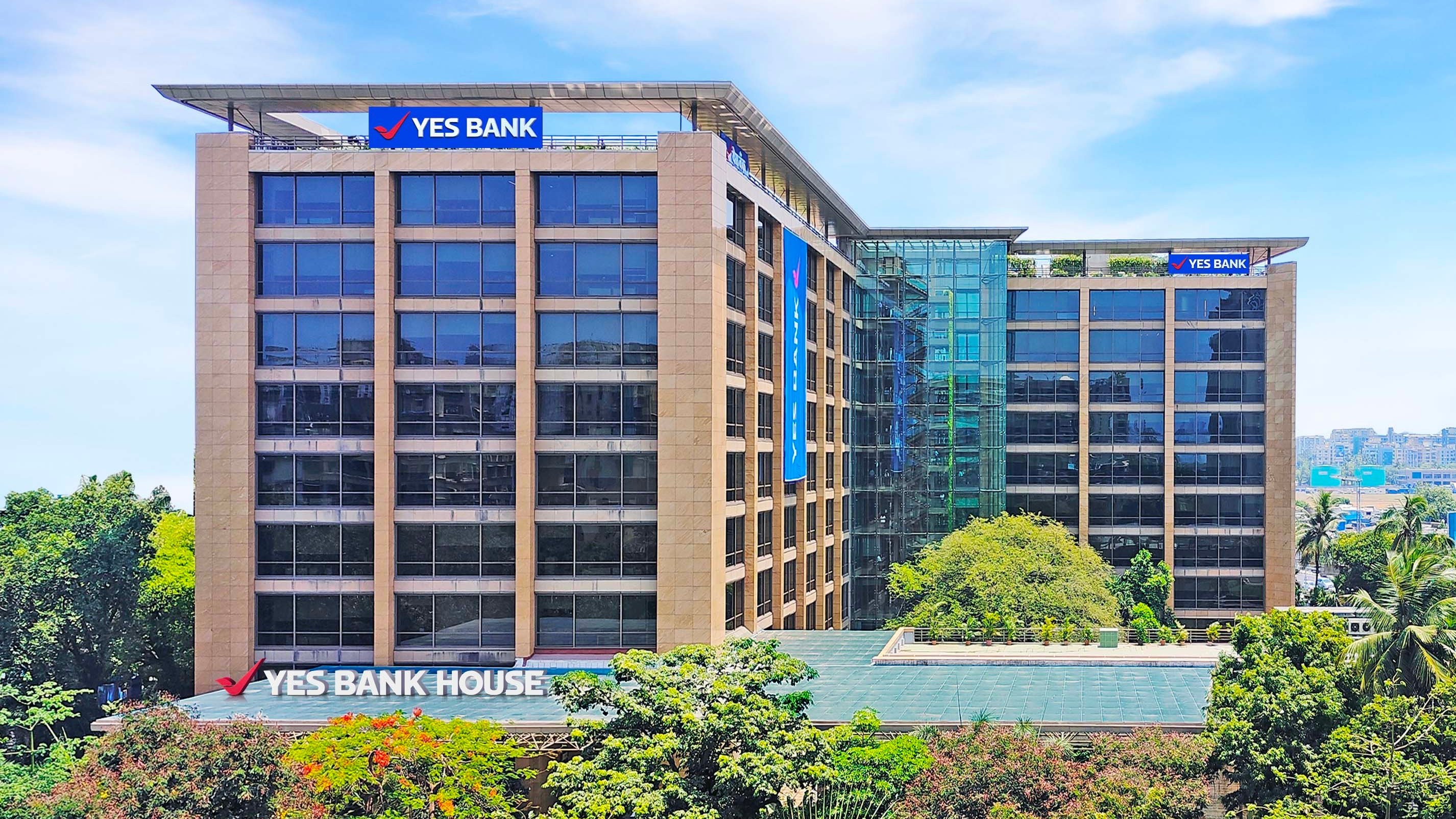
Private lender Yes Bank Ltd.'s net profit rose in the first quarter of fiscal 2025 on lower provisions, beating analysts' estimates.
The standalone net profit increased 46.4% year-on-year to Rs 502.4 crore for the quarter-ended June 30, according to an exchange filing on Saturday. Analysts polled by Bloomberg estimated a net profit of Rs 376.4 crore.
Sequentially, the profit rose 11.1%.
Net interest income, or core income, for the lender stood at Rs 2,243 crore, up 12.2% year-on-year. Other income rose 5.08% year-on-year to Rs 1,199 crore.
The other income included fees and commissions earned from guarantees and letters of credit, loans, and financial advisory fees, according to a statement sent to the stock exchanges.
Yes Bank Q1 Results Highlights (Standalone)
Net profit up 46.4% to Rs 502.4 crore versus Rs 343 crore (YoY).
Net interest income up 12.2% to Rs 2,243.9 crore versus Rs 2,000 crore (YoY).
Gross NPA at 1.7% versus 1.7% (QoQ).
Net NPA at 0.5% vs 0.6% (QoQ).
Yes Bank's asset quality stayed flat in the quarter, with the gross non-performing asset ratio at 1.7%. The net NPA ratio improved 10 basis points sequentially to 0.5% in the quarter ended June, compared to 0.6% in Q4.
Provisions for the quarter fell 41.1% year-on-year to Rs 211.7 crore.
Gross slippages for Yes Bank stood at Rs 1,205 crore, down 11% quarter-on-quarter, compared to Rs 1,356 crore in Q4.
In a post results media briefing, Yes Bank's management said that they expect slippages coming down in the next few quarters.
The lender's operating expenses rose 10.1% year-on-year to Rs 2,557.7 crore. In the previous quarter, there was an uptick in operating expenses due to the bank buying priority sector lending certificates along with an increase in variable compensation.
In Q1, the lender met its PSL target from both organic and inorganic side, the management told reporters.
Net interest margin, a key profitability indicator for the lender, stayed flat sequentially at 2.4% in quarter ended June.
The lender's net advances grew 14.7% year-on-year to Rs 2.29 lakh crore. Here, retail advances rose 9.4% year-on-year to Rs 1.01 lakh crore, small and medium enterprise loans were up 23.8% year-on-year to Rs 37,147 crore and corporate advances were up 13.8% year-on-year to Rs 56,328 crore.
In the current financial year, Yes Bank is targeting loan growth of 16-17% and the growth of deposits will be more than this, management said in response to a question on advances and deposit growth targets.
Responding to questions on the corporate book, the bank's management said that the growth is balanced between large and financial institutions. In the latter, the focus is to grow priority sector lending, they added.
Total deposits for the bank rose 20.9% year-on-year to Rs 2.65 lakh crore. The CASA ratio for the quarter stayed flat sequentially at 30.8%. The CASA ratio is the contribution of low-cost current account and savings account deposits as a percentage of overall liabilities.
The CET 1 ratio of the bank stood at 13.3% for the quarter ended June.
In Q4, the bank said that its Rural Infrastructure Development Fund balances had an impact on its NIM.
This time, however, Prashant Kumar, MD & CEO of Yes Bank said that the lender expects to get back 25% of its balances in RIDF back which would amount to approx. Rs 11,000 crore. Rest of it may happen in the next 2−3 years, he added.
Responding to a question on unsecured loans, Kumar said that the bank was adopting a cautious approach in onboarding customers on both credit card and unsecured side.
The lender also plans to open around 30-50 branches in this financial year.
The bank's management did not comment on media reports of a potential stake sale.

-
Leadership As Mission: Why The Age Of AI Demands More Human Leadership

Debjani Ghosh examines how AI is changing leadership, arguing that its success must be measured by its impact on people and the accountability of those guiding its use.
-
We May Need Another Tukaram Mundhe To Fight Air Pollution | The Reason Why
Developers may install basic measures such as sprinklers and green nets, resume work, and continue violating rules when this equipment stops working.
-
Extracting Value From Battery Scrap Could Be Challenging For India | The Reason Why
A discarded lithium-ion battery still contains valuable materials such as lithium, nickel and cobalt. These can be recovered and reused. When such batteries are crushed and shredded, they produce a dark powder called black mass.
-
One El Nino, India Can Handle. Two Could Break The Granary
India's grain stocks can absorb one bad year, but a second El Nino could drain the buffer in two to three years, economists say.
-
India's Troika Of Good Luck | Joining The Dots
As Jensen Huang's exit drags Nvidia down, a cooling AI trade and resilient earnings have revived investor interest in India. A likely RBI rate hike looms.
-
Talking Points This Week: Leadership Shock At Nvidia, Earnings Strength, And The Fog Over Hormuz
The Anthropic IPO pricing and first trading day, Nvidia's upcoming earnings, and any fresh signals from Iran will set the tone for the following week.
-
Signature Play: The Classic Cocktail Is Dead. Or Is It?
Classic cocktails are disappearing from India's cocktail menus. But they're still being ordered, taught to bartenders and borrowed from. So, who's really having the last drink?
-
A New Samvat Wishlist: Inclusive Prosperity And Human Development
India has strengthened its economic foundations through infrastructure, digital access and enterprise. Its next growth chapter must deepen productivity, create better livelihoods and widen participation in prosperity.
-
Love, Sex Aur Dhokha: The Audacious Plot To Spy On Jensen Huang
A Taipei dinner, a Singapore chip buyer and a suspected Chinese asset: inside the alleged spy operation that got close to NVIDIA's Jensen Huang.
-
Ten Things I Learnt This Samvat
Patience can be a trap. Cheap stocks can stay cheap. Leverage can wipe you out. What did Samvat 2082 teach us? Niraj Shah writes on 10 lessons from the year gone by.









