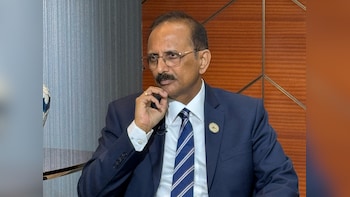
(Bloomberg) -- China could set its own rules for global trade and investment if the U.S. doesn't return to the Trans-Pacific Partnership ditched by President Donald Trump last year, Japan's former point person on the trade pact said in an interview.
"China is trying very hard to get its own rules recognized as the standard," said Akira Amari, a former economy minister and key architect of the agreement, which included the U.S. when it was first signed in 2016. China's rules are "a bit different from what Japan, the U.S. and Europe see as fair," he added. "I don't think the U.S. can accept them as the global standard."
Why Pacific Trade Deal Is a Big Deal With U.S. or Not: QuickTake
Trump withdrew the U.S. from the TPP as soon as he took office in January 2017, saying he preferred to negotiate bilateral trade deals. Japan spearheaded the drive to keep it alive among the remaining 11 members, in a bid to balance China's growing clout in the region. It was finally agreed last month.
"If they recognize the situation, the U.S. can work with Japan and with Asean as well, and even draw in Europe, so that we can create fair and open rules on trade and investment for all countries," Amari said.
Chile Meeting
As well as traditional areas such as cutting trade tariffs and removing non-tariff barriers, the agreement, now known as the Comprehensive and Progressive Agreement for Trans-Pacific Partnership, covers a broad swath of issues, such as intellectual property, labor laws and government procurement.
The 11 remaining members agreed in January to suspend some of the content and the resulting deal is set to be signed by ministers in Chile on March 8. It must then be ratified by at least half of the members before it comes into force.
Last month, Trump said at the World Economic Forum in Davos he would be open to rejoining TPP if the agreement were improved. Treasury Secretary Steven Mnuchin said this week he had been in talks with several of his counterparts about the deal.
"All we have done is freeze the parts of TPP12 that were related to the U.S., and we can unfreeze them if it returns," Amari said.
Renegotiating the content to address Trump's concerns would be impossible, because the whole agreement would fall apart, he said, adding that putting in further clauses on topics not currently covered might be feasible, if they could not be resolved outside the TPP.
Thailand is considering joining the agreement, a senior government official said in an interview last week. The current agreement, includes Singapore, Brunei, Malaysia, Vietnam, Australia, Mexico, Canada, Peru, Chile, and New Zealand as well as Japan, and makes up about 13 percent of the global economy. South Korea and the U.K. have also expressed interest in joining.
To contact the reporters on this story: Isabel Reynolds in Tokyo at ireynolds1@bloomberg.net, Maiko Takahashi in Tokyo at mtakahashi61@bloomberg.net, Yuko Takeo in Tokyo at ytakeo2@bloomberg.net.
To contact the editors responsible for this story: Daniel Ten Kate at dtenkate@bloomberg.net, Brett Miller at bmiller30@bloomberg.net, Andy Sharp, James Mayger
©2018 Bloomberg L.P.
Essential Business Intelligence, Continuous LIVE TV, Sharp Market Insights, Practical Personal Finance Advice and Latest Stories — On NDTV Profit.