The RBI, after cutting rates by a good 125 basis points in 2025, chose to keep the policy repo rate unchanged at 5.25% in the February 2026 bi-monthly monetary policy meeting after a detailed assessment of the evolving macroeconomic and financial developments and the outlook.
Consequently, the following rates were also kept unchanged:
- The standing deposit facility (SDF) rate at 5.00% (a borrowing mechanism for banks to meet immediate, overnight cash shortages)
- The marginal standing facility (MSF) rate at 5.50% (meant to address the liquidity of banks during extreme shortages)
- The bank rate at 5.50% (to provide long-term, unsecured loans to commercial banks)
RBI Rate Cuts and Monetary Policy Stance
Month Also Read | Layoffs Are Rising In Tech, But These Skills Are Helping People Unlock Better Pay | Repo Policy Rate | Policy Action (Basis points) | Monetary Policy Stance |
Feb-25 | 6.25% | -25 | Neutral |
April-25 | 6.00% | -25 | Neutral |
June-25 | 5.50% | -50 | Neutral |
Aug-25 | 5.50% | Status quo | Neutral |
Oct-25 | 5.50% | Status quo | Neutral |
Dec-25 | 5.25% | -25 | Neutral |
Feb-26 | 5.25% | Status quo | Neutral |
Moreover, the six-member Monetary Policy Committee of the RBI decided to continue with the neutral stance. All six members voted in favour of continuing with the existing policy rate, but in the case of stance, one member, Prof. Ram Singh, retained his view that the stance be changed from neutral to accommodative. The MPC observed that the global economy showed remarkable resilience in 2025.
On the domestic front, it also noted that real GDP is estimated to grow at 7.40% (y-o-y) in 2025-26, as per the first advance estimates, with private consumption and fixed investments contributing to the overall growth, while net external demand continues to be a drag (as imports exceeded exports). As regards inflation, the RBI observed that it was on the path of gradual decline, although it remained above target in several advanced economies.
In the case of India, CPI inflation remained well below 0.7% in November 2025 and 1.3% in December 2025, supported by deflation in food inflation and moderate fuel inflation. Thus, core inflation, which excludes food and fuel inflation, also remained benign, despite the uptick in the price of the precious metals
The Outlook
Inflation
The RBI is of the view that the near-term outlook for food supply remains bright. It also expects core inflation to be range-bound, except for the potential volatility induced by prices of precious metals. It also sees upside risk to the inflation trajectory from geopolitical uncertainty, coupled with volatility in energy prices and adverse weather events. The unfavourable base effects stemming from a large decline in prices observed in Q4:2024-25 may also lead to an uptick in Y-o-Y inflation in Q4:2025-26, despite the anticipated momentum being muted.
Considering all these factors into consideration, CPI inflation is now projected at 2.1% in 2025-26 (compared to 2.0% earlier). In Q4 of this fiscal year, CPI inflation is estimated to be 3.2% (from 2.9% earlier). CPI inflation for Q1:2026-27 and Q2 is projected at 4.0% and 4.2%, respectively. The risks are evenly balanced.
GDP Growth
As regards the outlook for GDP growth, it is likely to be supported by private consumption, considering GST rationalisation, rate cuts, benign inflation, and even buoyancy in the services sector. Similarly, the investment activity will be supportive for GDP growth under the present high-capacity utilisation, conducive financial conditions, healthy balance sheets of financial institutions and corporates, robust credit growth and the government's continued thrust on capital expenditure.
Growing demand is also expected to encourage investments in the private sector. The new reduced tariffs by the US, and trade deals with the European Union, New Zealand, and Oman, are expected to provide a boost to merchandise exports, while services exports remain strong. That being said, the headwinds from geopolitical tensions, uncertain global trade environment, volatility in global financial markets and international commodity prices continue to pose downside risks to the outlook.
Considering the positive and other factors, the real GDP growth for Q1:2026-27 and Q2 are revised upwards to 6.9% (from 6.7% projected in December 2025) and 7.0% (from 6.8% projected in December 2025), respectively. The risks are evenly balanced.
So, Will RBI Cut Rates Further?
The MPC has noted that the overall near-term domestic inflation and growth outlook remains positive. The headline CPI inflation is well below the tolerance band of the inflation target currently. The outlook for the upcoming two quarters, i.e. Q1:2026-27 and Q2 continues to be benign and near the inflation target.
On the growth front, economic activity remains resilient. India is the fastest-growing economy and remains a bright spot even in a challenging external environment.
That said, the MPC will be watchful of the incoming data guided by the evolving macroeconomic conditions and the outlook. While the stance of the monetary policy is kept neutral, Prof. Ram Singh continues to insist that the stance should be changed from neutral to accommodative.
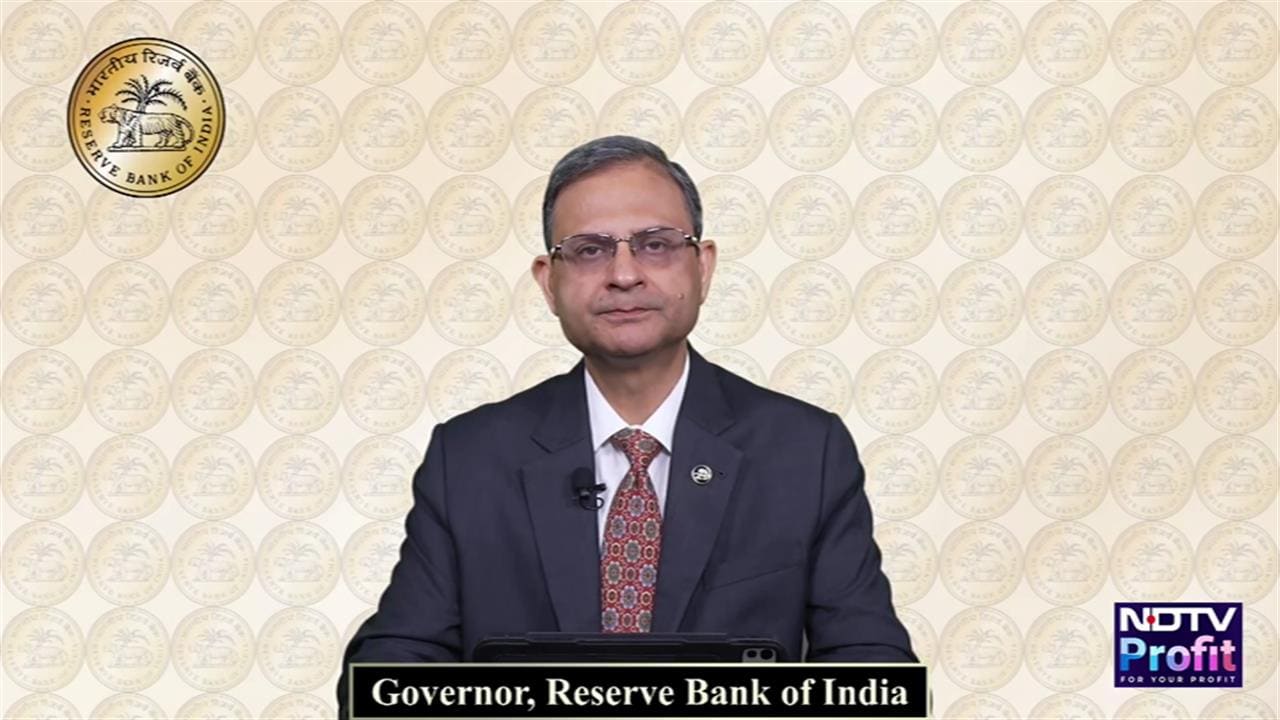
RBI Governor Sanjay Malhotra also mentioned in his statement: "Benign inflation provides the leeway to remain growth-supportive while preserving financial stability. We remain committed to meet the productive requirements of the economy and sustain the growth momentum."
Given this, the RBI may reduce the policy rates by 25 bps or so in its April 2026 bi-monthly monetary policy for 2026-27, subject to the CPI inflation readings. But overall, it seems we are almost near the end of a rate cut cycle. Low inflation would not necessarily induce the RBI to keep cutting policy rates.
The Impact on the Benchmark Yield
The 10-year G-sec yield has hardened by 13 bps since the start of the year and is up since the RBI's latest policy decision. This is because of a slightly higher CPI inflation projection for the fiscal year 2025-26 and the ensuing quarter. The G-sec yield is also weighing the liquidity conditions and mirroring global trends, and a variety of other factors.
Going ahead, the Reserve Bank will remain proactive in liquidity management and ensure sufficient liquidity in the banking system to meet the productive requirements of the economy and to facilitate monetary policy transmission. This shall help the benchmark yield soften a bit.
How to Approach Debt Mutual Funds Now?
It would be prudent to gradually shift to mutual funds holding long-duration debt papers (with around 30% G-secs) with a medium-term view of up to five years or so. For this purpose, the medium to long duration funds and long duration debt funds would be appropriate.
If you have an investment horizon of two to three years and want exposure to mainly banking and PSU debt papers, some of the best Banking and PSU Debt Funds can be considered. For an even shorter horizon of one to two years, funds investing in shorter maturity debt papers, such as some of the best short duration funds and low duration funds, may be considered.
Here, prefer funds with schemes with higher exposure to government and quasi-government securities. Avoid funds with high exposure to private debt paper for higher returns, where the credit risk is high.
For an investment horizon of less than a year, consider some of the best liquid funds that have no exposure to private issuers. If you intend to benefit from both falling and rising interest rate cycles, you may consider some of the best Dynamic Bond Funds. Here, a bond laddering strategy may be followed, wherein the focus should be on owning bonds with staggered maturity dates.
Choose your debt mutual funds sensibly, considering your liquidity needs. Also, keep in mind, unlike bank fixed deposits, investing in a debt mutual fund is not risk-free; there is some element of risk involved. Hence, consider your risk profile and invest accordingly.
Remember, when approaching debt mutual funds, your objective should not be wealth maximisation but mainly capital preservation and earning a decent income.
Invest sensibly.
Happy investing!
Disclaimer: The views expressed in this article are solely those of the author and do not necessarily reflect the opinion of NDTV Profit or its affiliates. Readers are advised to conduct their own research or consult a qualified professional before making any investment or business decisions. NDTV Profit does not guarantee the accuracy, completeness, or reliability of the information presented in this article.
Essential Business Intelligence, Sharp Market Insights, Practical Personal Finance Advice, Daily Fuel, Gold and Silver Prices and Latest Stories — On NDTV Profit.