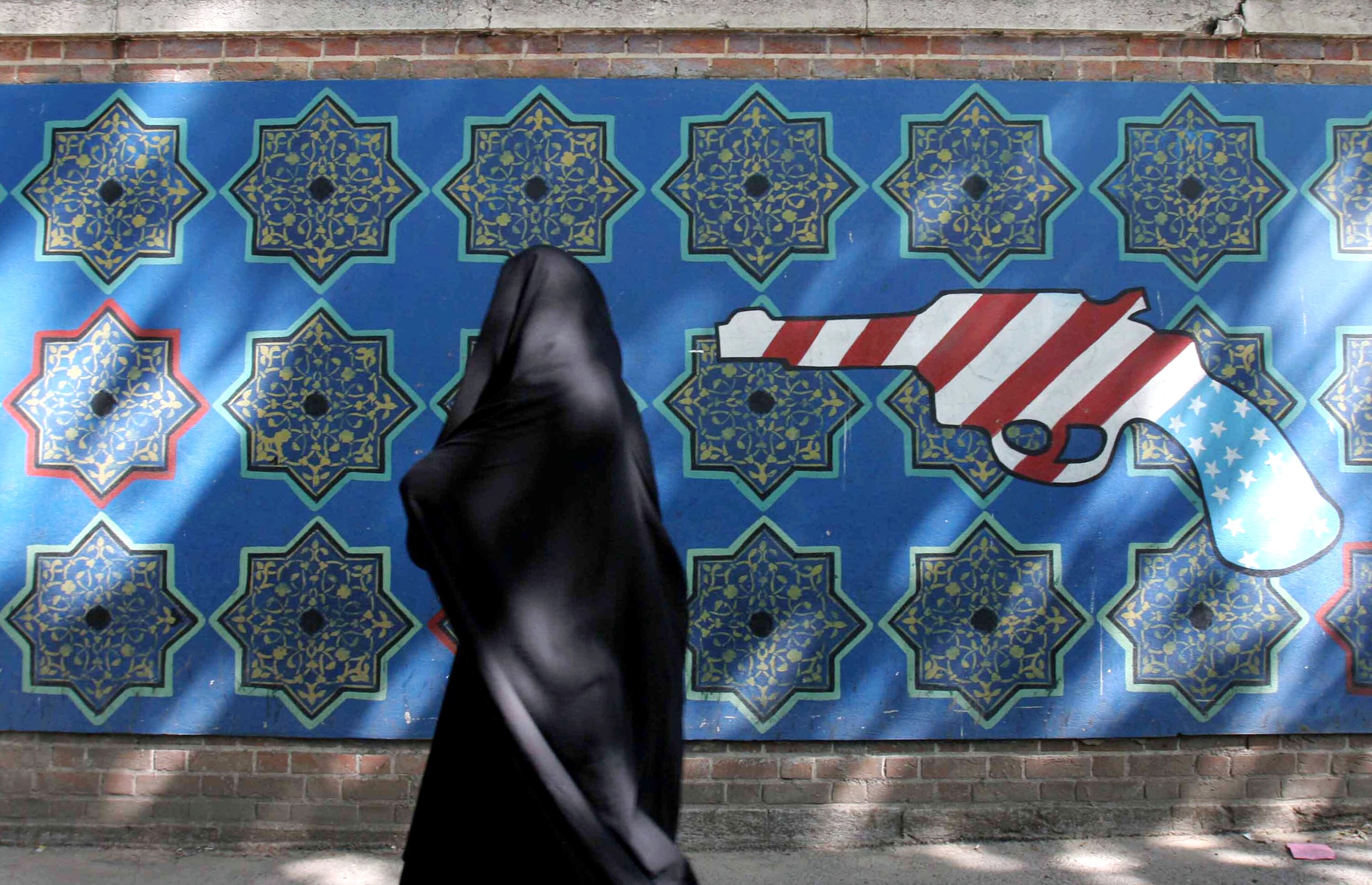
The first foreign policy crisis of Narendra Modi's second term as prime minister may be a war between two of India's friends, America and Iran. As Indians cast and counted their ballots, American and Iranian leaders beat their drums:
- May 8, 2019
On the first anniversary of America's withdrawal from the July 2015 Joint Comprehensive Plan of Action, Iran announced suspension of certain commitments under this nuclear deal. Iran said it would cease overseas sales of surplus enriched Uranium and heavy water, suspend redesign of the Arak heavy water facility, and might resume Uranium enrichment in 60 days if the signatories to the deal other than the U.S. (China, France, Germany, Russia, and the United Kingdom) failed to help Iran cope with American sanctions within that time frame The signatories reaffirmed their commitment to the deal but rejected the ultimatum.
- Also in May
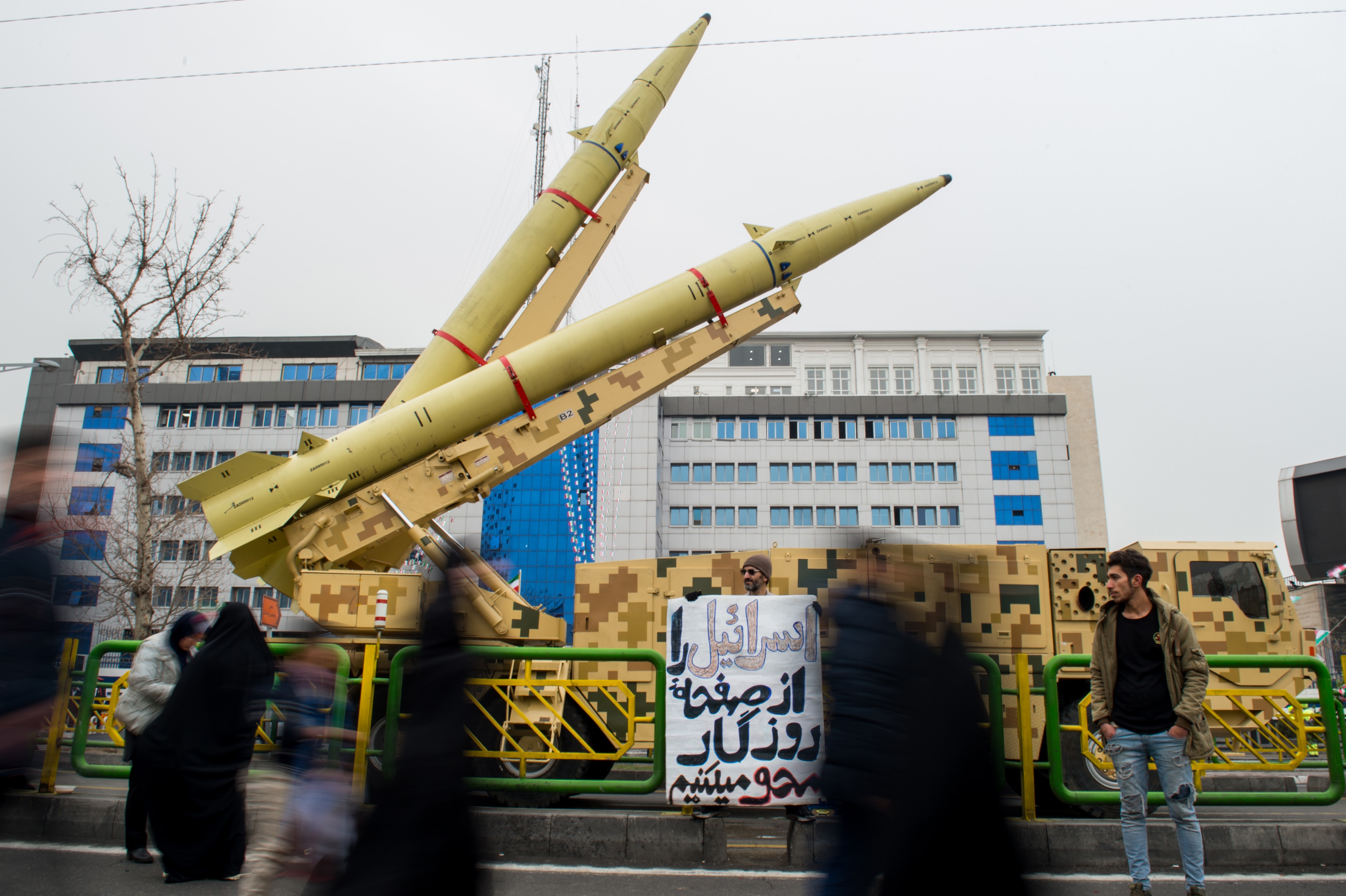
The U.S. accelerated deployments of bombers, Navy assets and missile defense systems, amidst accusations that Iran and its paramilitary and proxy forces threatened American personnel in Iraq and allies in Syria and Yemen.
- May 12
There were attacks on four oil cargo vessels with underwater limpet mines allegedly delivered by Iranian sea drones. These renewed fears of oil flow disruption through the Straits of Hormuz, a choke point through which 40 percent of the world's crude oil is shipped daily.
- May 14
There were seven aerial drone attacks on the East-West Saudi oil pipeline, for which Iranian-backed Houthi rebels in Yemen claimed responsibility. They sparked fears of disruptions in oil shipments from the Saudi Red Sea Port at Yanbu.
- May 19
A Katyusha was rocket fired, allegedly by Iran or its agents, at Baghdad's diplomatic Green Zone, putting U.S. personnel in peril.
- May 24
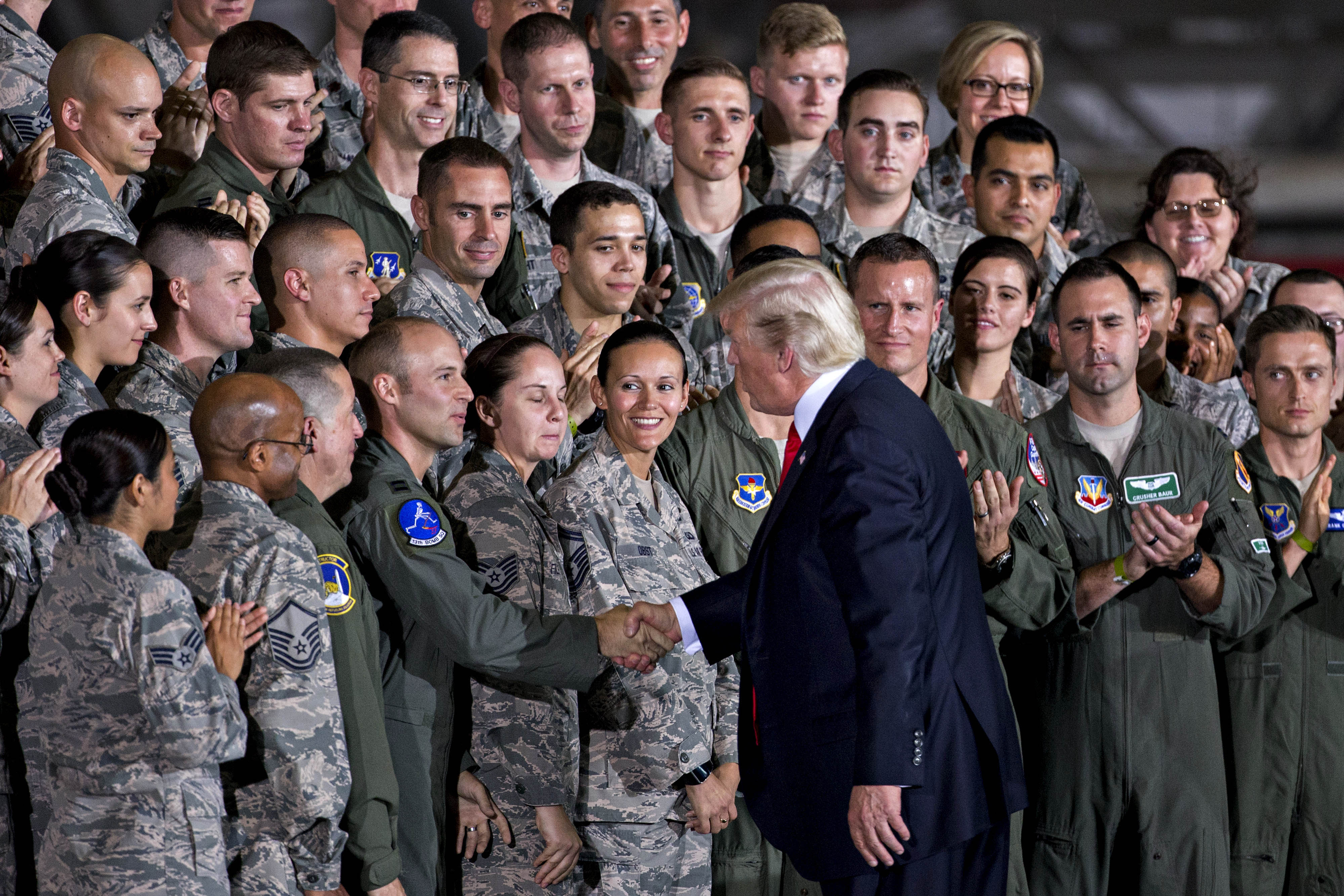
The U.S. sent a further 1,500 military personnel to the Persian Gulf, attributing the sea and air attacks to the Iranian Revolutionary Guard Corps and its proxies. President Donald Trump said it was “mostly in a protective capacity,” but added “we'll see what happens”.
- Also on May 24
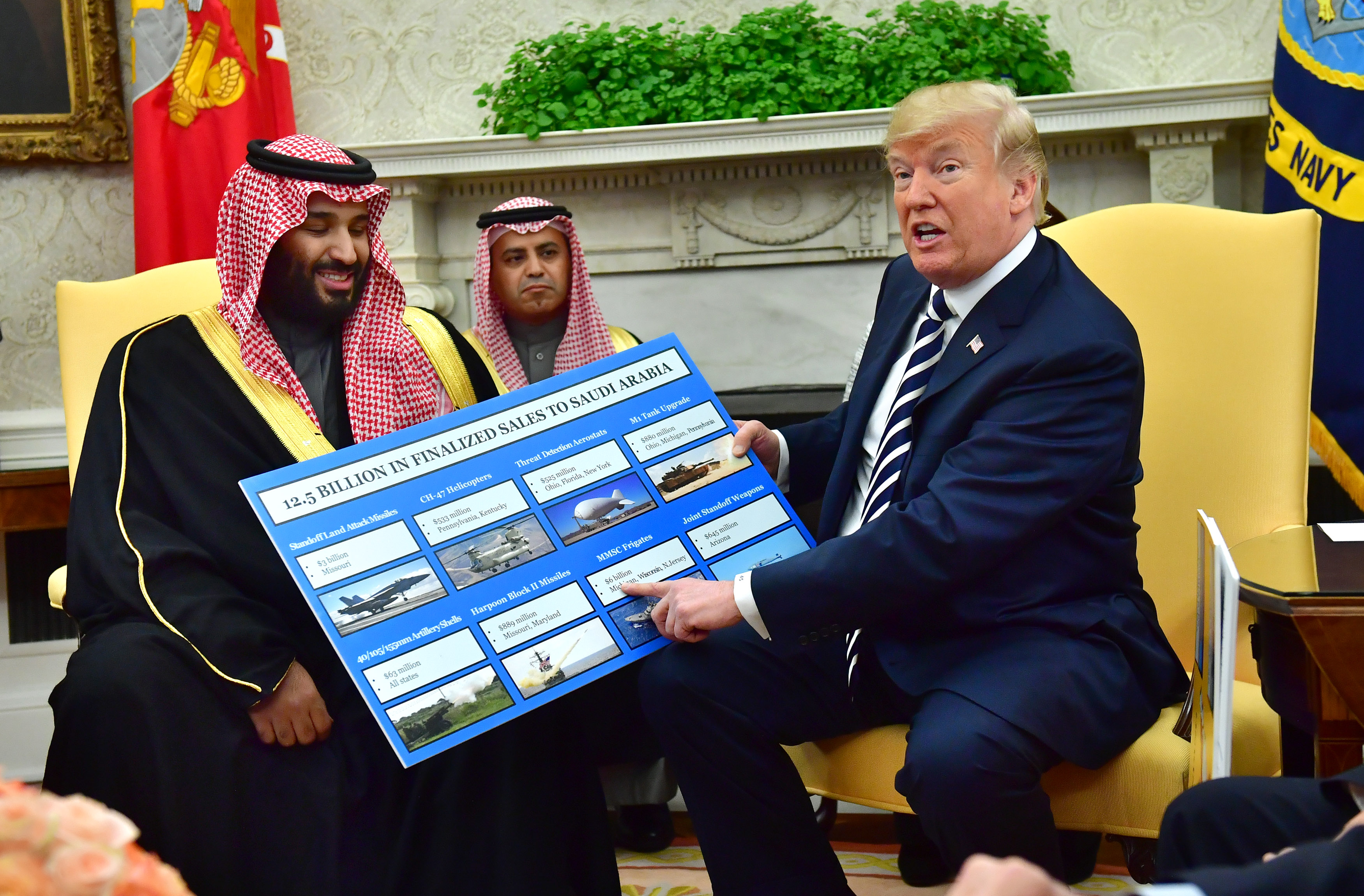
The Trump Administration bypassed Congress and invoked an ‘emergency' exception under the Arms Export Control Act, to approve 22 arms contracts totalling $8 billion, including offensive military equipment, to Iran's Arab rivals Saudi Arabia, the U.A.E., and Jordan.
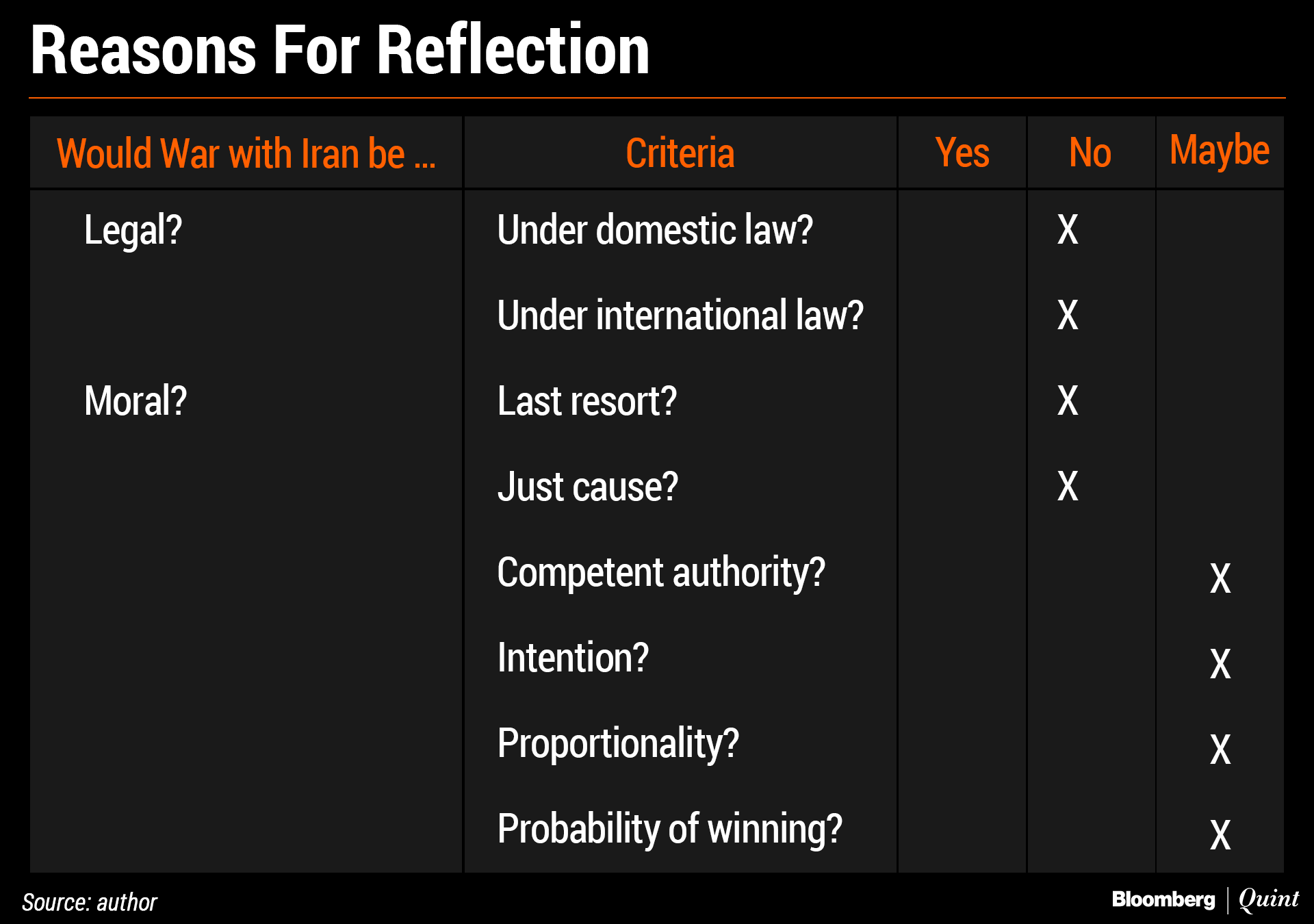
The argument that should rise above these drumbeats is that a war launched by the United States against Iran would be illegal and immoral. Here's why.
Illegality
The U.S. lacks the authority under domestic and international law to plunge into a third war in the Middle East in 18 years.
1. Domestic Law
Immediately after 9/11, Congress passed the Authorization for Use of Military Force. Section 2(a) of AUMF authorised the President “to use all necessary and appropriate force against those nations, organizations, or persons [i.e., so-called associated forces] he determines planned, authorized, committed, or aided the terrorist attacks that occurred on September 11, 2001, or harbored such organizations or persons, … to prevent any future acts of international terrorism against the United States by such nations, organizations or persons.”
Neither Iran nor indeed Shī‘ītes had anything to do with 9/11.
The 19 attackers on 9/11, all professedly Sunni, but all perverters of the true meaning of jihād (struggle) in the Sharī‘a (Islamic Law), were citizens of Saudi Arabia, the U.A.E., Egypt, and Lebanon.
As of May 2016, Presidents Barack Obama and George W. Bush had relied on the AUMF 37 times in 14 countries and in international waters to hunt so-called “associated” or “affiliated” forces. Critics charged those presidents with stretching the AUMF, but those stretches stayed within the bounds of fighting Al Qaeda.
Al Qaeda and Iran are foes on opposite sides of the 1,400 year old Sunni-Shī‘īte schism. Stretching the AUMF to hit Iran would snap it.
Likewise, no domestic legal authority exists for attacking Iran under the 2002 Authorization for Use of Military Force Against Iraq Resolution, where Congress authorised American action against the Saddam Hussein regime.
2. International Law
The best international legal argument for war is self-defense against “malign behavior” by Iran, to use a Trumpism. No prior approval is needed to launch a war against a prior attack. But, as U.S. Senator Angus King asked, “Who's provoking who[m]? Are they reacting because they are concerned about what we're doing, or are we reacting because we're concerned what they're doing?”
Pre-emptive self-defense is the second-best argument, i.e., protection that is both necessary and proportional against an imminent Iranian terrorist attack. That is the same parlous argument used to justify America's March 2003 Iraq invasion. Most of the world disagreed.
The third-best international legal argument is frivolous. The U.S. could invoke Article 39 of the U.N. Charter, contending, as it did for Iraq, that Security Council resolutions declare Iran to be in material breach of its international legal obligations, notably, the JCPOA. Yet, the facts don't support that contention. IAEA inspectors have testified to Iran's compliance with the nuclear deal, whereas America quit the deal.
America must point to a Security Council Resolution holding Iran in material breach of its treaty obligations, with language therein permitting violence against Iran. The Security Council has made no such determination, nor likely will it.
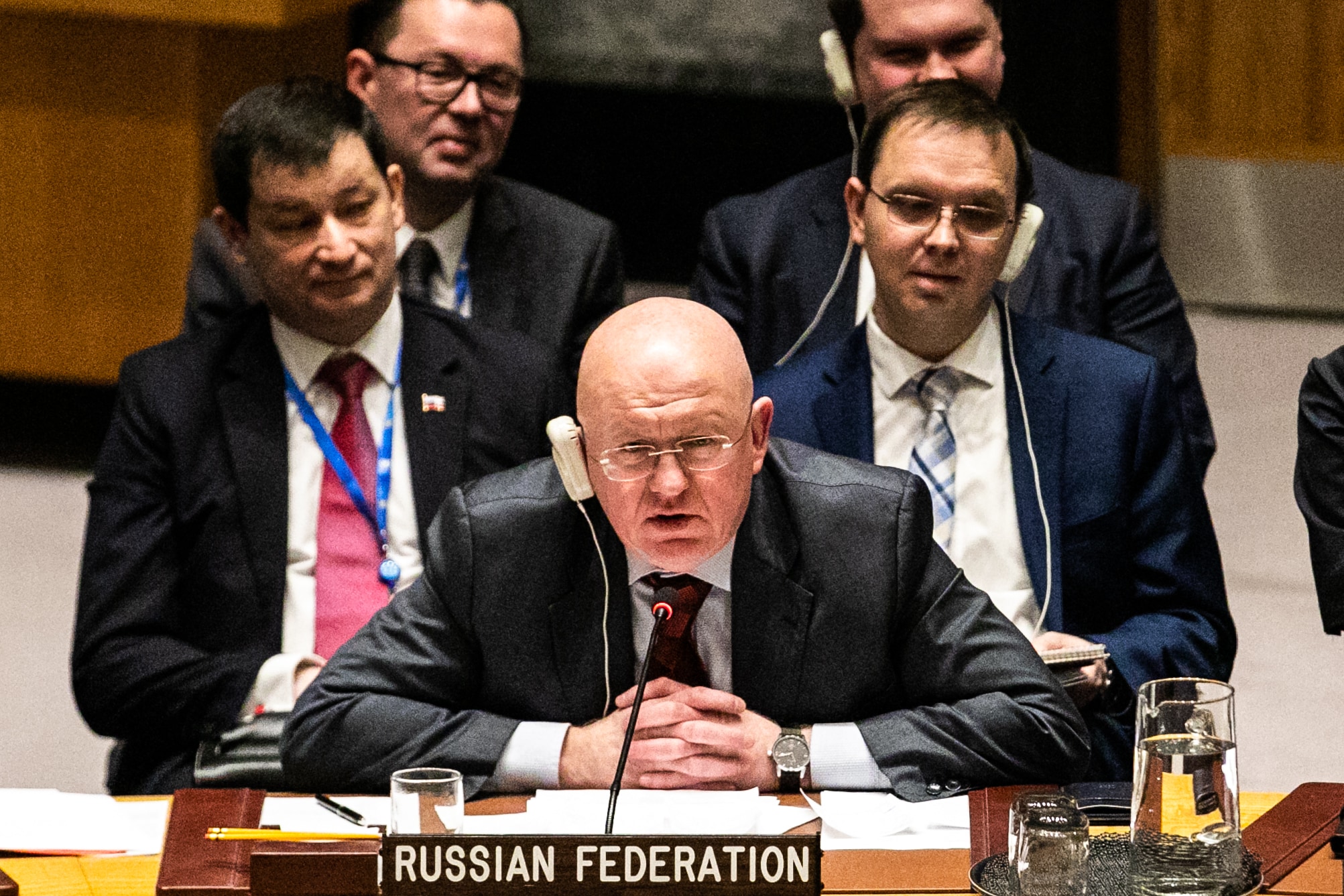
Russia is on Iran's side in supporting the Assad regime in Syria and will veto any allowance of U.S. action against Iran. China, ever eager to counter multilateral condemnation of its repression of Tibetan Buddhists with the claim foreigners meddle in its internal affairs, would cast a veto too.
Immorality
Just War Theory provides the most widely accepted metrics for the morality of war. Six criteria must be met to judge war as “moral.” As to violence against Iran, America fulfils none of them.
1. Last Resort
War with Iran is not a last resort, because America has not exhausted all non-violent measures. To the contrary, after withdrawing from the nuclear deal, it progressively strengthened its unilateral sanctions against Iran, applying them extra-territorially to virtually all dollar-denominated goods and services transactions with Iran. In May 2019, seeking to drive Iranian energy exports to zero, it ended its six-month waivers for India and seven other countries.
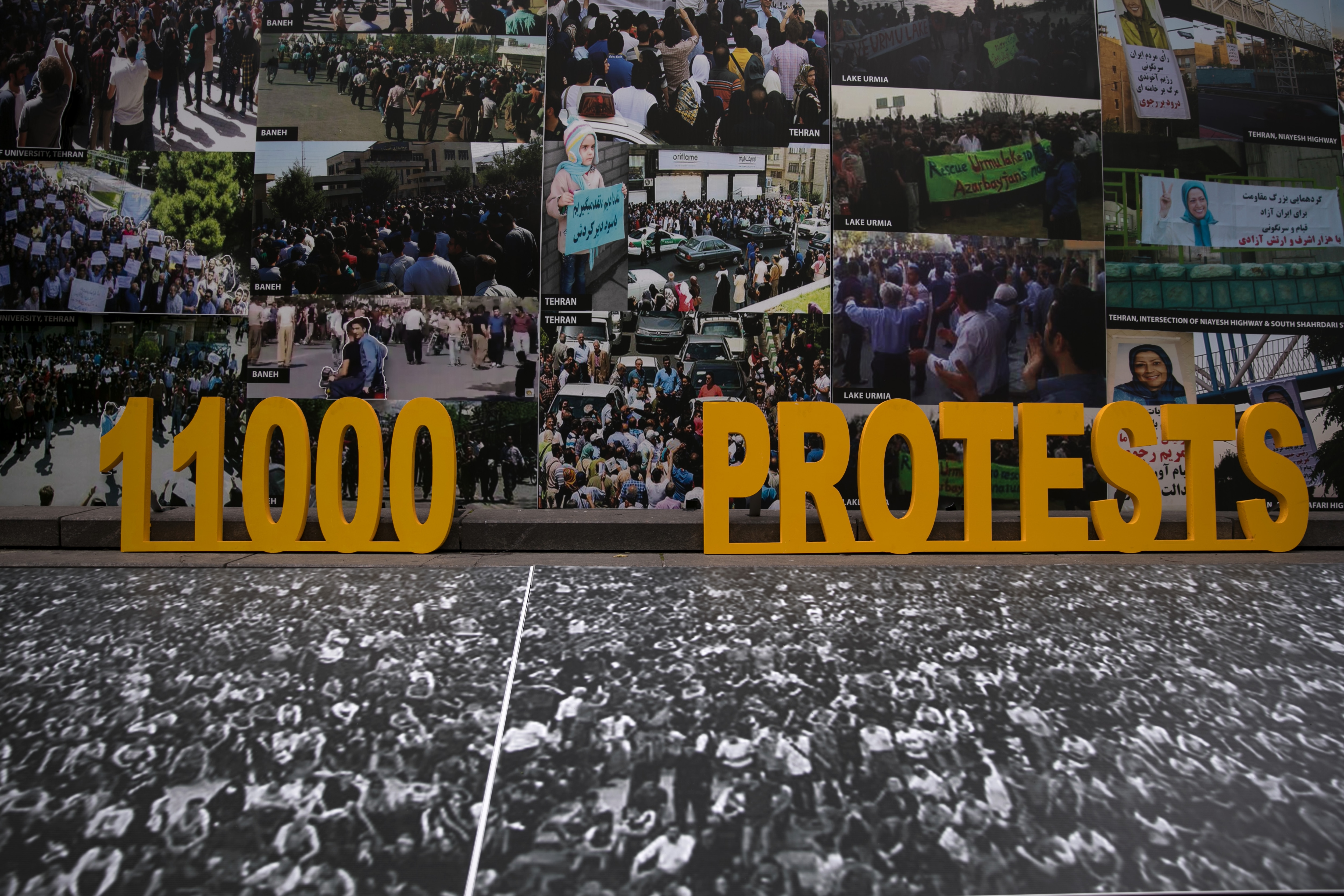
Tougher sanctions are designed to wreck Iran's economy, once again. Based on Iran's GDP and inflation forecasts, sky-high unemployment and street protests, they're working.
With time, internal resentment against Iran's aging, repressive theocracy is sure to increase.
2. Just Cause
America has not articulated a just cause. The U.S. rightly complains about Iran's malevolence in Iraq, Syria, and Lebanon, and its threats to Israel from Iran's proxy in Lebanon, Hezbollah. But war is just only when correcting a serious wrong, which means there must be proof Iran is blameworthy.
The evidentiary burden should be high, especially given the U.S.' record the last time it presented this kind of case to the Security Council... Iraq. The classic criminal law standard should be used, “beyond a reasonable doubt,” because at issue is triggering the overwhelming, irreversible, coercive force of a government against a relatively weaker target.
Moreover, the justness of any cause for violence ought not to be adulterated by sinister motives of allies. One of the Iraq resolution justifications was Saudi Arabia despised Hussein and wanted him out of power.
The House of Saud hates Iran's current rulers and wants the U.S. to shed American blood to kill its Persian neighbours, as it did 15 years earlier to get rid of its Iraqi Arab rival.
That's an unjust choice for America to make, regardless of how much more oil the Kingdom pumps to stabilise world energy markets. War is not just when the cause is a small guy subcontracting his fantasy hits to a bully.
3. Competent Authority
For two reasons, it's dubious whether the U.S. satisfies the competent authority criterion. Just War Theory demands the officials responsible for launching a war be legitimate public decision-makers who allow for debate.
First, authorities should act as thought leaders to help the public learn from history to avoid scripting a new history that turns into a march of folly.
Shamefully, there has been no national debate on whether to go to war with Iran.
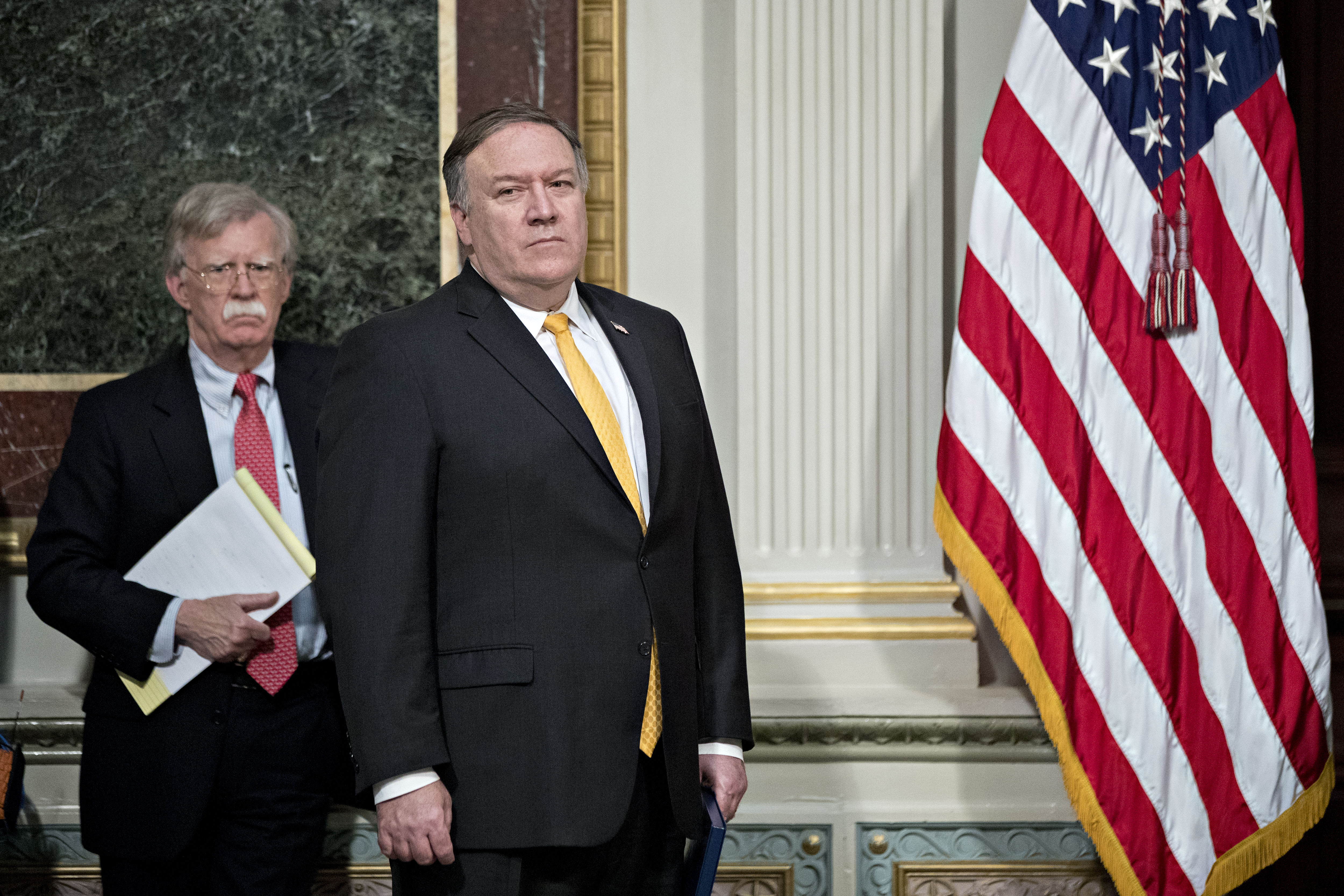
Second, authorities should indeed be competent. Whether key decision makers on Iran are competent is questionable. U.S. Secretary of State Mike Pompeo behaves like a Secretary of War. He's never spoken directly with his Iranian counterpart, Foreign Minister Mohammad Javad Zarif. Tweeting in February 2019, Pompeo called him and Iran's President, Hassan Rouhani, “front men for a corrupt religious mafia.”
We note @JZarif's resignation. We'll see if it sticks. Either way, he and @HassanRouhani are just front men for a corrupt religious mafia. We know @khamenei_ir makes all final decisions. Our policy is unchanged—the regime must behave like a normal country and respect its people.
Zarif – whose relationship with President Barack Obama's Secretary of State John Kerry was constructive – replied that averting a crisis was unlikely.
Pompeo makes sure that every time he talks about Iran, he insults me. Why should I even answer his phone call?Javad Zarif, in an interview with ReutersZarif and Kerry had defused a potential casus bello (occasion for war) in 2016 when U.S. sailors strayed into Iranian waters.
Worse yet, undignified sarcasm flows effortlessly from the mouth of an un-elected official in a powerful position on which the lives of American soldiers depend for objectivity: John Bolton. This National Security Adviser seethes with hatred for Iran, intoning, on May 29, with respect to the oil tanker attacks, of May 12:
There's no doubt in anybody's mind in Washington who's responsible for this. Who else would you think is doing it? Someone from Nepal?John Bolton, U.S. National Security AdviserChalking out hawkish positions is part of a healthy policy debate, but unseemly rhetoric undermines their moral authority and reveals the intransigence on which they are based.
Also Read: What America Can Learn From India About Iran
4. Intention
What is the intention in plunging America into war with Iran? Is America's purpose regime change, meaning Iran's theocrats themselves embody the serious wrong and must be removed? That's what Bolton said in July 2017, months before becoming NSC chief, at a ‘Free Iran' rally in Paris: “the declared policy of the United States should be the overthrow of the mullahs' regime in Tehran.”
If so, then what is America's intent after it militarily defeats the Iranian Revolutionary Guard Corps?Having labelled the IRGC a Foreign Terrorist Organization on April 8, 2019 – the first time the U.S. designated the military of a sovereign nation a terrorist group – the U.S. cornered itself into potentially making the same mistake the Coalition Provisional Authority in Iraq did in May 2003, when it banned Saddam's Ba'ath Party and disbanded his defeated army. Demoralised and unpaid, the party members and soldiers were fertile recruits for Al Qaeda and ISIS, inflicting brutalities on their own civilians and American soldiers. What becomes of the IRGC and occupying the American force?
Or, is the serious wrong that America intends to correct not Iran's theocracy per se, but its discretionary behaviour, as Pompeo suggested on April 22, 2019? If so, then what are the terms of a peace deal America intends for Iran? On what points is America flexible, so as to avert war?
Look for no clarity on intention from where it is most needed, America's Commander in Chief.
We're not looking for regime change. I want to make that clear.Donald Trump, on May 27But just a week earlier...
If Iran wants to fight, that will be the official end of Iran. Never threaten the United States again!
Different positions on the same topic undermines trust in the intention to right a serious wrong.
5. Proportionality
The fog enveloping America's intention for war obscures the ability of the U.S. to satisfy the fifth Just War criteria – proportionality. The Theory asks that the expected benefits of any conflict must at least offset any harm. For two reasons, the costs may exceed the benefits.
- First, conflict with Iran may undermine whatever stability the U.S. helped to bring about or seeks around and within Iraq.
Iraq's two closest allies are America and Iran. 64-69 percent of Iraqis are Shī‘a. Stability in Iraq depends on calmness along its border with Iran. It's a mistake to think American forces chasing the IRGC and its proxies across that border will mitigate conflict, just as it was when America bombed Laos and raided Cambodia thinking it would cut off supplies to the Viet Cong along the Ho Chi Minh Trail.
Trashing the integrity of the Iraq-Iran border may strew conflict that neither American nor Iraqi security forces may be able to contain, any more than Americans and their South Vietnamese allies could half a century ago.
- Second, stability in Iraq requires warm ecumenical relations between Sunni and Shī‘a within Iraq.
It's a mistake to think Iraqi Shī‘a are pro-Tehran, just as it's farcical to suggest India's Muslims are pro-Islamabad. Sadly, crises beget those mistakes. If the U.S. attacks Iran, can American and Iraqi security forces contain violence meted out against Sunnis on Shī‘a who falsely accuse them of supporting Iran?
Avoiding religious communalism helps explain why thousands of Iraqis peacefully protested on May 24 in Baghdad and Basra. They urged Iraq to stay out of any U.S.-Iran war. “No to war, yes to Iraq,” were the chants of the supporters of Muqtada al-Sadr, the one-time Shī‘a militia leader who opposes U.S. and Iranian influence, and whose nationalist platform won his party the largest block of seats in Iraq's 2018 parliamentary elections.
6. Probability of Winning
Indubitably, in a direct military conflict with the U.S., Iran will suffer a defeat the likes of which Persian civilisation has not seen since the 331 B.C. Battle of Gaugamela (Arbela), when Alexander the Great's Hellenic League defeated the larger forces of Darius III Achaemenid Empire.
But, America's victory – to use Shakespeare's Sonnet 2 metaphor – “will be a tattered weed, of small worth held.”Contemporaneously with America's ‘win', the U.S. may suffer four losses:
- Creating new and catalysing existing enemies worldwide, as it did after the Second Gulf War;
- Bolstering the narrative its conflicts are a War on Islam, as it will have attacked Islam's two great denominations, Sunnite and Shī‘īte;
- Draining itself from its more important confrontation with China in the South China Sea and Formosa Strait; and
- Distracting itself from one war it cannot afford to lose, climate change.
The “small worth” of victory may be the “tattered weeds” – human costs – that spread across the homeland.
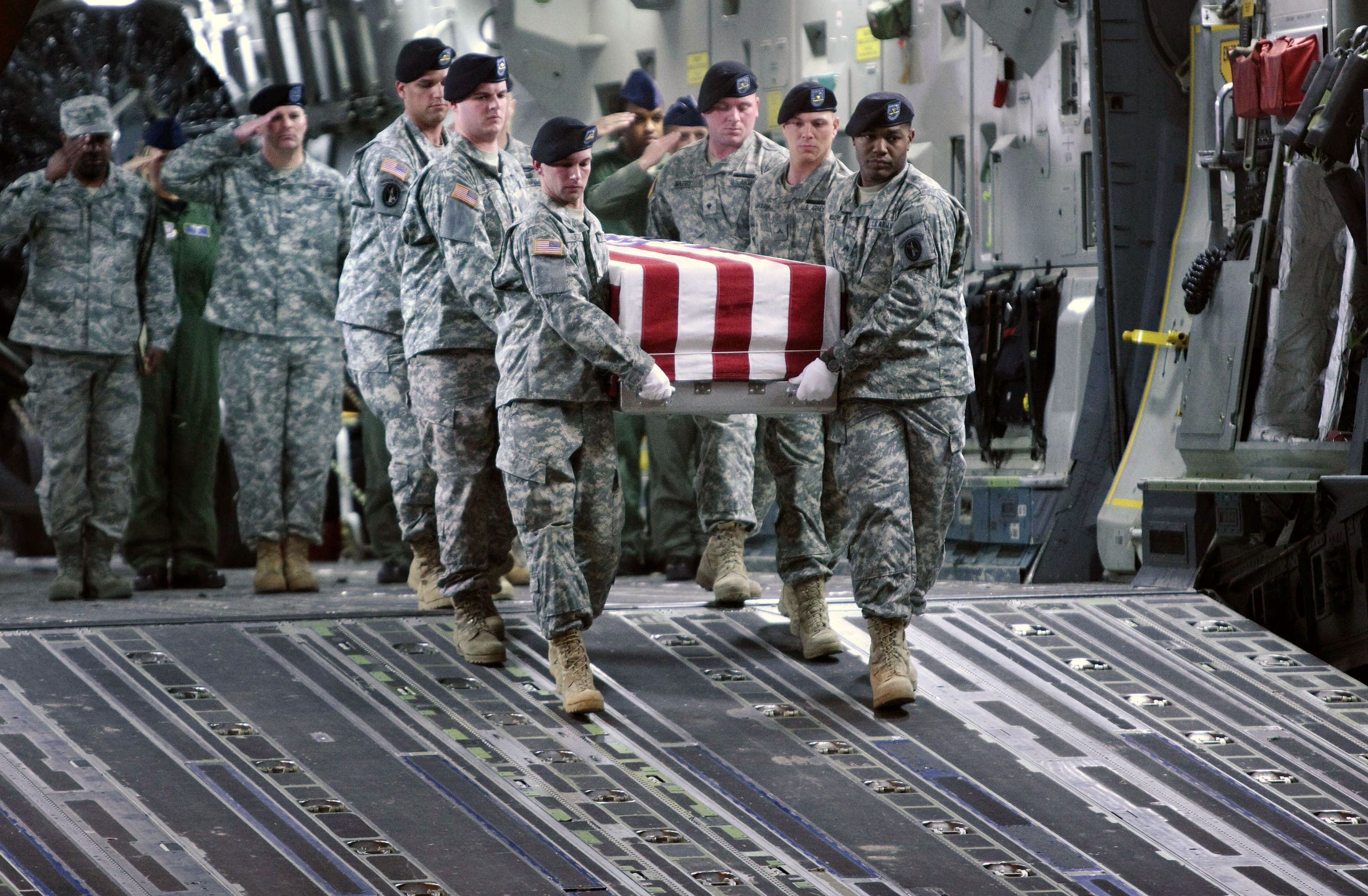
America's endless conflicts since 9/11 have left combat veterans suffering Post-Traumatic Stress Disorder, diminished sensory perception, and lost limbs, and suffering again through an over-crowded, under-funded health care system. Their families cope with suicide: 20 per day among veterans, based on data from 2001 to 2014; and about one per day among active duty personnel (in 2018). The military copes to replace these noble veterans, sometimes, it is whispered, through recruitment efforts among teenagers of single parents in poor and lower-middle class minority communities susceptible (given skyrocketing U.S. college costs) to pledges of tuition assistance.
PM Modi's Choice
India's Prime Minister Narendra Modi is in the rare position of holding the trust of America as well as Iran. Appreciating the illegality and immorality of conflict, his choice is to offer his good offices for India's two friends to re-engage with one another.
Raj Bhala is the inaugural Brenneisen Distinguished Professor, The University of Kansas, School of Law, and Senior Advisor to Dentons U.S. LLP. The views expressed here are his and do not necessarily represent the views of the State of Kansas or University, or Dentons or any of its clients, and do not constitute legal advice.
The views expressed here are those of the author, and do not necessarily represent the views of BloombergQuint or its Editorial team.
Essential Business Intelligence, Continuous LIVE TV, Sharp Market Insights, Practical Personal Finance Advice and Latest Stories — On NDTV Profit.