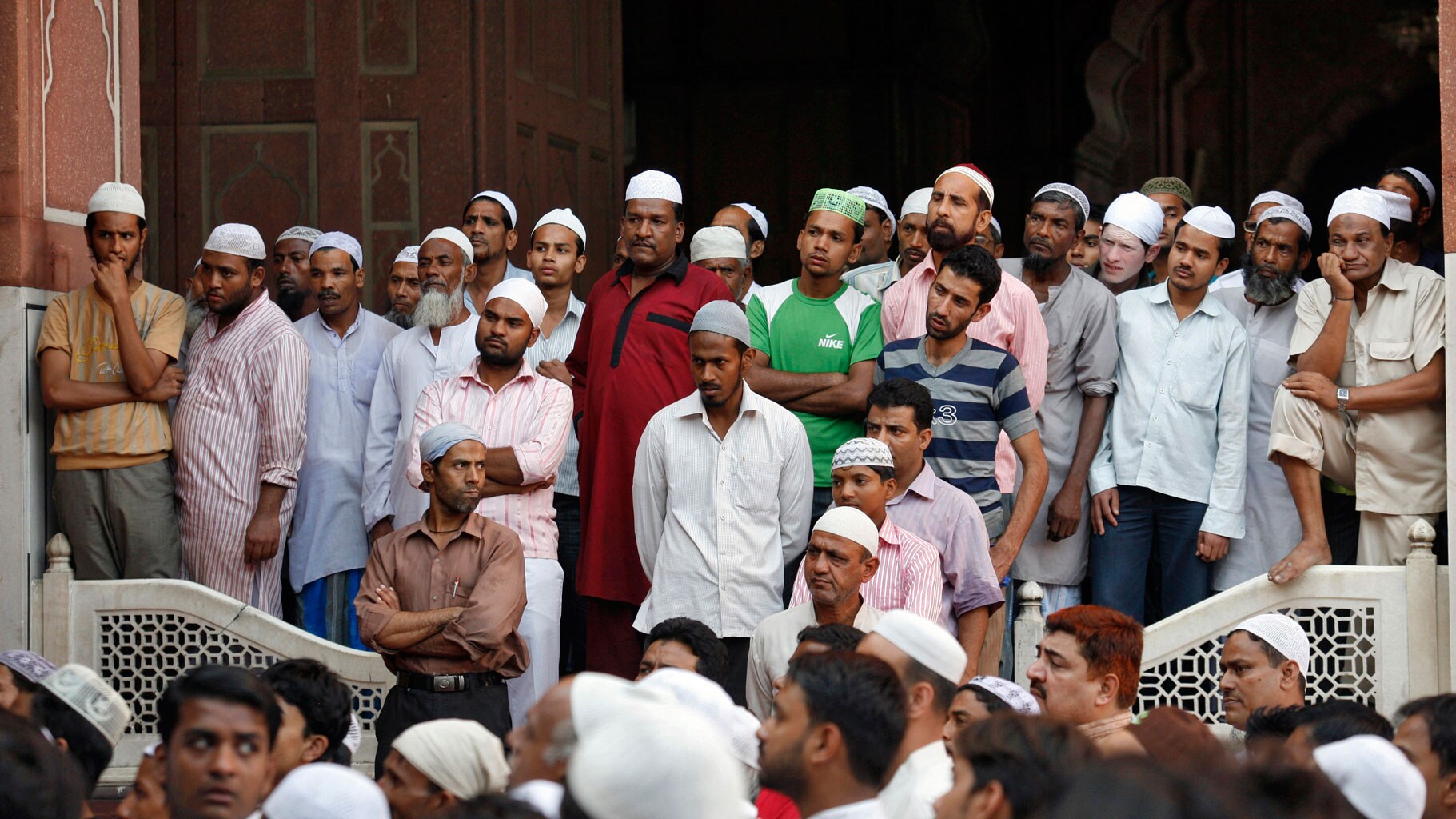
Indicating the need for wider consultation before taking a call on a uniform civil code, the government on Friday, asked the Law Commission to examine the issue.
In July 2015, Nistha Gautam had written for The Quint about how the code will simplify justice delivery.
Rise Above Petty Politics
- Uniform Civil Code has the ability to simplify the justice delivery mechanism
- Judiciary's reiteration speaks about its commitment for the UCC, political class has chosen to dither so far
- Debate on UCC reduced to political slugfest though it has potential of bringing gender equality
- In midst of contentious issues such as Ram Mandir & Article 370, UCC is reduced to a political tool
On September 27, 1951, BRAmbedkar resigned from government as an act of protest against what heperceived as Prime Minister Jawaharlal Nehru's inertia on the Hindu Code Bill. The billaimed at social reform which Ambedkar saw as the greatest responsibility of thelawmakers of an independent India. An astute advocate of uniformity in civillaw, he had been provoking extreme reactions from not only the religion basedbodies like the Hindu Mahasabha, RSS and Muslim members but also the Congressstalwarts. The Hindu personal Law was the first to get codified in an attemptto achieve uniform civil code for the citizens of a new born democracy.
Six decades hence, theendeavours “to secure for the citizens a uniform civil code throughout theterritory of India” are still afoot meeting similar kind of socio-political resistance.The debate has merely shifted in spatio-temporal and technological terms fromthe Constituent Assembly to the Parliament as well as social media.
In acharming turn of history, Bhartiya Janta Party- progeny of the same Jan Sanghthat fulminated against the Hindu Code bills- has espoused the cause of UniformCivil Code while Congress decries it now. It is the judiciary that has remainedunequivocal in its commitment towards this goal and the recent Supreme Courtruling in favour of an unwed Christian mother demonstrates it.
UCC A Binding Force
Over the past few years, INChas repeatedly accused the BJP of using Uniform Civil Code as a tool to bolsterits rally towards Hindutva majoritarianism. With the resounding success of BJPin 2014 polls, this view seems to be gaining currency among sceptics andfence-sitters. At the same time, BJP supporters have begun to flash UCC as the righteousmeans of ‘sorting out' the privileged minorities. The debate has sadly beenreduced to being a spectacle of jubilant chest-thumping and mournfulchest-beating in the political arena while the integrating and empoweringaspects of UCC languish in the background.
As conceptualised by Ambedkar,the UCC, in principle, aims at stratifying a set of gender-neutral laws whereinno individual is denied of his/her fundamental rights in the name of religiousdiktats. In a culturally diverse country like India, caste and religiouscouncils wield enormous powers over the lives of individuals and often their decreesoverride the constitutional mandates. The UCC also seeks to simplify theprocess of delivering justice by establishing common reference points for allthe citizens.
Reinforcing Equal Status of Women
Resistance to UCC, fromHindus earlier and now mostly Muslims, is entrenched in the idea of treatingfamily as a sacrosanct institution, precluding any scope for reforms in itsinternal transactions. In most communities, unfortunately, it is the women ofthe family who are often short-changed when it comes to basic rights.
.jpeg "(Photo: Reuters)")
As manylegal experts, women's rights groups and social commentators have noticed, UCCis one of the ways of reinforcing equal status of women that our constitutiongrants them. However, any law is only as good as its implementation. Forinstance, Goa has a common family law and yet its gender balanced natureremains a matter of theory and not praxis.
Is the Government Serious?
Can reforms in the existingpersonal laws for different communities, coupled with the existing provisionsin the Special Marriages Act, 1954 and Indian Succession Act, 1925, become thereconciliatory ground? Perhaps yes, albeit such a scenario does nothing to helpan overburdened judiciary of this country.
.jpeg "(Photo: Reuters)")
If the government is seriousabout the empowering aspects of the UCC, it is imperative that the minorityscepticism is assuaged. Clubbed together with contentious issues like RamMandir and abrogation of Article 370, and in the absence of a draft, the UCCmerely becomes another road-roller fantasy for the Hindus and nightmare for theminorities, especially Muslims.
Yet, in all likelihood, theminorities will embrace a just UCC. Is the government willing to offer themthat? Prime Minister Narendra Modi had categorically remarked before assumingoffice that the UCC is not a Hindu code. Let a sensitively conceptualised draftreflect the same.
(The writer isAssociate Fellow ,Gender Studies, at the Observer Research Foundation)
Essential Business Intelligence, Continuous LIVE TV, Sharp Market Insights, Practical Personal Finance Advice and Latest Stories — On NDTV Profit.