Indicating the need for wider consultation before taking a call on a uniform civil code, the government on Friday, asked the Law Commission to examine the issue.
In October 2015, Professor Zoya Hasan had written for The Quint about how the issue hinges on gender equality.

Why the Delay?
- In its recent judgment on unwed mothers, the Supreme Court has hinted towards the Uniform Civil Code once again
- UCC among electoral promises of BJP in 1998, party used it to embarrass the Congress which was reluctant
- UCC issue largely ignores the issue of equality
- Proposals given by various women's groups to widen the ambit of gender justice
In a recent judgment the Supreme Court decided that an unwed Christian mother, who had challenged a Delhi High Court order directing her to reveal the name of the child's father when she sought guardianship, can be the sole guardian. While ruling in her favour, the court made an observation in favour of the need to implement a Uniform Civil Code (UCC). This has once again focused political attention on the UCC.
There is agreement that religious personal laws are discriminatory towards women and must therefore change. There are, however, disagreements over the means to achieve this objective, whether through a state-sponsored civil code or community-based internal reform. There is also disagreement whether such a code would be a UCC or a gender-just common civil code.
Fear Among Minorities
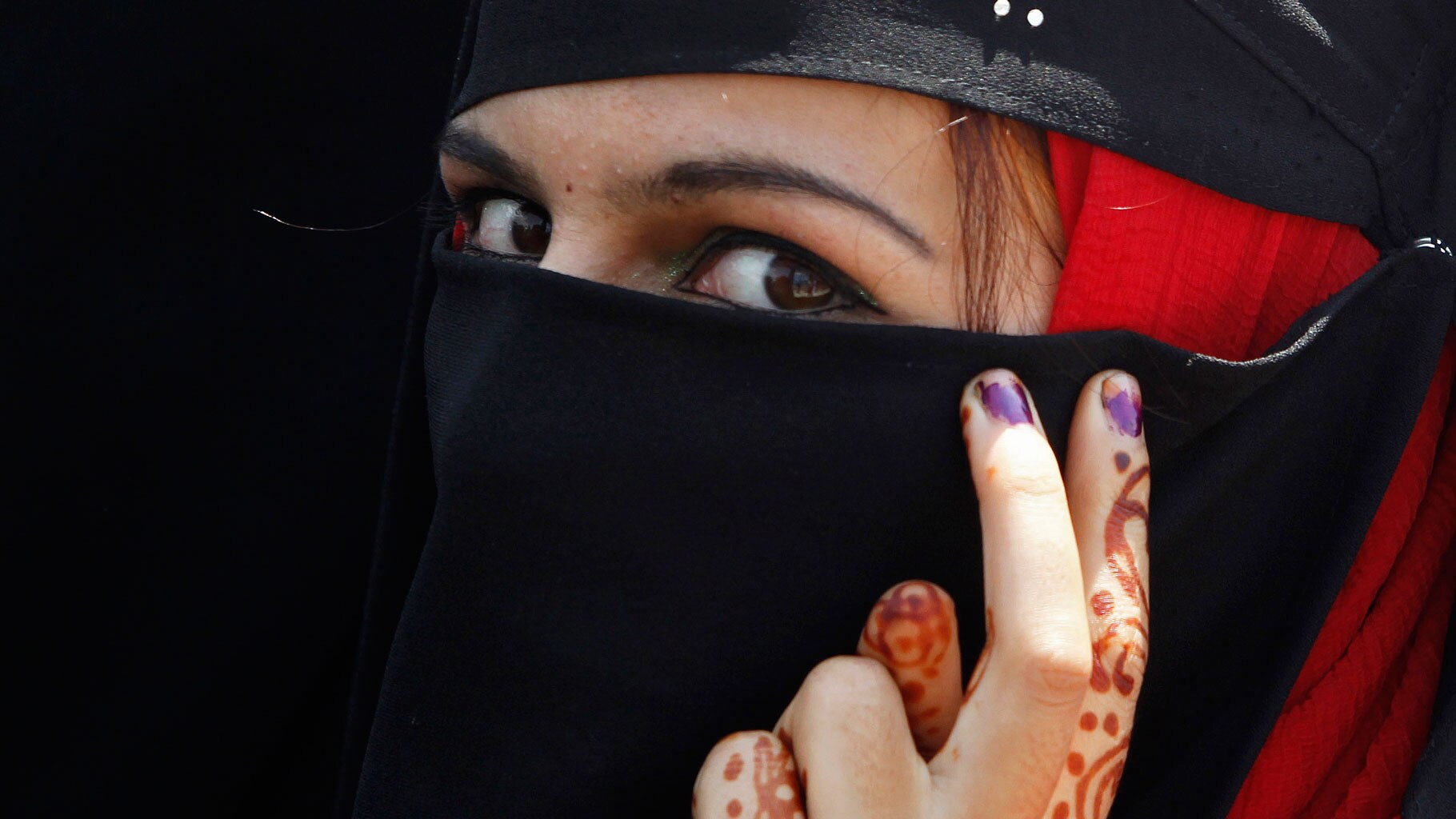
The Sangh Parivar isthe strongest advocate of a UCC while Muslim conservatives are among itsstrongest opponents. After the Shah Bano controversy resulted in the 1986Muslim Women's (Protection of Rights on Divorce) Act, 1986, which denieddivorced Muslim women the same rights to maintenance as other Indian womenunder the Criminal Procedure Code, Hindu organisations stepped up theiradvocacy of uniform laws, primarily as a means of eradicating the ‘privileges'of minority men.
In 1998, the BJP promisedto institute a UCC if it came to power. Until then, the party had raised the UCC issue principally to embarrass the Congress which was reluctant tochange the status quo in the face of Muslim opposition to it. To its way ofthinking, leaving Muslim personal law untouched implies unequal andasymmetrical treatment. This asymmetry has formed the basis for the charge thatsecularism, especially secular practice, implies pandering to Muslims forelectoral gains. The Muslim leadership, on the other hand, fears that such lawswould inevitably lead to uniform cultural practices and alien customs beingfoisted upon them.
.jpeg "(Photo: Reuters)")
Political Muddle
Over the last threedecades, the UCC has run into considerable opposition resulting in most politicalparties and women's organisations distancing themselves from it.
The decisive shiftoccurred in the wake of the Ayodhya conflict and the dramatic growth of Hindunationalism which increased Muslim fears of the imposition of a ‘Hindu' code.This led to the move away from the long term goal of homogenisation of familylaw to the reform of group specific personal laws. The strategic change fromdemanding a UCC to personal law reform was particularly significant for women'sorganisations as they were wary that the BJP's real interest is in imposing aHindu code.
Aware that legalchange cannot be isolated from wider political conflicts, women's groups hadpressed for greater advances in women's rights. Earlier they believed that UCCwas the optimal path to women's empowerment in family law, now they support amore nuanced position which combines the options of reform from within personallaws with the formulation of gender-just laws deriving from the concept of acommon civil code.
.jpeg "(Photo: Reuters)")
Widening UCC's Ambit
From the outset, theproblem with the UCC debate was its gratuitous emphasis on uniformity whichfound its reflection in terming it a UCC. The UCC issue has largely ignored matters related to equality and revolved around uniformity of civil codes thought to beessential for national integrity, while plural systems of law undermine it.
Hindu nationalists underpinned their calls for a UCC with criticisms ofgender-unequal features of Muslim personal law, but not similar infirmities inHindu law. But despite considerable disparagement of secular parties foropposing a UCC, the BJP did not devise proposals to advance this project whenit was in power in a coalition from 1998 to 2004. It remains to be seen whetherthe Modi government with a majority in the Lok Sabha can go beyond the rhetoricof reviling Muslims for their refusal to embrace a UCC.
.jpeg "(Photo: Reuters)")
A number of proposalshave been mooted by women's groups to enlarge the scope of gender justice ongrounds of equality. One is to devise secular laws and encourage people to optfor them. Such an idea was advanced as early as 1945 when it was suggestedthat the UCC be made optional. India already has optional civil code in theform of the Special Marriages Act, 1954. This Act read with other similar Actssuch as the Indian Succession Act, 1925, provides a legal framework for mattersconcerning marriage, divorce, maintenance and succession for those who wish toavoid religion-based laws.
However, successive governments failed to create themachinery for implementing an optional code. Had they done so, it may well haveexpanded the ground of secular laws, besides building up pressure for reform ofcommunity laws. Such options would result in the regime of personal lawsbecoming voluntary.
(The writer,formerly Professor of Political Science at the Jawaharlal Nehru University, iscurrently National Fellow, Indian Council of Social Science Research)
Here's Nishtha Gautam's Counter-view on the same topic
Uniform Civil Code will Simplify Principles of Justice
Essential Business Intelligence, Continuous LIVE TV, Sharp Market Insights, Practical Personal Finance Advice and Latest Stories — On NDTV Profit.