India's juvenile ‘warrior anchors' (strange, isn't it, how the second word rhymes with ‘jokers') on television were ready with their blood sport in the late evening hours on Wednesday, March 13: “By midnight, China must call out Masood Azhar and his terror handlers in Pakistan; else, China will face India's/world's wrath.”
Yet, one hour before midnight, China cocked a snook at our tele-warriors, slapping a fourth veto at the United Nations Security Council against India's demand. Our jilted trolls'/anchors' riposte was characteristically vengeful and shrill: “Boycott Chinese goods; launch another surgical strike: kill Wuhan Spirit; roll out MIG Bisons from the hangars”. But these electronic bullies failed to provoke their ‘beloved' Modi government, which de-escalated its reaction to a simple “disappointment”, without naming China.

India Should Now Learn How China De-Hyphenated Taiwan
In the late 1940s, India and China won independence from imperial rule. While the trajectories of their respective freedom movements were quite different, there was one remarkable similarity. Both broke up into two enemy nations apiece, China-Taiwan and India-Pakistan. For seven decades now, these pairs of estranged siblings have stayed implacable foes.
Also Read | Layoffs Are Rising In Tech, But These Skills Are Helping People Unlock Better Pay
But as China closed in on Superpower status, it de-hyphenated from Taiwan without lessening its hostility.
China is now America's global rival, not Taiwan's principal adversary.
Unfortunately, India has remained fixated on Pakistan, even as our economic heft has multiplied manifold. Yet we continue to invest almost all our diplomatic capital in an India-Pakistan binary. This must change. A country's standing in world affairs is defined by who its primary competitors are. India must raise its gaze from Pakistan, without lessening its chokehold, yet diminishing the high-pitched/overt importance we give it in our foreign policy narrative. Let's keep a hard thumb on their trachea, but not allow them to unsettle us in full global glare.
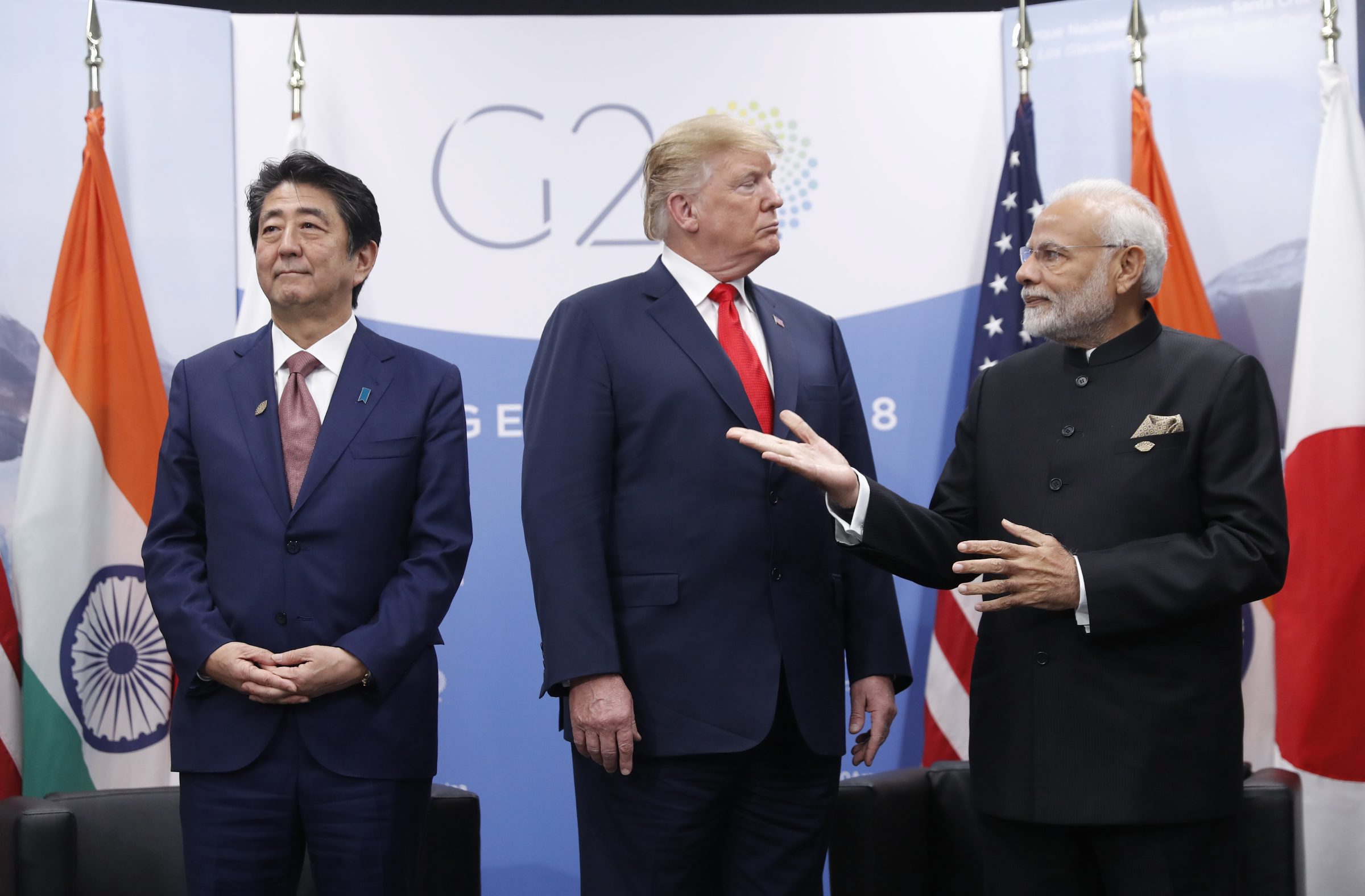
It's time to move out of the emotional ravines of history—i.e., avoid getting trapped in the Pakistan crossfire—and give primacy to China, along with America and Japan, in our foreign policy exertions.
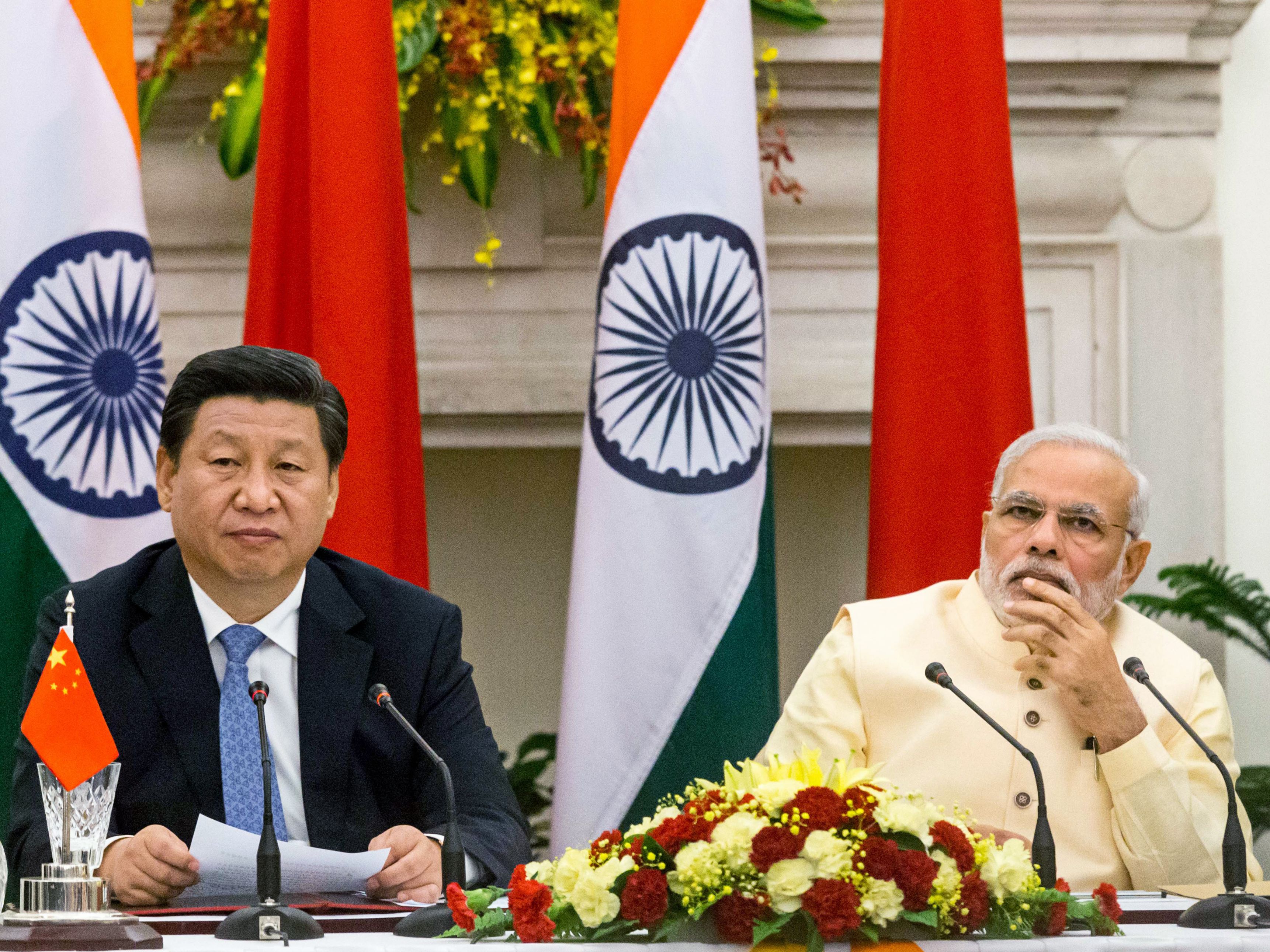
For all our economic engagement, there is surprisingly little contact between ordinary Chinese and Indian citizens. Our populations remain deeply suspicious of one another, locked into media-fuelled stereotypes; according to a 2016 Pew Survey, only 26 percent of Chinese expressed a favourable view of India—down seven points from 2006—with more than 60 percent holding a negative view. ‘There's a perception among Chinese that India is dirty and unsafe,' Tansan Sen, a history professor at New York University Shanghai, told the New York Times.
Indians, for their part, don't trust China's economic or strategic intentions. A parallel 2016 Pew survey found that only 31 percent of Indians had a favourable view of China, with nearly 70 percent citing both Chinese military power and its territorial incursions as a ‘somewhat' or ‘very' serious problem for India.
But in many ways, India's engagement with China—as with the United States—has deepened and matured in recent years.
The two countries have signed bilateral agreements on everything from cultural exchanges to joint military patrols. In 2016 they even staged their first joint army exercises in Jammu and Kashmir, which focused on humanitarian aid, disaster relief, and counter-terrorism operations but also were clearly designed to foster trust along the border.
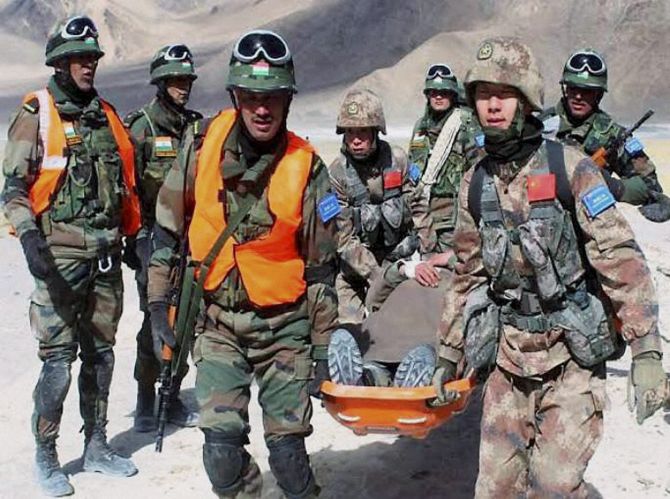
China And India See Eye-To-Eye On Several Geopolitical Issues
As recently emerged economies far from the centers of Western power, India and China share a basic disillusionment with the Bretton Woods institutions that have shaped global economics since the end of World War II. That has led to collaboration on creating such alternatives as the Asian Infrastructure Investment Bank and the BRICS New Development Bank, which foster sustainable development in emerging countries, beyond the auspices of the World Bank and the IMF.
China and India have also found common ground on environmental issues, whether it's sharing oceanic and atmospheric research or taking the developed world to task for holding them to a higher standard in reducing greenhouse gases. As the first and third biggest polluters respectively, China and India have taken an important lead in curbing emissions, most notably by signing the Paris climate accord.
But our most important area of convergence is economic. China's slowdown has strengthened those ties, with India becoming not only a convenient outlet for the glut of steel, cement and the like, but also an attractive alternative for nervous mainland investors.
- A handful of big firms—including Tencent and Xiaomi—have committed hundreds of millions of dollars.
- Other Chinese companies venturing deeper into India include the controversial Huawei Technologies, which opened a huge research and development facility—with room for 5,000 engineers—in Bangalore, and the e-commerce giant Alibaba, which owns shares of Snapdeal and PayTM.
Always a teacher ! pic.twitter.com/Imd9IQFrmn
- Chinese appliance makers Haier, Midea, and Konka are also either launching or expanding their presence in India.
- New agreements are paving the way for greater collaboration on such ventures as high-speed rail lines, smart cities, and joint technology parks.
My Contrarian View: India Should Be In ‘Belt and Road'
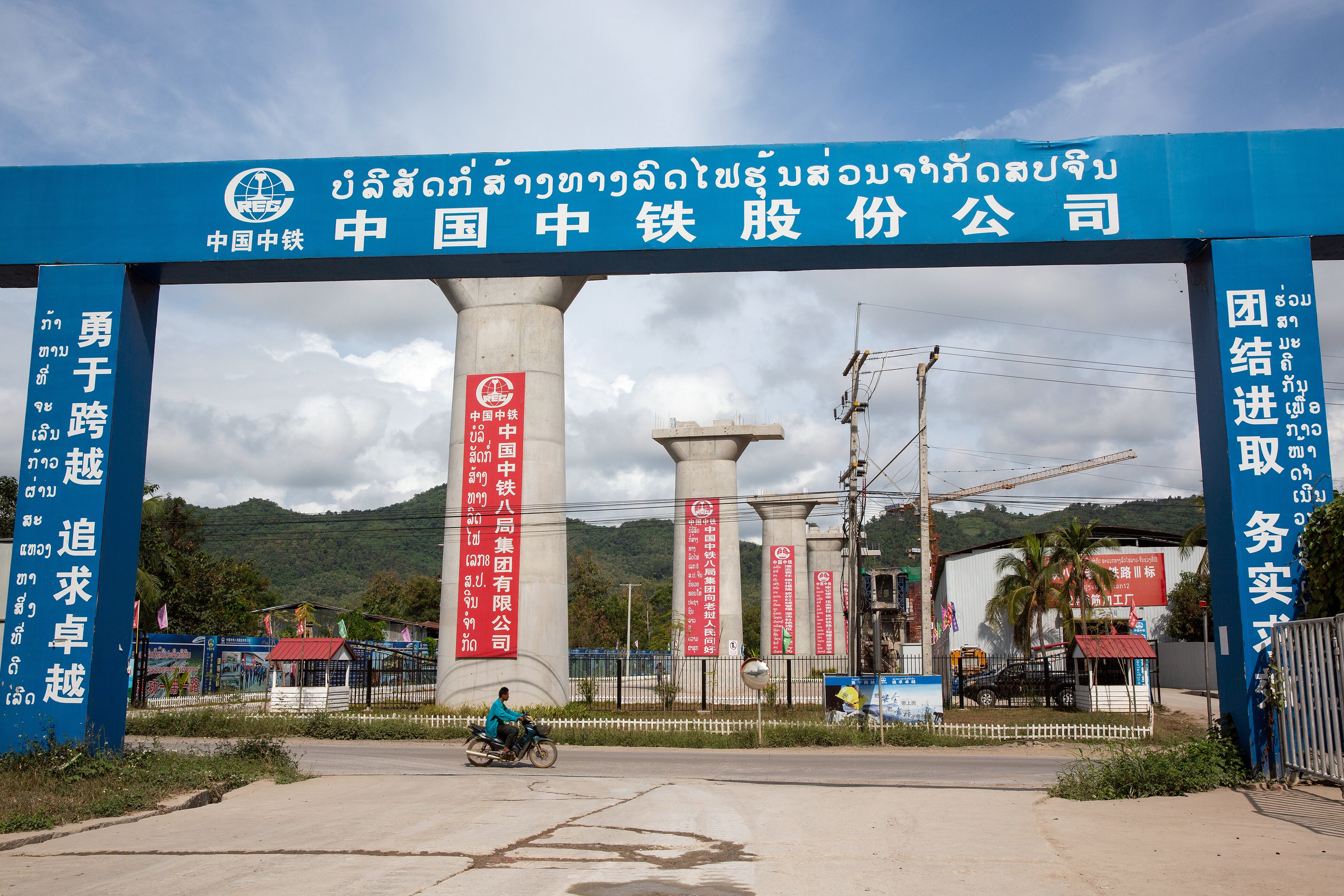
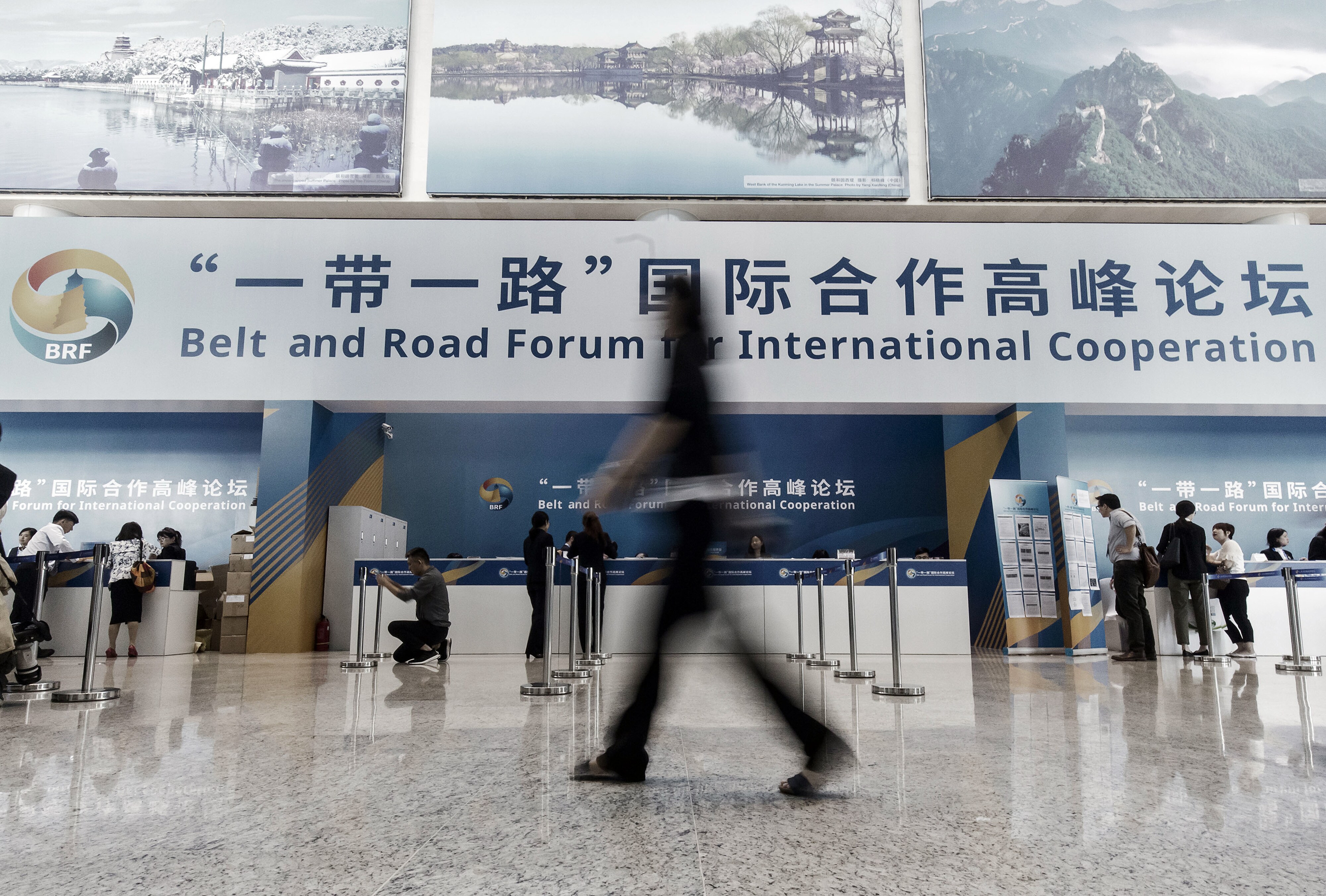
As I see it, Beijing's ‘Belt and Road Initiative', designed to boost Chinese trade and cultural ties with Eurasia, is a winning proposition for India as well.
Without BRI, we risk growing stagnant and isolated in an increasingly connected Asia; with it, India can overhaul its woeful infrastructure, create jobs, and explore vital new trade avenues in China and South Asia.Official Delhi has been far more circumspect, wary of China's motives, its unilateral approach, and especially its development of the China-Pakistan Economic Corridor leg, which runs through Indian territory in Kashmir. By embracing BRI, detractors argue, India would be tacitly accepting the CPEC, which will only strengthen the China-Pakistan bond and signify India's concession of the territory to Pakistan. That's a legitimate concern, but Delhi has at least partially addressed it by insisting on a provision in the charter of the AIIB, which provides BRI funding, that requires all rival claimants to approve any project slated for development in disputed territory. Besides, Beijing has indicated it is open to making some concessions in exchange for India's participation, which would give the initiative a big boost. Speaking in Delhi, Chinese ambassador Luo Zhaohui said, ‘Even we can think about renaming the CPEC,' and ‘create an alternative corridor through Jammu & Kashmir, Nathu La pass or Nepal to deal with India's concerns.'
Luo's ‘renaming' remark was quietly removed from the embassy website the next day, while a Pakistani newspaper claimed he was just being ‘sarcastic.' Still, we have some leverage here, and we should use it.
Instead of shunning BRI, Delhi should push to ‘co-brand' it, becoming an official sponsor of the initiative in our neck of the woods.Of course, we should negotiate hard on the financial terms of the engagement, avoiding the debt trap that several smaller economies who signed up for BRI have fallen into. We now have the wisdom of hindsight to guide us here.
Use The Trade Deficit To Create Fair Terms Of Trade
More importantly, India can use the trade deficit with China—just like BRI —to our national advantage. Delhi should unequivocally demand fairer access for our exports, and if Beijing refuses to comply, we should not hesitate to implement retaliatory tariffs or bans. I'm not talking about anti-dumping duties here; India already taxes nearly 100 cheaply-produced Chinese imports, ranging from rubber to steel. I'm suggesting a targeted, tit-for-tat response. Take pharmaceuticals, for instance; India is one of the world's largest producers of generic drugs, many of which we export in great quantities to the US and Europe, where they have won regulatory approval. We import roughly two-thirds of the raw ingredients for those drugs from China. Yet Beijing does not allow generic drug imports from India, despite persistent complaints from our Commerce Ministry—and a thorough inspection of Indian manufacturing facilities by Chinese investigators.
If Beijing continues to refuse our pharmaceuticals, we should stop importing their raw materials and source them elsewhere.While we don't want to antagonise China, we won't be its doormat, either. That means we must remain ever nimble, treating China alternately as a peer, a partner, and an adversary, depending on the circumstances. Where our interests converge, we should embrace; where they diverge, we must pick our battles carefully, adopting a hard line only when Beijing's actions pose a direct threat. Otherwise, we keep a low profile and grant the Chinese plenty of leeway, with the understanding that they are no more interested than we are in escalating hostilities.
Raghav Bahl is the co-founder and chairman of Quintillion Media, including BloombergQuint. He is the author of two books, viz ‘Superpower?: The Amazing Race Between China's Hare and India's Tortoise', and ‘Super Economies: America, India, China & The Future Of The World'.
Essential Business Intelligence, Sharp Market Insights, Practical Personal Finance Advice, Daily Fuel, Gold and Silver Prices and Latest Stories — On NDTV Profit.