Ayodhya Verdict: Abandoning Our Secular Heroes
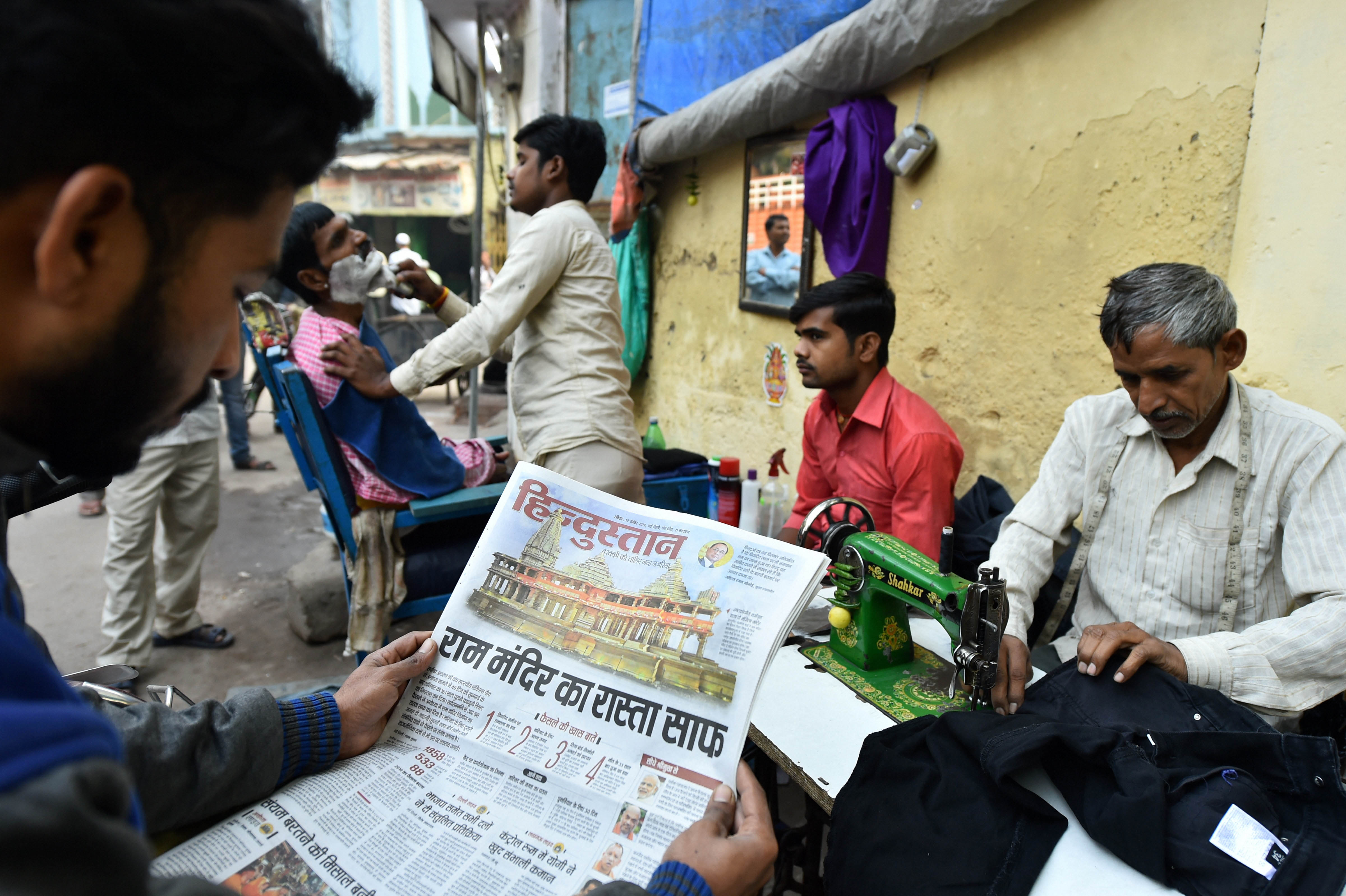
Do we have the right to be shocked? Everything in the last five years was building up to this moment. The scuttling of the opposition by fair means and foul, the exclusive harnessing of all sources of finance, the near-complete control over the media, the complete control over administrative and law enforcement agencies, the creation of a digitally savvy army of millennials, the uncanny electoral timing of cross-border terror attacks – the juggernaut was rolling down and gathering speed, having just flattened in its path the autonomy that Kashmir had been promised at accession well over half a century ago.
Strategic delays and calibrations in the Supreme Court bench did not inspire confidence. Long before judgment day, many already knew the result. Law enforcement agencies warned human rights activists in Uttar Pradesh not to step out of their homes. Days earlier, the Vishwa Hindu Parishad, an offshoot of the Rashtriya Swayamsevak Sangh, issued circulars that sweets be distributed once the judgment came out.
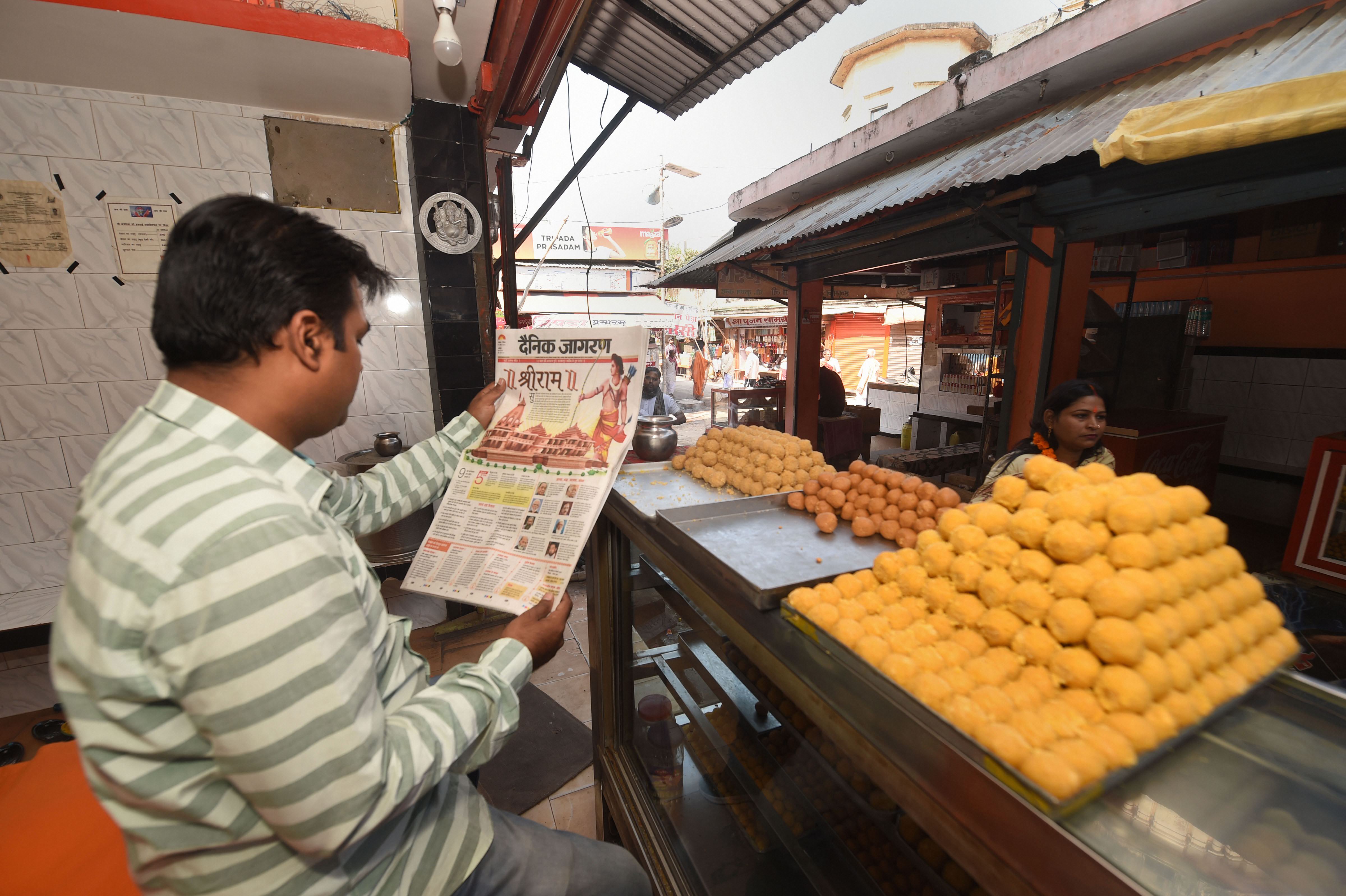
And yet when the final judgment was delivered I was dismayed. I knew that it would take a brave judge to withstand both peer pressure and the invisible but all too tangible diktat of the powers that be. No such judge stood up. There was no dissenting voice on a day that will go down in history as a dark blot on the judicial record of India's secular democracy.
The Documented Record
The bare facts speak louder than arguments. An inscription at the entrance of the Babri Masjid stated that Mir Baqi, commander of the Mughal emperor, Babur, built it in 1528. A few decades later Tulsidas composed his Ramcharitmanas. The earlier Valmiki Ramayana being in Sanskrit was only accessible to scholars and Brahmin priests and temples to Lord Ram were almost non-existent.
It is Tulsidas' epic poem, written for the first time in Avadhi Hindi, the language of common people, that popularised the story of Ram and led to the mushrooming of Ram temples. Remarkably, Tulsidas who was a frequent visitor to Ayodhya, never mentions anywhere that a temple marking the birthplace of Lord Ram had just been destroyed.
The archaeological reports of the digs carried out at various periods on or near the disputed site, are at complete variance with each other, reflecting more the ideology of the diggers and reporters than offering reliable historical evidence. The deepest layer excavated found Buddhist artefacts that pointed to the possibility that Ayodhya was the ancient Buddhist town of Saket. A petition to that effect was filed in the Supreme Court in 1994 by Savita (Mai) Ambedkar, the widow of BR Ambedkar, but we do not know how and when it was disposed of.
Even if we give credence to the least likely report that a Ram temple existed underneath the Babri mosque, what of it? Are there no limits on the claims of archaeology and history? What is the cut off date for determining who owns what? 500 years? Why not 1,000 or 2,000 years when adivasis may have worshipped a tree at the same spot? There is no dispute that in 1947, when India became independent, namaaz was being offered at the Babri Masjid and continued to be offered till Dec. 22, 1949, when Hindu miscreants broke into the mosque at night and placed Ram idols inside it. KK Nayar, the then district magistrate refused to remove the idols citing “law and order” reasons. In the 1990s, when the mosque was attacked and finally demolished in the name of Ram, thousands in the sub-continent paid with their lives for KK Nayar's cowardice and complicity. Nayar, after retirement in the 1950s, was rewarded by the RSS and became a Jan Sangh MP.
On Nov. 9, 2019, the Supreme Court conferred property rights on Ram Lalla (child Ram) instead of charging his followers with trespass and break and entry.
If mythological or religious deities have dormant property rights that can be awoken any time their followers and legal ‘friends' reach a critical mass, seeing that Hindus alone have 330 million gods and goddesses, we are in for interesting times.
The Vishwa Hindu Parishad has already earmarked their next immediate targets as Kashi and Mathura.
The Real Heroes Of Ayodhya
If Independent India, instead of building a temple to Lord Ram, wants to honour the memory of those who fought for communal harmony from within the very same premises, it should honor Pujari Laldas, the court-appointed priest of the Ram temple, who in 1990 had warned the country against the designs of those who were using Ram for political and financial gain.
The brave and outspoken Laldas was murdered in 1993.
There are two other secular heroes we should never forget. Back in 1857, when Hindus and Muslims had united to fight a war against the British, the Englishmen had erected a dividing wall inside the compound of the Babri Mosque. As trouble between the communities was stoked, it was through the efforts of Baba Ramcharan Das from the Hindu side and Acchan Khan, a Muslim landlord in Ayodhya, that communal harmony was maintained and a pact was reached by which both communities would pray side by side in separate portions of the same Babri compound.
The British, who finally crushed the revolt of 1857, hanged Ramcharan Das and Acchan Khan on charges of sedition. The pact of communal harmony the two had forged in Ayodhya lasted almost a hundred years. It was broken only by an act of vandalism in 1949.
70 years later the Supreme Court of India rewarded the vandals.
Anand Patwardhan is a documentary filmmaker. ‘Ram Ke Naam' (1992) documents the events that led to the demolition of the Babri Masjid.
Views expressed are personal. The views expressed here are those of the author and do not necessarily represent the views of BloombergQuint or its editorial team.

-
AI Agents Are Gaining Power. Who Governs Them?

Artificial intelligence agents promise to transform productivity by moving machines from assisting decisions to executing them. But as organisations delegate greater authority to these AI-agents, they must first establish who controls that authority and who remains accountable when things go wrong.
-
Why Swapping Your Old Gold Can Trigger A Rs 5 Lakh Tax Bill, And How You Can Avoid It Legally
Swapping old gold for new is taxed as a sale and a fresh purchase. Getting your own gold remade can cut most of that bill, though it has its own costs.
-
The AI Trade is Done. The Real Opportunity for Investors Starts in 2027 | Unhedged Position
As pureplay AI stocks plunge and circular, capex-led financing unwinds, 2027 is set to be a year of reckoning for AI companies. Yet the bust clears the way for a better opportunity for investors in 2027 -- shifting the spotlight from AI builders to the companies using AI.
-
Leadership As Mission: Why The Age Of AI Demands More Human Leadership
Debjani Ghosh examines how AI is changing leadership, arguing that its success must be measured by its impact on people and the accountability of those guiding its use.
-
We May Need Another Tukaram Mundhe To Fight Air Pollution | The Reason Why
Developers may install basic measures such as sprinklers and green nets, resume work, and continue violating rules when this equipment stops working.
-
Extracting Value From Battery Scrap Could Be Challenging For India | The Reason Why
A discarded lithium-ion battery still contains valuable materials such as lithium, nickel and cobalt. These can be recovered and reused. When such batteries are crushed and shredded, they produce a dark powder called black mass.
-
One El Nino, India Can Handle. Two Could Break The Granary
India's grain stocks can absorb one bad year, but a second El Nino could drain the buffer in two to three years, economists say.
-
India's Troika Of Good Luck | Joining The Dots
As Jensen Huang's exit drags Nvidia down, a cooling AI trade and resilient earnings have revived investor interest in India. A likely RBI rate hike looms.
-
Talking Points This Week: Leadership Shock At Nvidia, Earnings Strength, And The Fog Over Hormuz
The Anthropic IPO pricing and first trading day, Nvidia's upcoming earnings, and any fresh signals from Iran will set the tone for the following week.
-
Signature Play: The Classic Cocktail Is Dead. Or Is It?
Classic cocktails are disappearing from India's cocktail menus. But they're still being ordered, taught to bartenders and borrowed from. So, who's really having the last drink?









