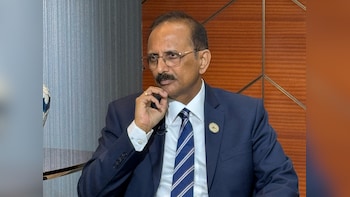
(Bloomberg) -- Former Bank of Japan board member Sayuri Shirai said that the central bank's new framework signaled a tightening of monetary policy and a tapering of bond purchases.
“The characteristics of the policy announced in September are implicit tapering,” she said in a press conference in Tokyo on Friday. Shirai, who voted with Governor Haruhiko Kuroda during most of her five-year term, was one of four dissenters on the BOJ board on the January decision to adopt negative rate.
At its last meeting on Sept. 21, the BOJ shifted the focus of its monetary stimulus from expanding the money supply to controlling interest rates, pledging to pin benchmark 10-year yields around zero. The central bank strengthened its forward guidance by vowing to continue expanding the monetary base until inflation is stable above the 2 percent target -- committing to an overshoot of consumer-price gains in an effort to revive inflation expectations.
Shirai said the new framework in concept is a move toward a tightening and “there is no room for objection” to this view.
She is among some economists who have been critical of the BOJ's latest move. Nobuyuki Nakahara, who has advised the prime minister on the economy and was an intellectual father of the BOJ's first run at quantitative easing in 2001, said in a Sept. 30 interview that "those who support quantitative easing were defeated.”
Other comments from Shirai on Friday include:
- The new framework signals an abandonment of further increases in the quantity of asset purchases.
- Buying Japanese government bonds at annual pace of 80 trillion yen isn't sustainable.
- The BOJ should gradually reduce bond buying to an annual pace of 60 trillion yen.
- It would be better not to lower interest-rate targets.
- The new framework may have limited effectiveness to boost prices and inflation expectations.
- There are risks for more distortion in the bond market.
- The new framework is very complicated and has reduced transparency.
To contact the reporters on this story: Keiko Ujikane in Tokyo at kujikane@bloomberg.net, Masahiro Hidaka in Tokyo at mhidaka@bloomberg.net. To contact the editors responsible for this story: Brett Miller at bmiller30@bloomberg.net.
Essential Business Intelligence, Continuous LIVE TV, Sharp Market Insights, Practical Personal Finance Advice and Latest Stories — On NDTV Profit.