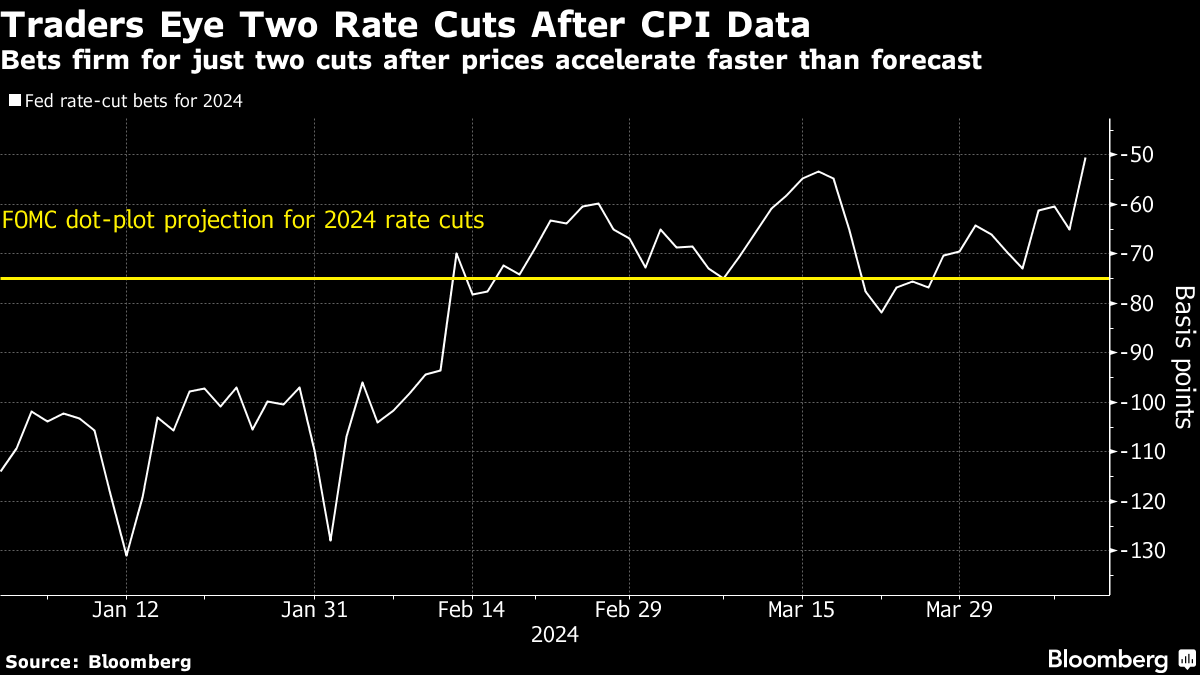
(Bloomberg) -- Investors are signaling the Federal Reserve will cut interest rates just twice this year, starting in September, after a fresh round of hot inflation sent Treasury yields soaring to 2024 highs.
In yet another revision of bets on when the US central bank will ease monetary policy, swap contracts indicated the Fed's benchmark rate will end the year only about 40 basis points lower than the current 5.33%. Options traders added bets on the Fed cutting just one time this year.
Yields across the maturity spectrum were up by at least about 13 basis points on the day, with the policy-sensitive two-year yield climbing as much as 24 basis points to 4.98%. The benchmark 10-year note's yield topped 4.5% for the first time since November.
The third straight higher-than-expected measure of underlying US inflation followed another blowout month of job creation in March. Just weeks ago, markets were pricing in three cuts from the Fed in 2024, starting in June.
“It looks like we are in more of a world where inflation is leveling out around 3% and that will bias the Fed to stay on hold,” said Campe Goodman, fixed income portfolio manager at Wellington Management Co. “I know they want to cut, and I understand it. They are betting that shelter inflation is going to ease off, but that's a model based view.”
Nearly everyone — from Wall Street strategists to Fed officials themselves — is being forced to, once again, reckon with signs of economic resilience and sticky consumer price pressures that stand to affect the path ahead for US monetary policy.
While Goldman Sachs Group Inc. economists only pushed back their forecast for a cut to July from June, their counterparts at Barclays Plc said they now just expect one reduction this year. Former US Treasury Secretary Lawrence Summers, a Bloomberg Television contributor, said markets “have to take seriously” the chance the central bank's next shift is a hike.
Read More: Summers Says Have to Seriously Consider Next Fed Move Is a Hike
“Bottom line is that this data means for the Fed there will be one or two cuts at most this year, and right now they just have to be patient,” said Kathy Jones, Charles Schwab's chief fixed-income strategist. “Generally, the trend in yields is still higher, and we don't want to fight the trend. But I'm not in the camp that we will make it to 5% in the 10-year.”
The Treasury yield increases were the biggest in months. The yield on the 10-year Treasury note surged Wednesday by as much as 20 basis points to 4.56%. Wellington's Goodman expects it to stay in a range of 4.5% to 4.75% as long as inflation lingers near 3%.
Yields on five-year Treasuries briefly exceeded those on 30-year bonds for the first time since September.
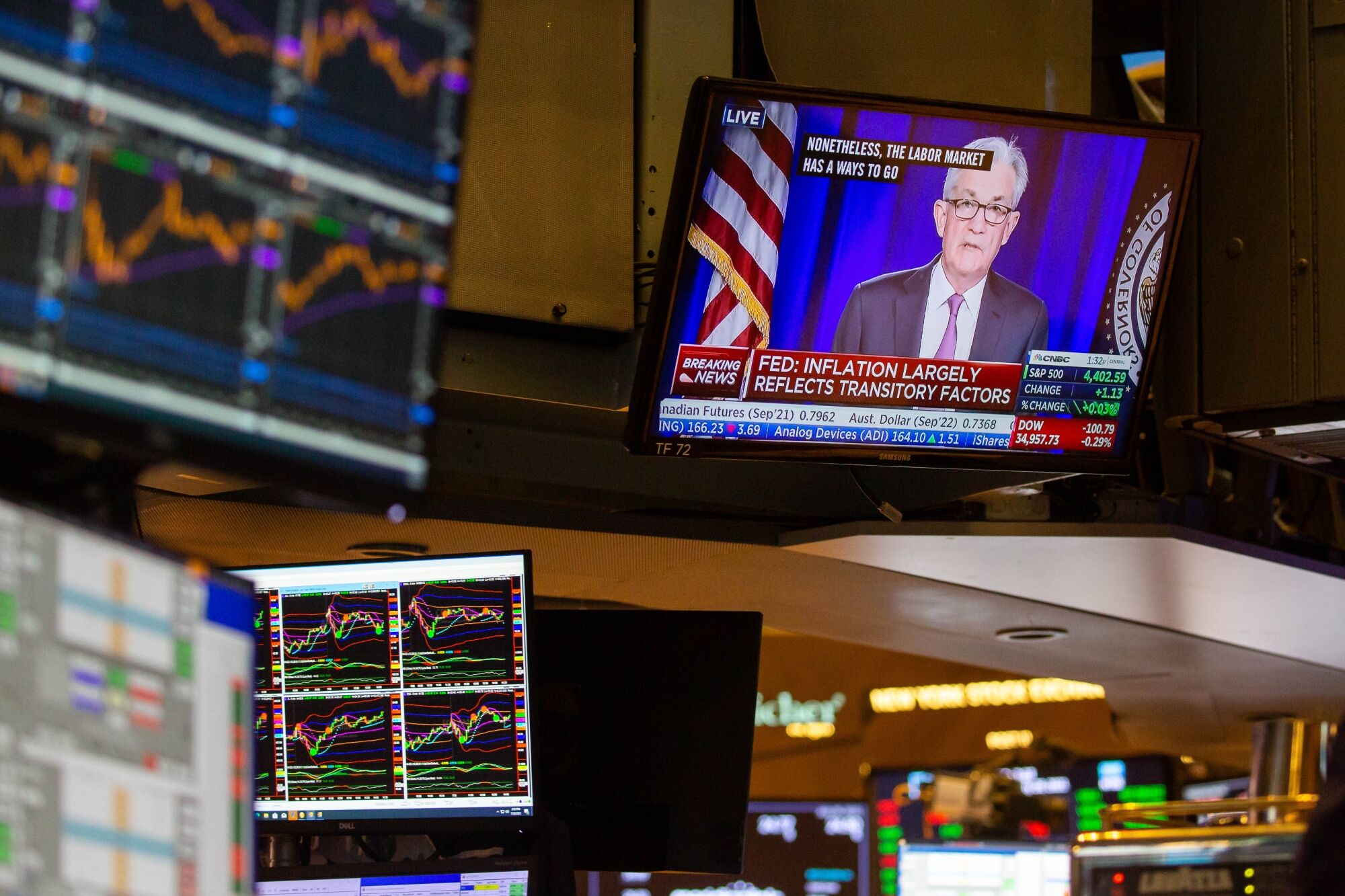
Fed policymakers have said that while they expect to cut rates this year, they want to be more confident that inflation is on a sustainable path toward their 2% target before beginning the process. The rate they target — different from the CPI — was 2.45% in February, down from a peak of 7.1% in 2022. The March CPI readings provide scant basis for increased confidence in the trend.
Read More: US Inflation Refuses to Bend, Fanning Fears It Will Get Stuck
“What the market is finally realizing is it's going to be very hard for inflation to keep coming lower,” said Leah Traub, portfolio manager at Lord Abbett & Co. “Unless we get very sudden weakness in the economy, we just don't see the Fed cutting soon.”
The US Treasury department sold $39 billion of 10-year notes at a yield that was above where the when-issued security was trading at the time the auction-bidding period ended — a sign of very weak demand for the debt.
Traders face more potential volatility ahead of the release of minutes from the Fed's March policy meeting at 2 p.m. New York time.
“Seems like this will solidify the idea of high-for-longer and keep upward pressure on rates in the near term,” said Zachary Griffiths, head of US investment grade and macro strategy at CreditSights. “From a longer-term perspective we think this back up in rates presents an opportunity to add duration at attractive levels.”
--With assistance from Edward Bolingbroke, Kristine Aquino, Nazmul Ahasan and Carter Johnson.
(Adds comments, updates yield levels and adds auction results.)
More stories like this are available on bloomberg.com
©2024 Bloomberg L.P.
Essential Business Intelligence, Sharp Market Insights, Practical Personal Finance Advice, Daily Fuel, Gold and Silver Prices and Latest Stories — On NDTV Profit.