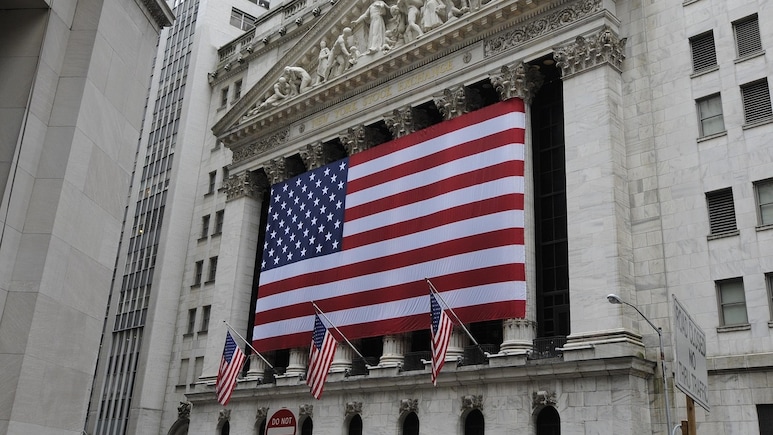
- US stocks fell as crude oil prices surged above $100 per barrel, raising inflation worries
- Dow dropped 213.74 points, S&P 500 lost 41.29 points, Nasdaq fell 228.57 points on Thursday
- US-Iran war's seventh month causes energy supply concerns, adding risk to crude markets
US stocks declined on Thursday as a sharp rise in crude oil prices fuelled concerns over higher inflation and interest rates, with the prolonged US-Iran war continuing to weigh on investor sentiment.
The Dow Jones Industrial Average fell 213.74 points, or 0.41%, to 52,166.92. The S&P 500 declined 41.29 points, or 0.55%, to 7,594.12, while the Nasdaq Composite dropped 228.57 points, or 0.88%, to 26,022.90.
Oil prices emerged as the key source of pressure for markets after US crude climbed above the $100-a-barrel mark. US West Texas Intermediate futures jumped 4.4% to $100.27 a barrel by 8:57 a.m. ET, while Brent crude, the international benchmark, gained 4% to $105.24 a barrel.
Also Read | Layoffs Are Rising In Tech, But These Skills Are Helping People Unlock Better Pay
The rise in oil prices has intensified concerns that a prolonged conflict in the Middle East could push inflation higher and complicate the Federal Reserve's interest-rate outlook.
The US-Iran war has now entered its seventh month, with continued uncertainty around energy supplies and shipping routes adding to the risk premium in crude markets.
ALSO READ: Brent Spikes To $105 After Saudi Arabia Flags Lowest OPEC Oil Output Since 1990
Higher oil prices also drove US Treasury yields sharply higher. The yield on the benchmark 10-year Treasury note climbed above 4.9%, its highest level since November 2023, raising concerns that elevated borrowing costs could weigh on economic activity and equity valuations.
Chip stocks, which have been among the biggest drivers of the recent bull market, came under pressure as investors assessed the potential impact of higher rates and energy costs on economic growth.
Intel and Micron Technology fell around 3% and 2%, respectively.
Meanwhile, a relatively tame wholesale inflation reading failed to ease concerns over the broader inflation outlook.
The US Producer Price Index (PPI), a measure of wholesale inflation, rose a seasonally adjusted 0.4% in August from the previous month, in line with the Dow Jones consensus estimate. On an annual basis, PPI increased 5.4%, remaining well above the Federal Reserve's 2% inflation target.
With oil prices rising sharply and inflation still elevated, investors are now turning their attention to the Federal Reserve's policy meeting scheduled for next week.
Fed Chair Kevin Warsh, speaking at Jackson Hole last month, highlighted inflation as a key concern for the central bank. He said both the Personal Consumption Expenditures (PCE) and Consumer Price Index (CPI) measures remained above the Fed's 2% target.
"None of these measures are perfect, but they all tell a similar story: Inflation is running above our 2 percent target. So the Fed's predominant focus right now should be on prices," Warsh said.
Attention will therefore remain firmly on next week's Fed decision, with markets assessing whether policymakers are likely to prioritise inflation risks over concerns about economic growth.
Essential Business Intelligence, Sharp Market Insights, Practical Personal Finance Advice, Daily Fuel, Gold and Silver Prices and Latest Stories — On NDTV Profit.