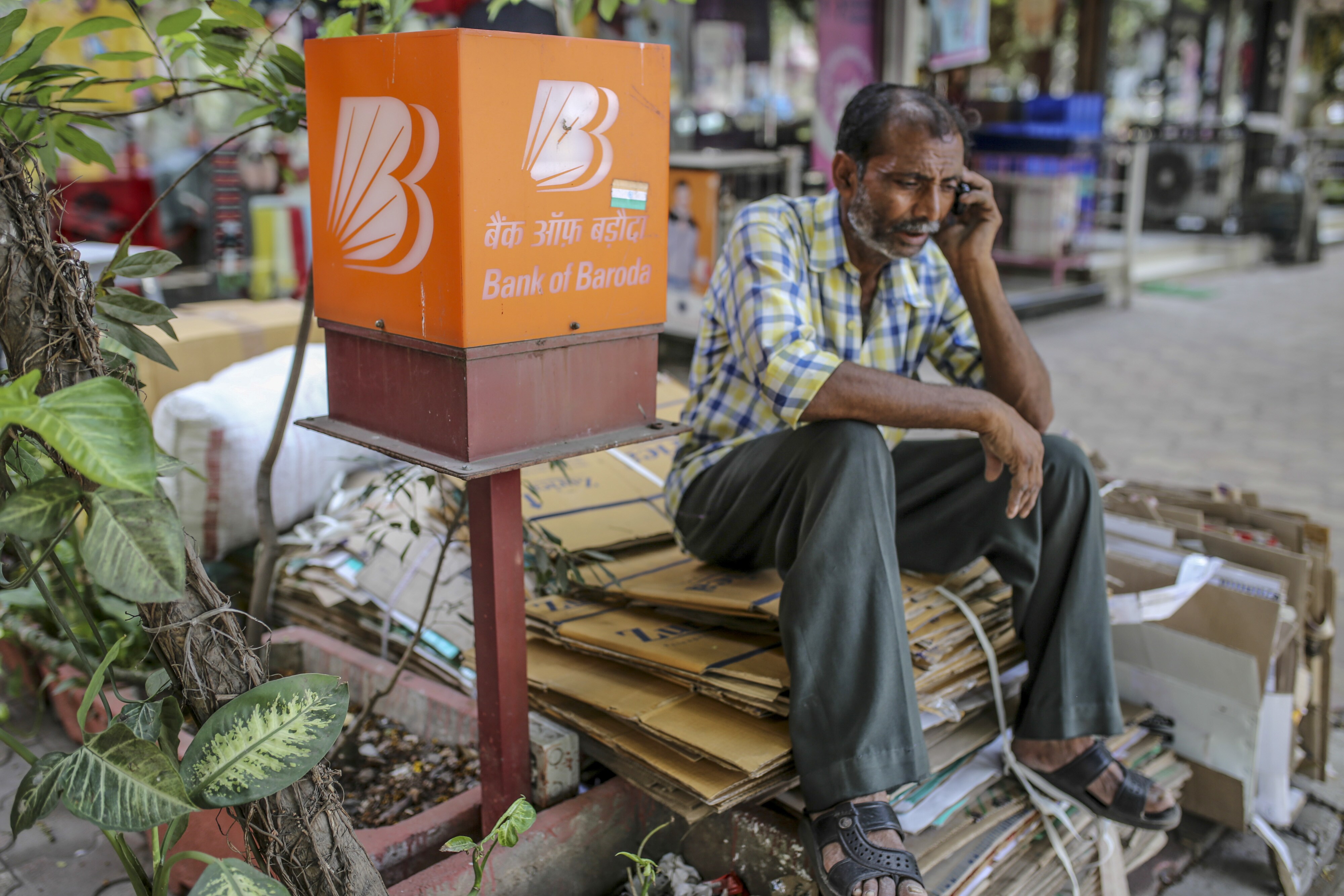
Bank of Baroda may be slightly better off with the share swap ratios announced for its merger with Vijaya Bank and Dena Bank, according to brokerages, including JPMorgan and Morgan Stanley.
The swap ratio for the amalgamation is ‘neutral' to ‘mildly positive' for Bank of Baroda, JPMorgan said in a note. “Bank of Baroda is not paying a significant premium for these entities and, specifically for Dena Bank (a stressed bank), it is buying it at the pre-merger announcement price (before the stock run-up), which should partly alleviate investor concerns,” it said.
The three-way merger moved a step closer to completion after the Union cabinet approved the deal on Wednesday. The banks then announced the share swap ratios for the transaction.
- Bank of Baroda will issue 110 shares of Rs 2 each for every 1,000 shares of Dena Bank worth Rs 10 each.
- Vijaya Bank's shareholders will get Bank of Baroda's 402 shares of Rs 2 each for every 1,000 shares of Rs 10 each.
The swap ratios imply a 27 percent and 6 percent lower valuation for Dena Bank and Vijaya Bank, respectively, compared with their last closing prices, according to BloombergQuint's calculations.
The deal also means about 30 percent dilution for Bank of Baroda and a trailing book value per share accretion of around 15 percent, Morgan Stanley said.
Motilal Oswal Research, however, said there will be an overhang on the banks' near-term performance due to network overlaps, relocations, and business and team integrations.
Also, leadership issues will add to their woes, Antique Stock Broking said in a note. “Managing Director Jayakumar's reappointment tenure ends in September 2019. While during this phase, the merged entity is likely to operate, the integration process would take a few years to reorganise the business,” it said.
Yet, Motilal Oswal said the additional capitalisation for public sector banks should help the merged entity deal with these issues. “The recent announcement by the central government of an increase in capitalisation outlay for PSUs by additional Rs 41,000 crore will likely ensure healthy capitalisation levels for the combined entity, and thus, equip it to better deal with the merger-related challenges,” it said.
All brokerages maintained their stance on Bank of Baroda, given its “reasonable valuation” and “strong fundamentals”.
Essential Business Intelligence, Continuous LIVE TV, Sharp Market Insights, Practical Personal Finance Advice and Latest Stories — On NDTV Profit.