
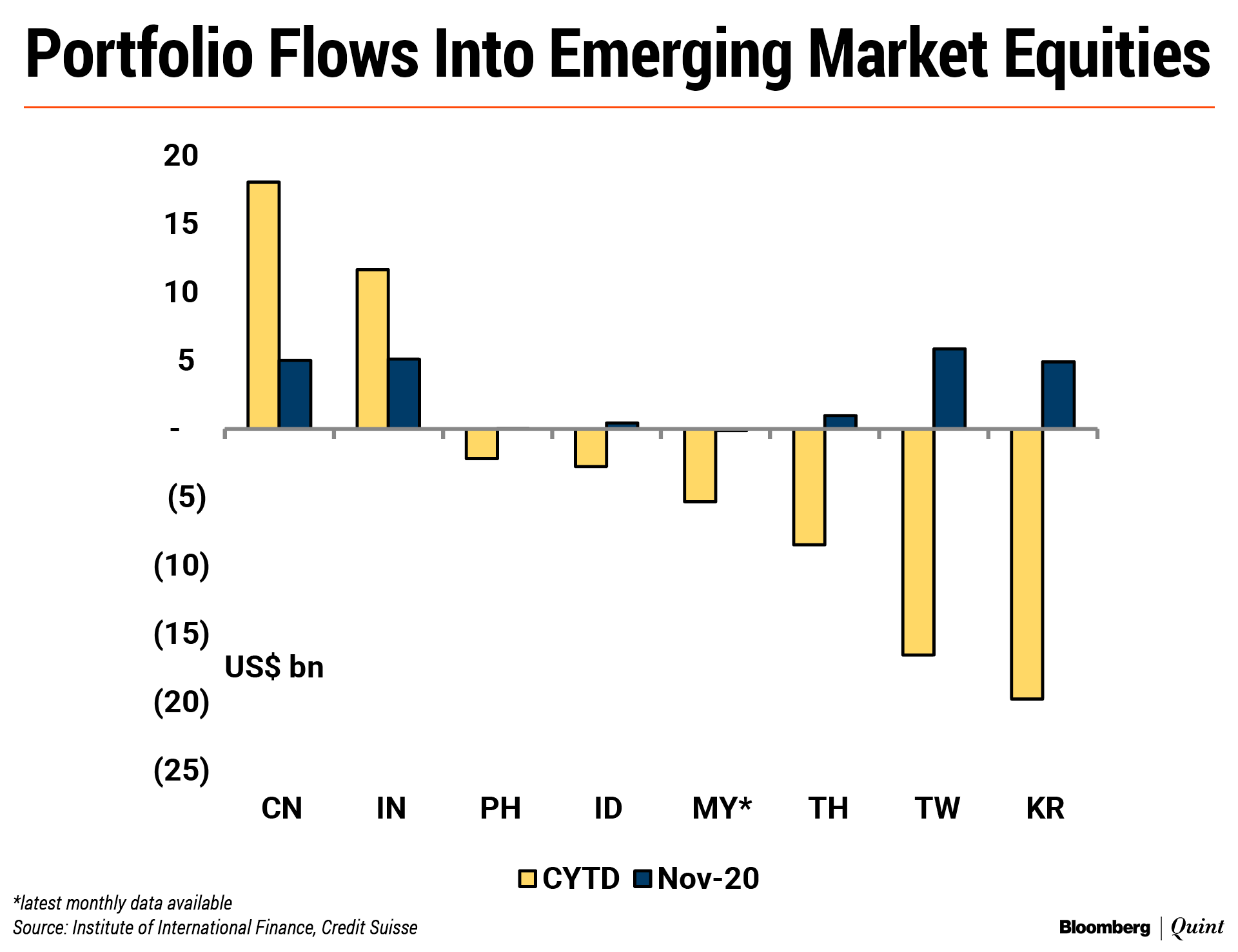
Portfolio equity inflows to emerging markets in Asia showed a strong pick-up in November as uncertainty around U.S. election results lifted and several vaccine candidates reported positive results in phase-III human trials. But Credit Suisse thinks the inflows won't last.
For most countries, excluding India and China, the equity inflows in November was still too small to offset the outflows so far this year. The relatively small quantum appears to be a tactical reversal, Credit Suise said in a report dated Nov. 24.
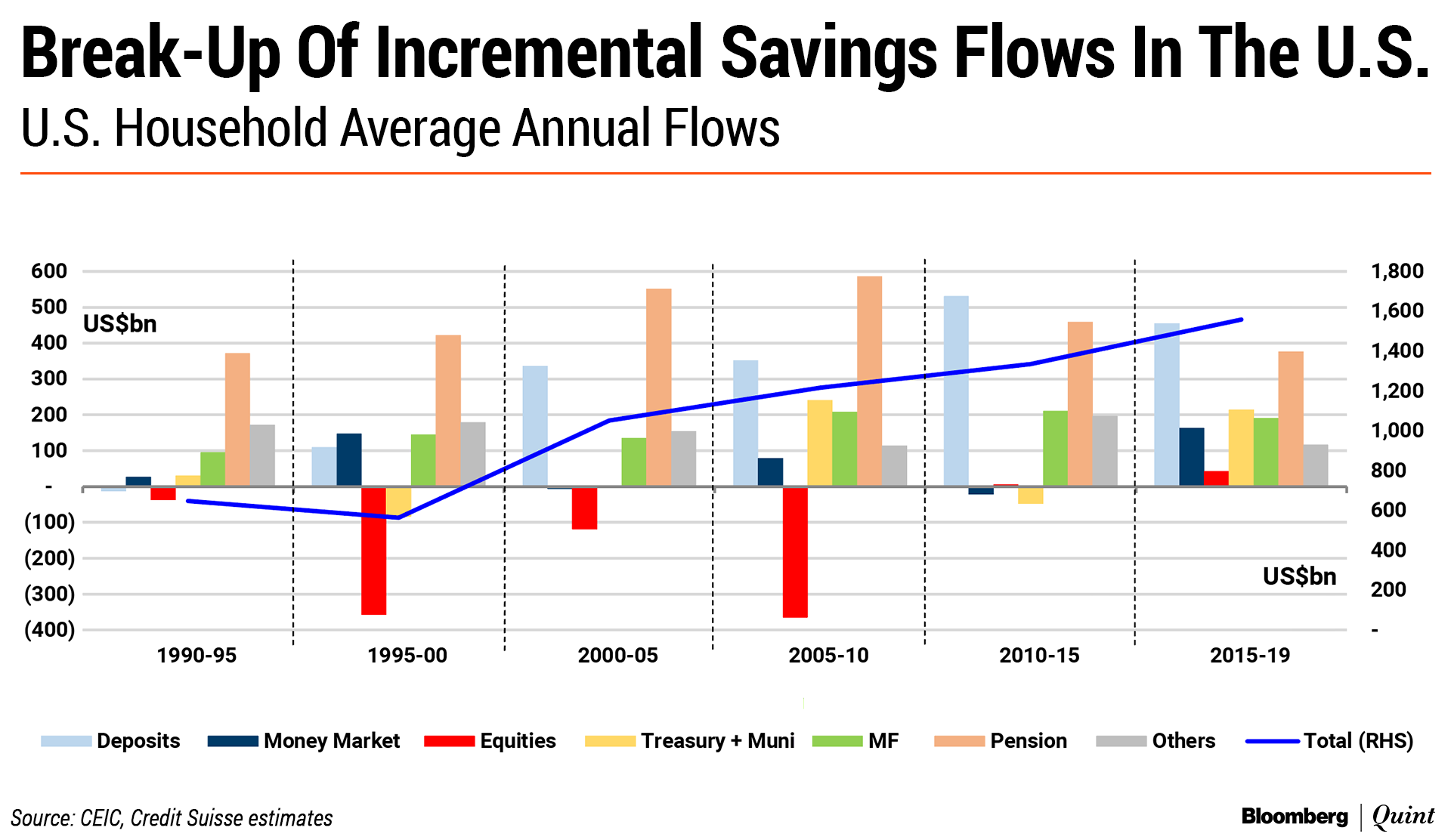
Household savings in the U.S. and European Union accounted for 70% of global outbound portfolio flows, according to Credit Suisse, and those savings were broadly at the same level before the pandemic at levels seen 15 years ago.
Allocation to asset classes that make cross-border portfolio investments—pension and mutual funds in the U.S. and insurance in the E.U.—has fallen, the brokerage said.
The report showed that pension and mutual funds together comprised 39% of U.S. household financial assets as of June 2020, but their share of inflows over the last three years had fallen below 25%—a 30-year low. The share of direct equities had increased, the report said, and share of deposits had gone up even before the recent pandemic-driven surge.
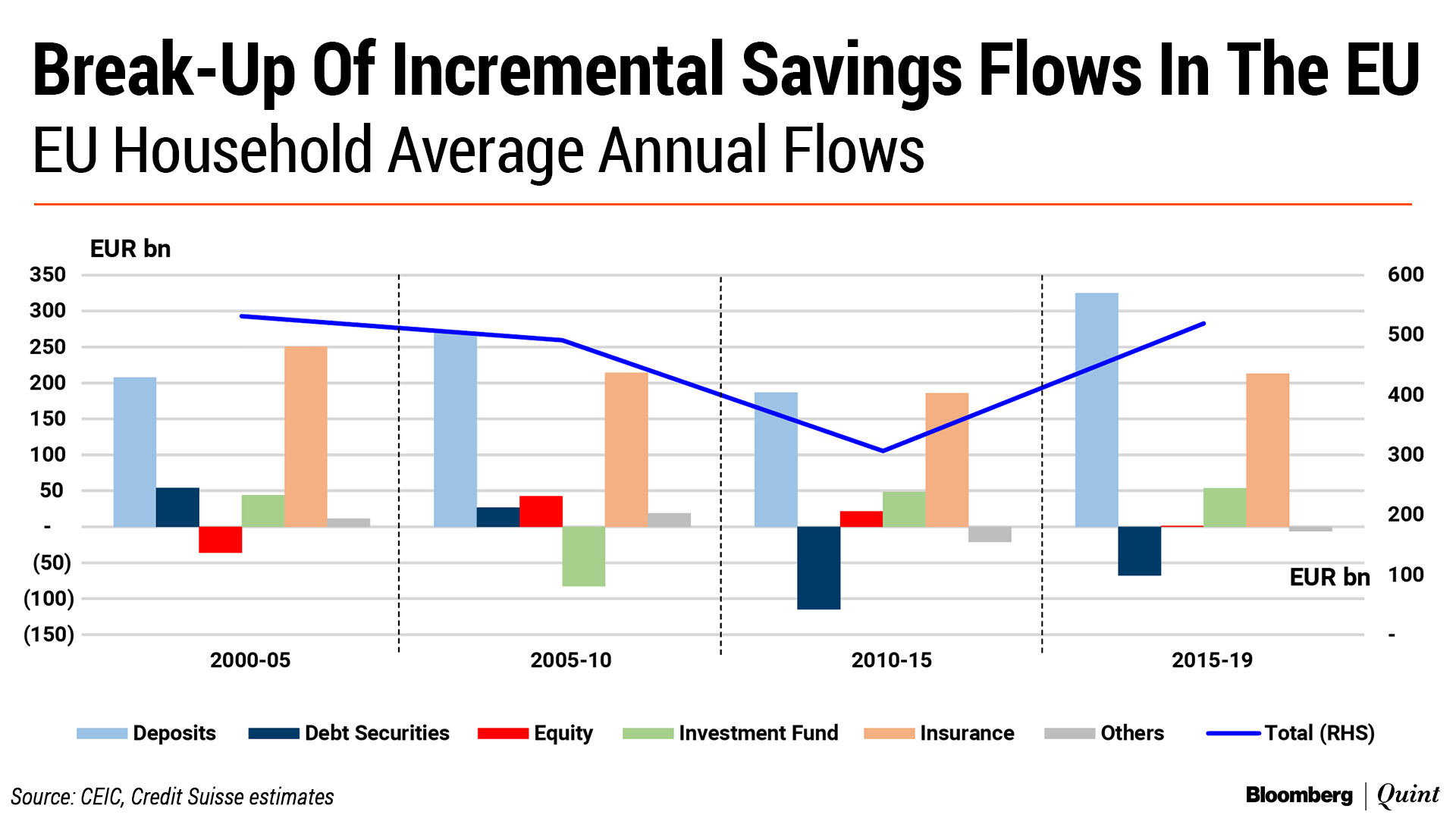
In Europe, too, the share of deposits in incremental savings had risen despite negative interest rates, while inflows into investment funds and direct equities remained weak, the report showed.
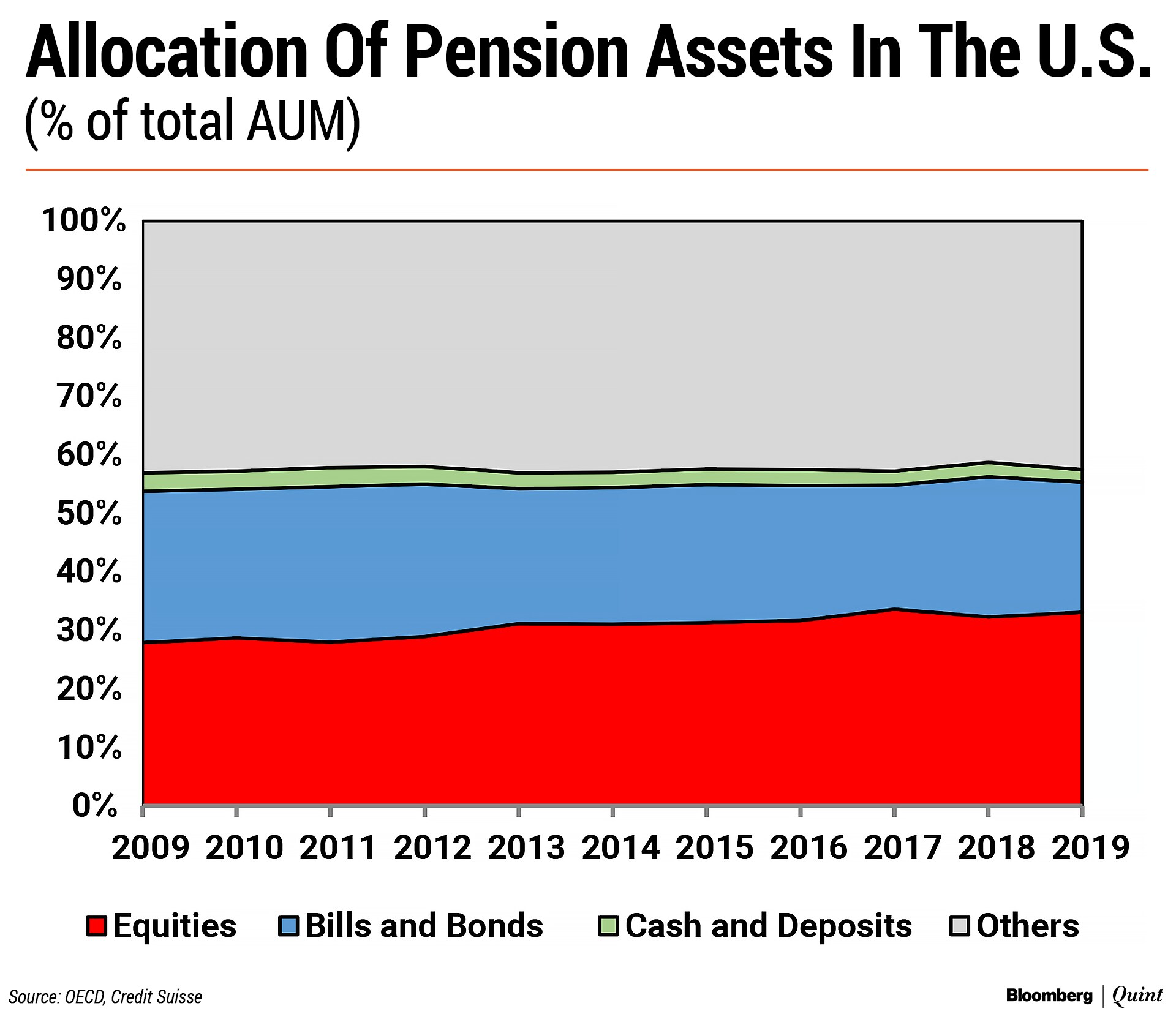
Not only have institutional money managers in the U.S. and Europe been seeing weaker inflows, their allocations to equities have barely changed in the last twenty years (see charts below).
Equity allocation in the U.S. moved from 28% in 2009 to 34% in 2017, but has since moved back down to 33%. In the European Union, assets moved from bonds and money market funds have gone into alternate assets and not equities, Credit Suisse said.
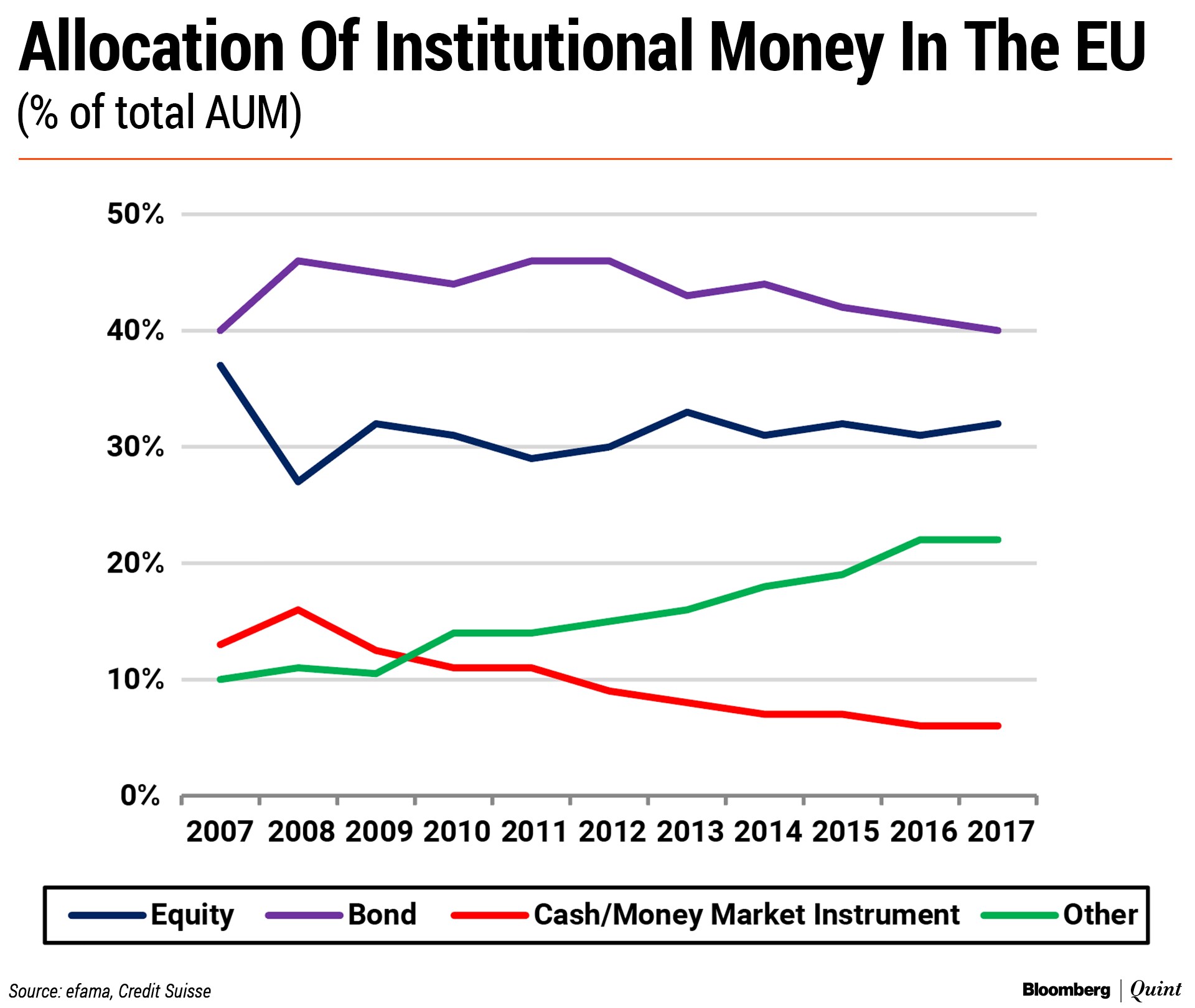
Thus, while a cyclical inflection in flows may last a few weeks, sustained strong inflows, proportionate to the now much larger markets, are unlikely. Slowing capital flows may not destabilise most Asian markets, given their current account surpluses, but can hurt growth.Credit Suisse Report
The brokerage also said markets opening up their capital accounts, with low gross external debt dependency and relatively low foreign equity ownership have better prospects.
China, India and Korea are the best placed markets, according to Credit Suisse, while Malaysia and Indonesia are the worst.
Essential Business Intelligence, Continuous LIVE TV, Sharp Market Insights, Practical Personal Finance Advice and Latest Stories — On NDTV Profit.



















.jpg?im=FeatureCrop,algorithm=dnn,width=350)