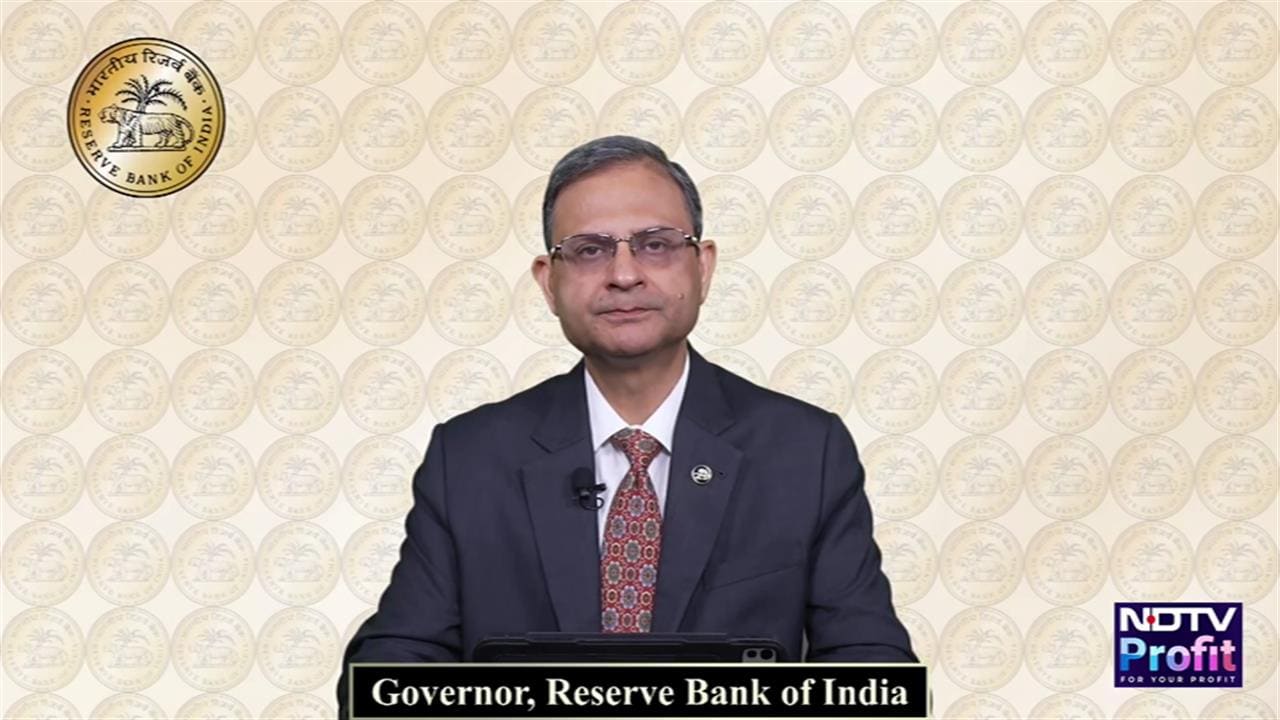
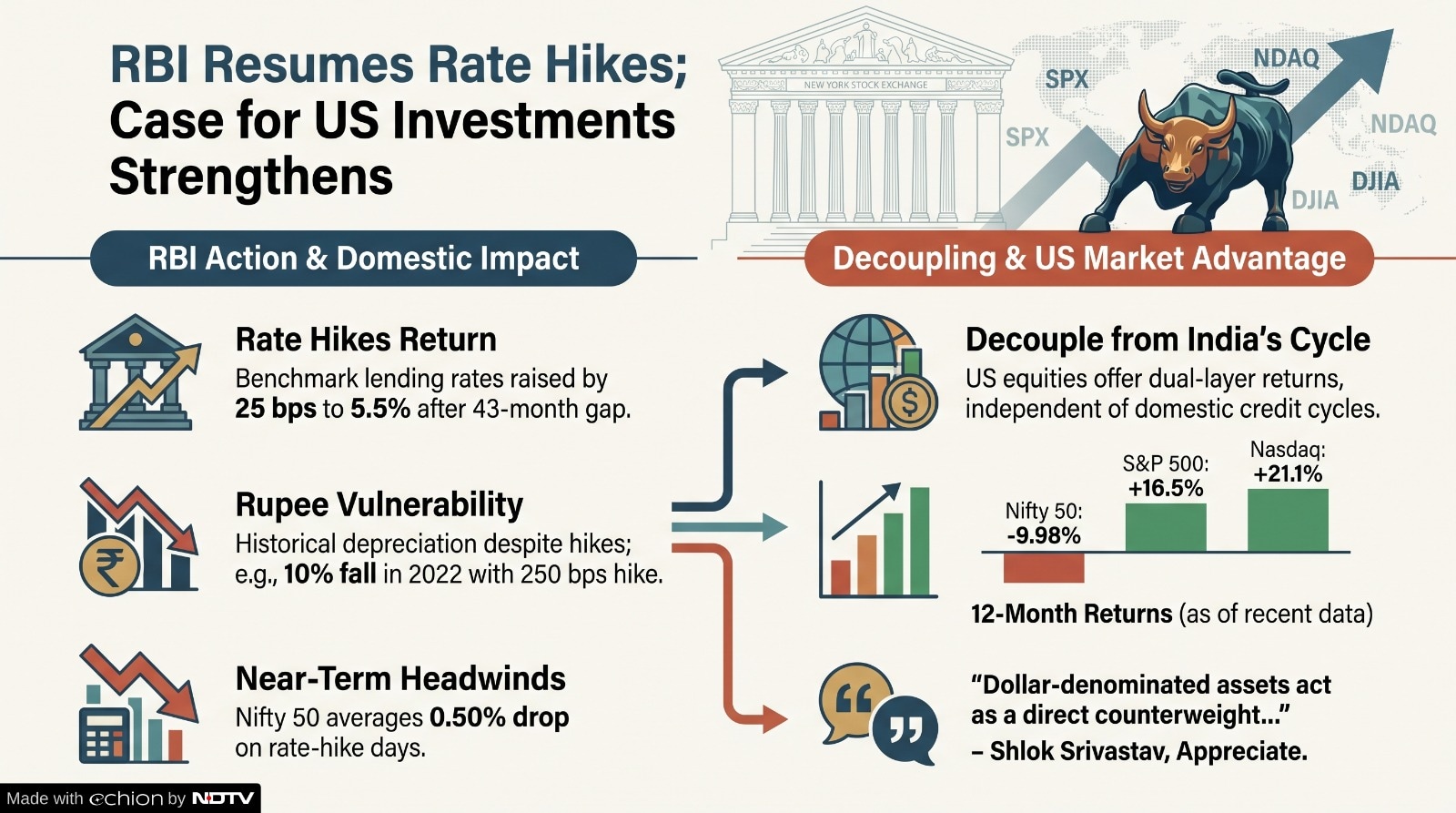
The Reserve Bank of India (RBI) has resumed raising interest rates after a 43-month gap, with the benchmark lending rates increased by 25 basis points to 5.5%. The hike comes amid an unfavourable external environment, with $100-a-barrel crude and an erratic El Nino weather phenomenon raising the risks of inflation.
With RBI Governor Sanjay Malhotra firmly putting rate cuts "off the table" for the near future, the central bank's hawkish pivot has prompted market participants to reassess portfolio risks and look beyond domestic borders.
While higher interest rates are designed to contain domestic price pressures and support the rupee, tighter monetary policy does not eliminate market vulnerabilities, according to Shlok Srivastav, co-founder and chief operating officer at cross-border investment platform Appreciate.
Also Read | Layoffs Are Rising In Tech, But These Skills Are Helping People Unlock Better Pay
"The latest hike strengthens the case for holding part of a portfolio outside India's interest-rate and currency cycle, rather than relying entirely on domestic assets," Srivastav said.
1. Rupee Depreciation
For investors, a primary driver behind potential shift towards Wall Street is the historical disconnect between domestic rate hikes and currency resilience. Even though the latest RBI rate hike was expected to support the local currency, the rupee ended up weakening due to a rebound in oil prices and the continued outflow of foreign institutional investors.
With the rupee hovering near 97 against the greenback, past tightening cycles show that central bank intervention rarely insulates the local unit from broader macroeconomic pressures, Srivastav said.
During the RBI's 2022–23 tightening cycle, the repo rate climbed 250 basis points from 4% to 6.50%, yet the Indian rupee depreciated about 10% against the dollar in 2022, he pointed out. A similar trend played out in 2011, 2013, and 2018, when the currency declined 16%, 11.4%, and 8.3%, respectively, despite tighter monetary policy.
"For Indian investors, dollar-denominated assets act as a direct counterweight, since any subsequent depreciation in the rupee enhances the overall rupee-denominated value of their offshore portfolio."
2. Historical Headwinds
A hawkish monetary environment also creates near-term valuation hurdles for domestic equity benchmarks.
Historical trading patterns show that rate-hike days have consistently applied downward pressure on headline indices.
"An analysis of 72 RBI policy announcements between 2014 and 2025 found that the Nifty 50 averaged a 0.50% drop on rate-hike announcement days, compared with a 0.66% gain following rate cuts," the Appreciate COO noted.
While Srivastav emphasised that these patterns do not imply domestic equities will slide after every hike, tighter liquidity conditions maintain elevated equity-market risk that warrants geographical hedging.
ALSO READ: Gold Slides Near $4,100: Why Experts Say Equity-Style Dip Buying Could Be A Strategic Flaw
3. Decoupling From India's Domestic Cycle
Allocating capital to US equities enables investors to decouple a portion of their wealth from India's borrowing-cost trajectory and liquidity curbs.
Dollar-denominated assets operate independently of domestic credit cycles, offering a dual-layer return mechanism for Indian portfolios, Srivastav pointed out.
Investors benefit from the underlying performance of US equities, while currency depreciation provides an additional layer of capital appreciation on top of asset gains.
With the RBI embarking on what economists project to be a multi-meeting tightening cycle, expanding exposure outside domestic assets provides a strategic buffer against localised macro shocks, he explained.
What also raises the odds of an Indian investor looking beyind the borders is the lacklustre returns given by the Indian markets over the past year. The Nifty 50's 12-month decline stands at 9.98%, whereas S&P 500 has risen by a remarkable 16.5% in the same period. The tech-heavy Nasdaq Composite has logged an even impressive yearly return of 21.1%.
ALSO READ: RBI Repo Rate Hike: Will Gold Prices Fall After Rates Rise To 5.50%? What Investors Should Know
Essential Business Intelligence, Sharp Market Insights, Practical Personal Finance Advice, Daily Fuel, Gold and Silver Prices and Latest Stories — On NDTV Profit.