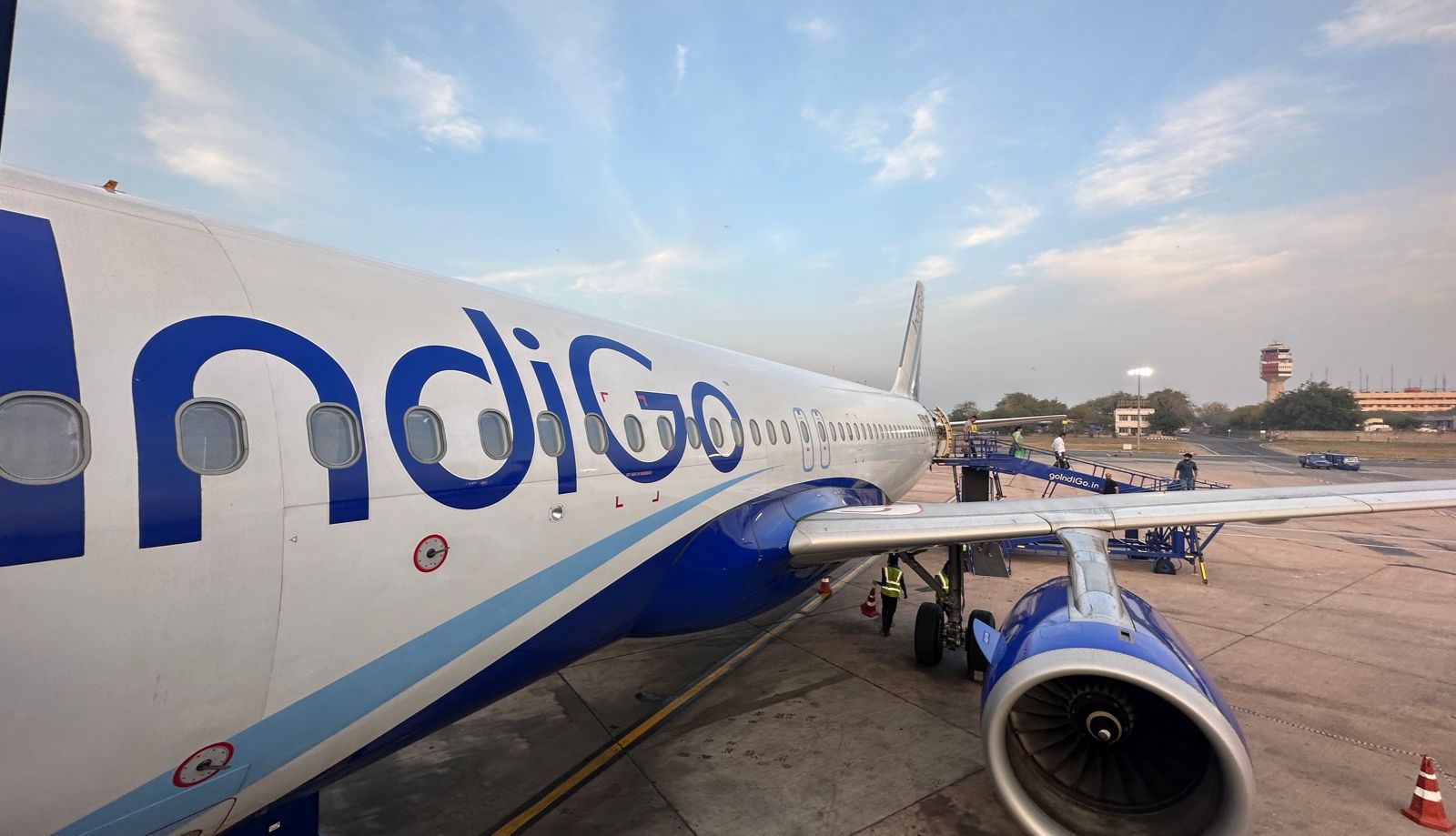
IndiGo's recent wave of cancellations, triggered by challenges in complying with India's new pilot fatigue management norms, has left thousands of passengers stranded and raised concerns about the airline's financial performance.
Industry experts estimate that the situation for the carrier could shave 5–7% off IndiGo's quarterly top line, denting profitability during what is usually a peak travel season, according to a leading business news website.
The report, citing Morgan Stanley, said that as per the estimate that pilot salaries, already accounting for nearly half of total staff costs, are set to climb further. The brokerage has cut its FY26 and FY28 earnings-per-share estimates by 20% each and reduced Ebitda forecasts by 1–4%.
The brokerage also noted that rising aviation turbine fuel also poses a challenge. ATF will cost more for airlines starting December as oil marketing companies hiked prices by an average of Rs 5,113.75 per kilolitre, marking the third consecutive monthly increase.
Citi, as per the report, projects IndiGo's operations to stabilise within the next month as corrective measures take effect. However, it warns that a weakening rupee combined with rising aviation turbine fuel costs could squeeze margins further during what is typically a strong third quarter.
With the latest revision, ATF now stands at Rs 99,676.77 per kilolitre in Delhi, Rs 1,02,371.02 per kilolitre in Kolkata, Rs 93,281.04 per kilolitre in Mumbai, and Rs 1,03,301.80 per kilolitre in Chennai, adding fresh pressure on airline operating costs.
Earlier in November, aviation turbine fuel prices were hiked by about 1%, while commercial LPG rates cut marginally by Rs 5 per cylinder. Last month, the price was increased by Rs 777 per kilolitre to Rs 94,543.02 per kilolitre in the national capital.
Meanwhile, for IndiGo, the crisis erupted after the carrier failed to comply with the latest norms.
The Directorate General of Civil Aviation, India's aviation sector regulator, rolled out the second and final phase of the new Flight Duty Time Limitations norms in November. The first phase came into effect in July after a delay of nearly a year.
In November, the Directorate General of Civil Aviation rolled out revised rules, which were meant to improve crew safety and rest hours, allowing increased weekly rest periods and changes in night duty norms.
It turned out that IndiGo, which commands 60% of India's domestic aviation segment, was ill-prepared for the adoption of the new norms. Its massive scale of operations ended up posing a challenge to comply with the new norms at its existing crew strength.
Essential Business Intelligence, Continuous LIVE TV, Sharp Market Insights, Practical Personal Finance Advice and Latest Stories — On NDTV Profit.