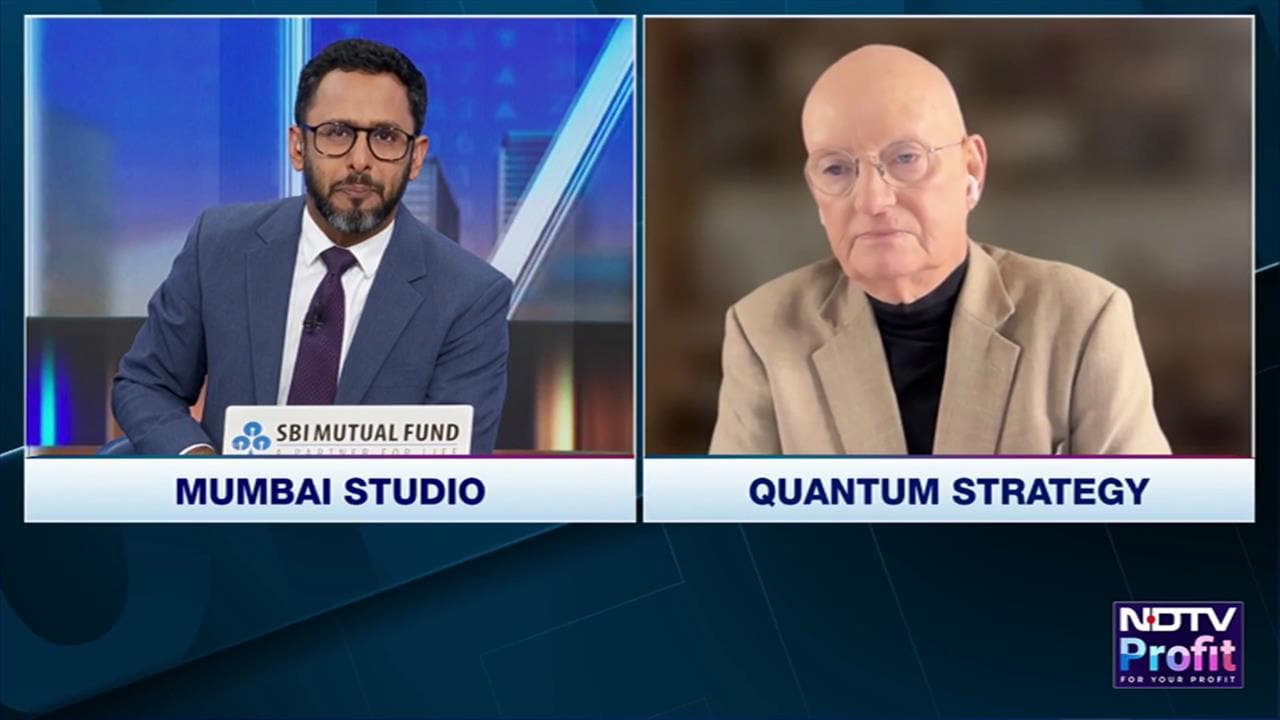
Indian Stock Market Outlook: Indian equities could see support return if investors get greater clarity on the Middle East conflict and energy supplies, according to Jonathan Barratt, Chief Investment Officer at ETO Markets.
Barratt said a conclusive outcome around the Middle East could trigger a rebound across equity markets, with India potentially benefiting from the spillover as investors continue to focus on artificial intelligence and data-centre investments.
Speaking to NDTV Profit, Barratt said the market is becoming “quite complacent” about the geopolitical situation, even as oil flows through the Middle East remain at pre-war levels. He cautioned that the conflict is not yet fully resolved and any fresh development could push crude prices higher.
Also Read | Layoffs Are Rising In Tech, But These Skills Are Helping People Unlock Better Pay
Middle East Clarity Could Bring Equity Flows Back
Barratt said the key for Indian equities is greater visibility on where energy supplies are coming from.
“I'd just like to see the good support come back to the market if we get a better handle on where we see our energies coming from,” Barratt said.
ALSO READ: Track All Stock Market Live Updates Here
He added that a conclusive outcome from the Middle East could help equity markets rebound.
“If we know that we've got a conclusive sort of result out of the Middle East, then I think you'll find that most equity markets will rebound,” he said.
For India, Barratt expects the combination of improving energy visibility and the ongoing AI and data-centre investment cycle to provide support.
“So let's see what happens with energy and let's see what happens with obviously, the new AI trade and data centres. And I think that will support the Indian market,” he said.
Market Getting “Quite Complacent” On Oil Risk
Barratt warned that the oil situation remains fragile despite crude supplies continuing to move through the Strait of Hormuz and the broader Middle East at pre-war levels.
“I think the market's getting quite complacent,” he said.
He pointed to additional oil being released into the market and the US sending another aircraft carrier to the Middle East as signs that the situation has not been completely resolved.
“So they're sort of saying that yes, we've got it in hand, but at the end of the day anything can happen that will force prices higher,” Barratt said.
He also highlighted developments in Yemen, saying the situation remains another factor to watch.
“I don't think the problem is resolved yet, although I'd like it to be resolved,” Barratt said. “So we're not yet out of the way and in the green pastures, so to speak.”
Inflation May Not Be As Severe As Markets Fear
Barratt also suggested that inflationary pressure could be less intense than markets currently expect.
He pointed to the additional oil supply coming into the market and said there is some easing in the oil market, particularly with the additional barrels being released.
“Perhaps we're not as inflationary as we think,” Barratt said.
If inflationary pressure remains contained, he believes the Federal Reserve may have less reason to tighten policy aggressively.
“If the Fed eases itself in terms of its tightening policy then I think the market will look at that and be more encouraged,” he said.
Barratt added that rates may not rise as aggressively as some market participants currently expect.
Weak US Jobs Data Raises Fed Questions
On the US economy, Barratt said the latest unemployment data was weaker than expected, while revisions were also weaker than anticipated.
He also pointed to subdued University of Michigan confidence numbers, arguing that the economy is slowing even as the 10-year US Treasury yield continues to move higher.
“I would like to think the Fed would not move on interest rates again for some time and let's see what happens,” Barratt said.
He cautioned that excessive monetary tightening could further weaken the economy and potentially push it into recession.
“Because if they tighten monetary policy too much and the economy starts to soften overly then we see ourselves in a recession,” he said.
AI, Data Centres To Keep Capex Cycle Moving
Barratt expects the capital expenditure cycle around data centres and artificial intelligence to remain an important destination for capital.
Asked whether that trend would continue even if crude prices fall following a potential truce, Barratt said the capex cycle should remain intact.
“I think that capex will go towards that but there are a lot of commodities that are required to fund that trade and that will keep prices support,” he said.
He also pointed to the US dollar and higher yields as another area attracting capital.
“I think that CapEx will continue to move that area,” Barratt said.
India Outlook Hinges On Energy, AI Trade
For Indian equities, Barratt's outlook therefore remains closely linked to two developments: greater clarity around energy supplies and continued investment in AI and data centres.
He said that while Indian equities have faced sustained selling, a clearer geopolitical picture could help bring support back to the market.
Barratt also noted that the Nasdaq remained at record highs, suggesting strength in the AI-led trade could spill over into other economies and companies.
“I think that will over spill into other economies that are on this trade and other companies,” he said.
ALSO READ: Goldman Sachs Lifts Kotak Mahindra Bank Target Price; Citi Backs Strong Q2 Loan Growth
Essential Business Intelligence, Sharp Market Insights, Practical Personal Finance Advice, Daily Fuel, Gold and Silver Prices and Latest Stories — On NDTV Profit.