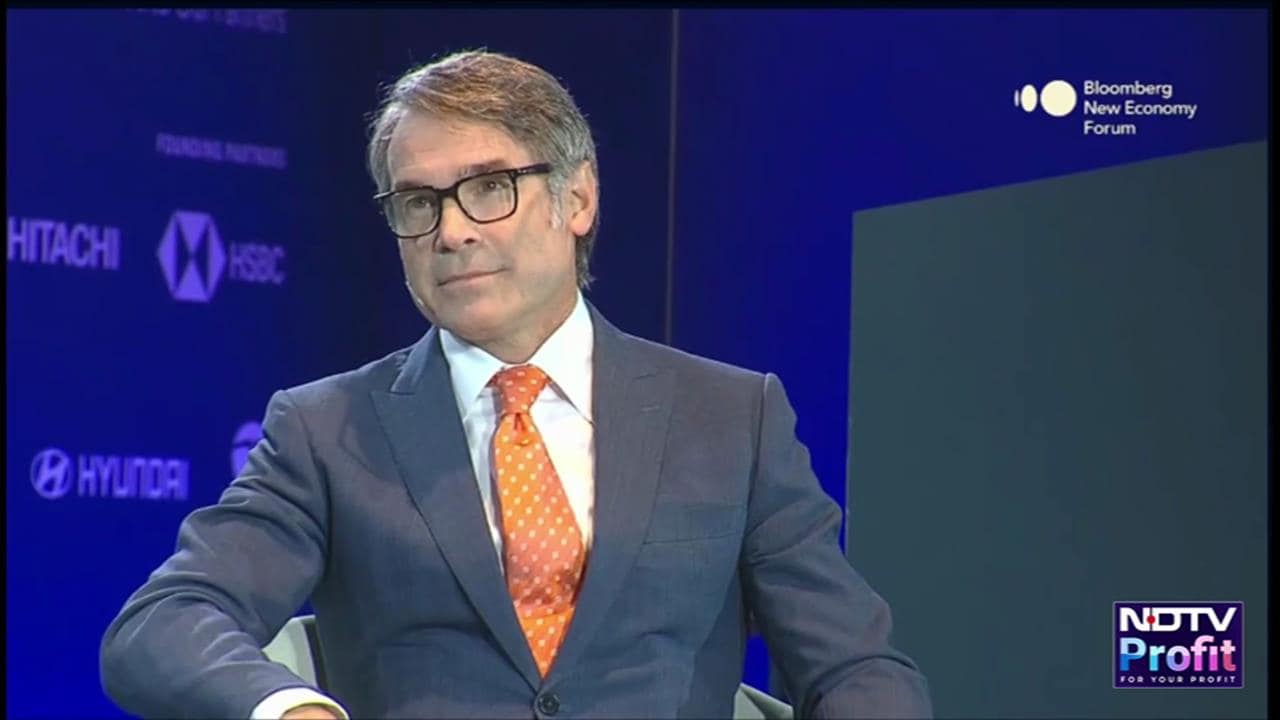
India faces mounting economic headwinds from elevated oil prices, currency pressure, and global uncertainty, even as domestic demand and services continue to support growth, Steve Englander, Global Head of G10 FX Research and North America Macro Strategy at Standard Chartered Bank, said while speaking to NDTV Profit.
Englander said emerging markets such as India could face greater challenges from higher energy and food prices than the US, where rising bond yields are being supported by economic strength and business confidence. He also expects the Reserve Bank of India to raise interest rates by 75 basis points over the coming year.
Oil Prices, Inflation Pose Risks For Emerging Markets
Also Read | Layoffs Are Rising In Tech, But These Skills Are Helping People Unlock Better Pay
The comments from Steve Englander come amid persistent uncertainty in global energy markets, with Brent crude prices nearing $106 per barrel amid continuing Houthi attacks on Saudi Arabia. The crude prices are rising even as oil flows are recovering through key routes.
Englander said markets are increasingly concerned about refined petroleum products, with questions surrounding refining capacity and widening price spreads between diesel and crude adding to global inflation risks.
He said higher oil prices could become a significant concern for countries that import energy, particularly when combined with rising food prices and adverse climate conditions.
India's retail inflation has also accelerated, driven by food prices, while core inflation has increased as well, and all these pressures could complicate the outlook for monetary policy for India.
Rupee Pressure, Foreign Flows Remain Key Concerns
Englander said the rupee had come under considerable pressure, prompting extraordinary measures by the RBI to support the currency. He added that Indian interest rates had not attracted foreign capital, leaving the currency and some domestic assets vulnerable to external pressures.
However, he cautioned against interpreting these developments as evidence of fundamental weakness in the Indian economy. According to Englander, global factors, including the war and elevated oil prices, have overstated some of the concerns surrounding India's economic outlook.
He said it was important to distinguish between domestic challenges, such as inflation, and external pressures that policymakers have limited ability to control.
Englander also pointed to a more optimistic assessment of India's technology sector's ability to adapt to artificial intelligence, compared with the pessimism he encountered during an earlier visit.
AI Sell-Off Puts Asian Markets Under Pressure
Englander said concerns around AI valuations, financing, and the sustainability of investments had yet to trigger persistent sell-offs in US markets, which remain close to record highs. He cautioned against turning short-term declines into a broader bearish call without concrete evidence of a fundamental deterioration.
The sell-off in US chip stocks spilled over into Asian markets, with South Korea's Kospi plunging around 6.5% during the session, while Japan's Nikkei fell about 2.5% and Hong Kong's Hang Seng also traded lower. Semiconductor stocks, including SK Hynix and Samsung Electronics, came under pressure, while SoftBank Group declined amid its exposure to AI-related stocks.
Growing competition from Chinese chipmakers has added to concerns, with CXMT advancing towards mass production of next-generation DRAM chips, potentially challenging South Korean chipmakers' global dominance and pricing power. Cautious remarks from Broadcom's CEO, who said AI investments had gambling-like qualities, also weighed on sentiment.
Englander said similar episodes of market weakness had often been followed by rebounds, advising investors to wait for concrete signs of a fundamental deterioration before turning decisively bearish.
IMF Growth Upgrade Offers Support For India
The International Monetary Fund has raised its growth forecast for India for fiscal 2027 by 0.6 percentage points, citing resilient domestic demand and services. The revision offers some support to the country's growth outlook despite elevated oil prices and global market uncertainty.
Asked whether the upgrade gave him greater confidence in India, Englander said the country had been affected by global developments, particularly the war and higher oil prices, which had overstated some concerns about the domestic economy.
He said it was important to distinguish between domestic challenges, including inflation, and external pressures beyond India's control. While the rupee remains under pressure and foreign capital flows are a concern, Englander said domestic economic conditions appear relatively firmer.
Also Read: IMF Raises India's FY27 GDP Growth Forecast To 7%, Cuts China's 2026 Outlook
Essential Business Intelligence, Sharp Market Insights, Practical Personal Finance Advice, Daily Fuel, Gold and Silver Prices and Latest Stories — On NDTV Profit.