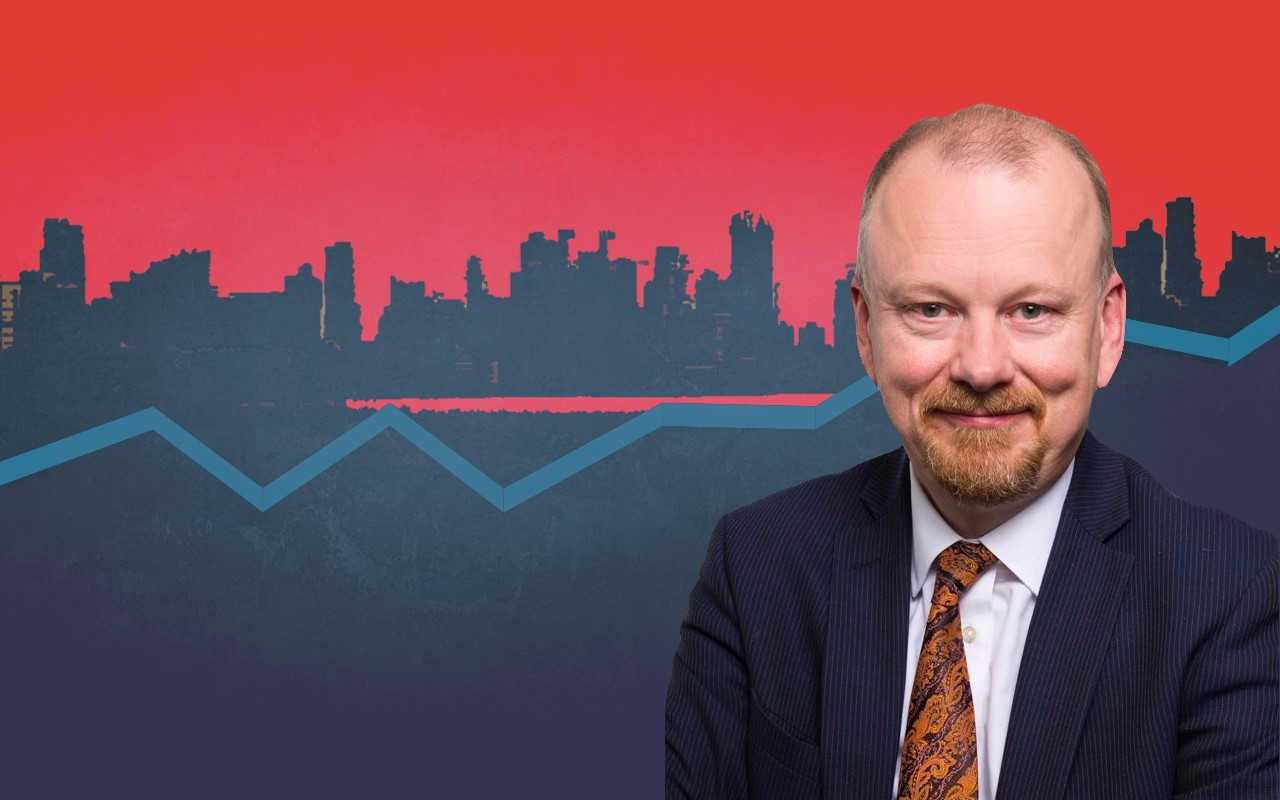
The possibility of large financial blowouts in the West and a growth of trade protectionism are bigger risks for global financial markets than the geopolitical tensions surrounding North Korea, says Jerome Booth, chairman of specialist emerging markets boutique New Sparta Asset Management Company.
In this backdrop, emerging markets are a better bet and less risky given that investors are largely underweight there, Booth said on BloombergQuint's Thank God It's Friday.
Here are edited excerpts from the conversation.
Based on North Korea's missile testing how are you assessing risk and how are you looking at uncertainty? What does this mean for Asian equities?
That's a tricky question because nobody knows. Itillustrates that there are number of very low probability but very high impact events that can always impact markets. This is one of them and it's a headlinegrabbing one. But it is by no means the most important. We maintain that whateverthe geopolitical issues currently are, the majority of the extreme event risks are still coming from Europe and United States. The bloated financial systems and the extraordinary quantitative easing, the global imbalances, is where wecan see a repeat of 2008. There arewarning signals at the moment. We have increased tension in Europe, slightly dysfunctionalpolicy mix in Washington and the North Korean episode is a part of that. It isindicative that we may have to prepare for a very different world, one in whichcountries are going to have to be more insular andprotect themselves. But I don't want to over-emphasise the risks of North Koreabecause while they are very real, there is very low probability of something extremely unpleasant happening. The bigger issues and risks are around large financial blowouts in the West and a growth oftrade protectionism. On a lot of these factors, one is much better positioned bybeing invested in emerging markets.
People have a very simplistic view of risk. They think it's linear, additive and there is a golden rule that however riskier things are in U.S. and Europe, emerging markets have to always be considered riskier. That's absolutely nonsense.
It is important that institutional investors and other investors starts to really think about global risks in terms of scenarios and to protect themselves against different scenarios. That doesn't mean you put all eggs in one basket and think of risk as a linear thing. You shouldn't if you get worried about U.S. and Europe, put more money into Europe and U.S. You should try to diversify. In particular, one should go into emerging markets, and within emerging markets do a whole range of things, including less liquid things because its liquid instruments that tend to suffer most, not the illiquid ones where you don't have the price pressure in a crisis. If North Korea shakes people's investment views up, then they should remember what that felt like and apply the same across a whole range of other scenarios.
‘Emerging Markets Still Cheap'
Do you think emerging markets will be more resilient to Fedbalance sheet unwinding program than they were last December where the Fed announced its second hike in a decade?
Emergingmarkets are pretty well immune to what happens in U.S. interest rates except in the very short term. We should not always think about what the U.S. will be doing to the rest of theworld. It is a two-way process. Also, countries have their own interest rate policies which are much more important than those policiesin the U.S. My concerns about the U.S. is that the policy mix there isvery tricky. It's difficult to exit from quantitative easing. Yes, there's been some economic recovery, there's beengrowth in employment. But compared to Britain, it's still a difficult labour market. There's still a lot of potential for the leveraged sectors of economy to cause problems.
The big hope of this administration was that we will get a big fiscal stimulus and corporate tax rates will come down which will stimulate investment and there will be public sector investment. I am afraid to say, I don't really think it's coming. What may come is the blowout of the debt and fiscal expenditure without the necessary benefits. And I think there is, if you like, a plan B. Plan A of the administration is to have a stimulus package which will lead to growth and jobs. The alternative which may emerge is that we don't get the stimulus but we do get the debt and we do get a point at which people start worrying about how this will get paid. Then you get a bond crash, inflation and devaluation of the dollar, they do create jobs, possibly even President Trump gets elected on the back of that. But it's very bad news for foreign savers in U.S. assets. U.S. asset classes are, very definitely, in a bubble - bonds, equities and the currency. When you start with that scenarios, to get worried about that there trying to cope with normalisation, yes, we should be worried about that but we shouldn't be overly worried, except in the short term. Short term we can see a crises in flows. The backdrop in terms of emerging markets is also that there has been an underweight position.
I don't think one should be overly concerned. It's very interesting to watch what's happening but whether there is certain problems rising in the U.S. economy or not, there is already a growing shift in central bank reserves moving away from the dollar. All of this will benefit emerging markets in the medium term.
A Central Bank's Conundrum
How easy or difficult is it going to be for the U.S. Federal Reserve to be able to go ahead with its third interest rate hike this year andis the U.S. economy well positioned for the Fed to start rolling back its QEprogram?
It is difficult to raise rates. It might push the economy back into recession or a deflationary environment. There is still a very strong inventorycycle in the U.S. economy and there is still many risks out there. And there is verylittle inflation. So what's the justification? The justification is to normalise and take some of the extraordinary monetary easing off the table. The Fed has been in this quandary for a very longtime. There are risks. Stanley Fisher has clearly pointed out that this isabsolutely the wrong time to be taking the foot off the peddle in terms ofregulation of the finance industry. One needs to do more to avoid a second oranother financial crisis. The risks are very finely balanced. That's why the Fedhas taken months to get where it has. We are still in a very extraordinary world where we've got trillions of dollars of bonds issued with negative returns and yet are people are somehow for some reason willing to buy them.
And in this environment it's always going to be difficult for the Fed to raise rates but it's difficult for them not to do something. There has to be a sense of improvement and a sense of recovery. A job of central bank governor in a highly-indebted western country today is not to have maximum transparency. There is a difference between maximum and optimal transparency. And in a world of financial pressure, the objective of which is to reduce the debt through a negative real interest rate without cottoning on to it.
You have to be almost like a magician, you have to distract attention. Part of that is every few weeks you work out what the market is saying about interest rates, inflation and growth expectations. You say something slightly different which gets pundits excited and very focused on that. Meanwhile, what you are trying to achieve is a) stability and b) try and to get inflation higher in the actual interest rate and reduce the level of debt over time. That's probably more achievable in the U.K. and in the U.S. In the U.S., politics is turbulent. Uncertainty over fiscal policy is much greater. That's the backdrop. This isn't a simple question of, ‘oh these economies are well-run run and what they do will determine flows in terms of the interest rates.' That's a fiction. International flows are now being determined by the balance of risks and, in particular, extreme risks and what investors think they should be doing.
There has been a lot of bubble chasing and insofar as that's coming to an end, there's going to be a large shift away from U.S. assets over time. That's a tricky scenario for a central bank.
‘Herding Mentality' And Asset Bubble
Thereare a growing number of observers who suggest that the U.S. markets are in bubbleterritory. What is your assessment?
It's definitely in a bubble territory - equities and bonds. Why is it that investors are investing in bonds withnegative yields? A child could work out that it's not a good idea. Yet we have all this rhetoric that these bonds are safe and so the story goes. Of course, emerging markets have to therefore be riskier, whatever happens. We have a very linear idea ofrisk. But risk is not linear and it's not simple. My risk is different from your risk.We have different liabilities, different information sets, different reactiontimes, different abilities to control things and it is not additive. We shouldget away from this simplistic view of the world, that everything is interrelated and mathematically easy to calculate to the reality which is much more complex and hugely difficult to analyse. Risk isnot a simple thing at all. It depends on where you are. One of the big problem isthat investors are really concentrated and because they are so worried about the globalenvironment, because they don't understand the macroeconomic environment, and then their gut comes in. Their prejudices are supported when they think that emerging markets are risky, I will go to things I am familiar with.
Now the familiar may be the riskiest thing. But that's what the gut tells you. That's what has created a big herding mentality. And the herding together with the reassurance that the Fed is there or the monetary authorities are there to keep prices up has fed these huge bubbles. But they are absolutely unsustainable.
‘India Needs More Investment In The Real Economy'
Whatis your assessment of the current state of the Indian economy and investability in Indian equities?
India is very well positioned over the medium term. Thereare all sorts of short-term concerns..growth isn't doing as well as it should and rest of it. But I think fundamentally, India is on a great medium-to-longer term track, and a lot of peopleunderstand that. We should look beyond equities as well. The stock market is a small proportion of GDP. I myself, have been trying to invest in the real economy and will continue to do that. If you are a foreigninvestor coming into India, the moment you start investing in India andother emerging markets as a way to not just to get a bit of higher risk and higher returnbut also to reduce risk, having done some scenario planning, having been forced todo it, then you realise that it's a good to do lots of different things, not just the easy to do, not just the short term, not just the equities. But equities arestill supported by the exchange rate which is coming up. We've had a series of important political messages, it's is clear that you've got the possibility of some major reform. There is always going to be annoyance at the delay or time things take. GST would haveproblems that need sorting out. We do have to solve problems of indebtedness in the economy. There is a tentativeness in terms of the Indianinvestors themselves to invest in the real economy. The entrepreneur wanting toinvest, does probably, need a bit more encouragement. We are on a good track. Institutionalinvestors looking to invest in India and emerging markets are a) underweight, b) very focussed on the need to do more. But they have traditionally found it difficult to invest in India. There are more things that could make it easier.We have got news at the moment, the Japanese-Indiandialogue going on, which is broadly extremely positive. But then you have a little dispute about tax as well. There are ways to promote FDI inwards.There are further things to do. It's generally a positive story and improvingstory. But that doesn't mean one should be complacent at all.
The Risks Of Cryptocurrency
It's believed that blockchain does improve efficiency interms of how trade pans out. But what is that the centralbanks may have a problem with when it comes to blockchain?
There are a whole bunch of issues around blockchain andcryptocurrencies, bitcoin, etc. It is very important to recognise from themonetary point of view that central banks have the legitimate monopoly of the use of monetary policy. And whilst it's convenient in a global environment tofacilitate transactions by having more money, in a different environmentwhich shall surely come, were central banks have to tighten more aggressively, theywill have a very different view because in a tightening environment central bankswill want to control the money supply and be the only authorities to do that. So, it's quite plausible that in certain timesalternative payments could be bad. So it's important for these markets to be developed in conjunction with central banks and under the auspices of central banks because they will want the knowledge, the security that they can reduce the monetary supply when they want. So, that's thefirst point. It's not an alternative. When it is set up as an alternative, which it is to some extent at the moment, there is a danger if the cycleturns. The other thing to say is that, very interestingly, these currencies to some extent might provide solutions to overleverage. This is more of aproblem in western economies with huge amounts of debt. The big challenge today, the obvious problemafter 2008, is the massive leverage inthe financial system. The fact that the leverage is still there makes another crisispossible.
Essential Business Intelligence, Continuous LIVE TV, Sharp Market Insights, Practical Personal Finance Advice and Latest Stories — On NDTV Profit.