Get App
Download App Scanner
Scan to Download
Advertisement
LIVE UPDATES

Editors’ Take: What Q2 Earnings Say About The Economy

Editors’ Take: What Q2 Earnings Say About The Economy
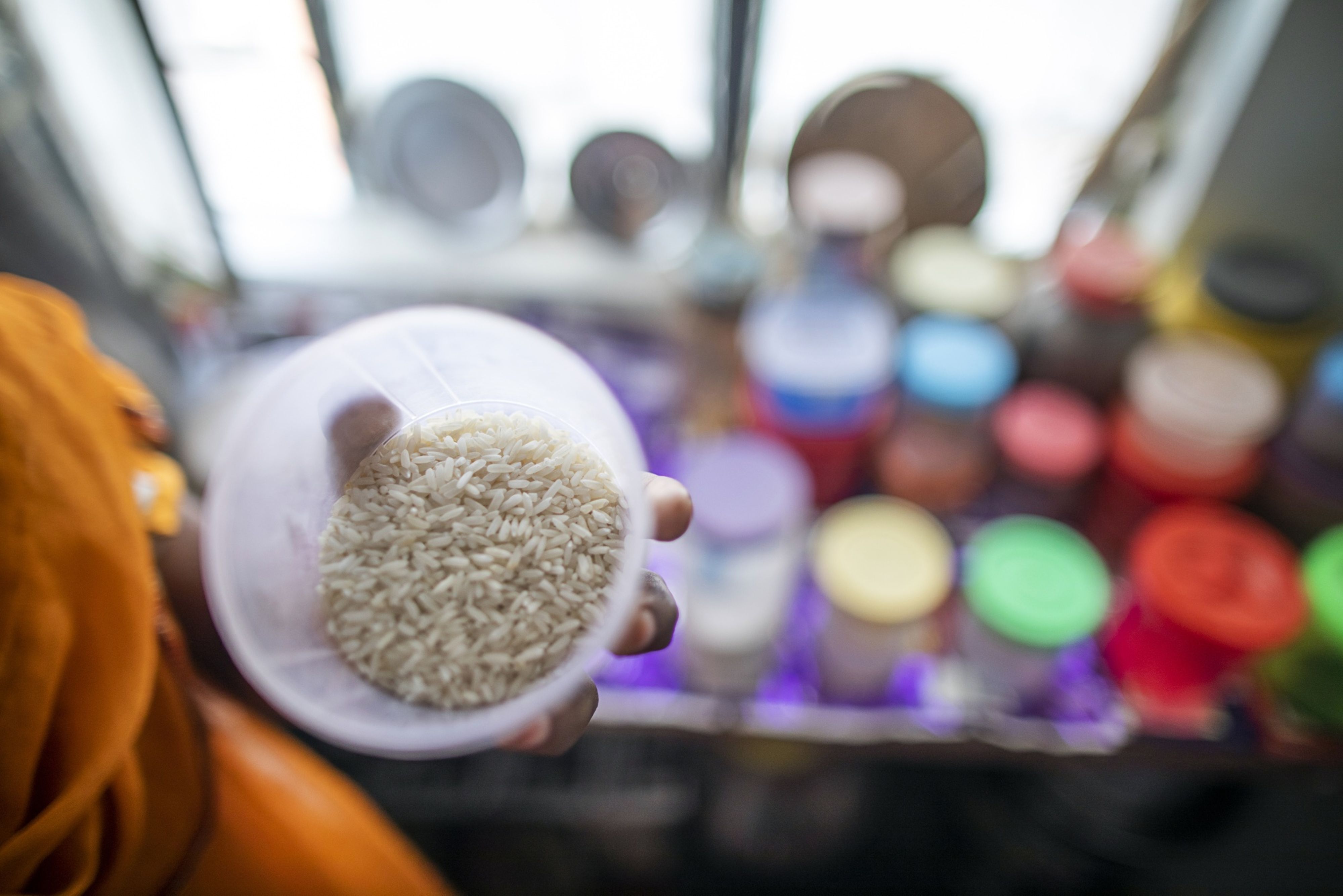
An inhabitant displays a nearly-empty food container in the kitchen of her home at a residential colony, state provided housing, in Banda, Uttar Pradesh, India, on Oct. 12, 2020. (Photographer: Prashanth Vishwanathan/Bloomberg)
5 years ago
The July-September quarter marks the reopening of India's economy after the Covid-19 lockdown, considered among the most severe in the world. BQ's editors are parsing Q2 financial results of companies big and small to gauge what they convey about the broader economy.

HDFC Ltd reported a rebound quarter. Yes, quarterly net profit was down 28% compared to a year ago but that was because of a one-time gain in the year ago quarter, when HDFC sold its stake in Gruh Finance. Net interest income rose 21%.

The macro takeaway from HDFC’s earnings, put together with commentary from other lenders, is that mortgage demand is back. HDFC saw a 12% year-on-year growth in individual applications and a 9% increase in approvals. Disbursements in October, according to vice chairman Keki Mistry, were the second highest in HDFC’s history, indicating strong appetite for housing loans.

Put this together with the commentary from ICICI Bank over the weekend. Mortgage disbursements are higher than pre-Covid levels, Anup Bagchi, head of retail at ICICI Bank told analysts.

Low interest rates and some decline in prices across key markets are doing the trick!

Ira Dugal

Shares of ICICI Bank got a nice bump when trading reopened on Monday after the lender’s weekend release of earnings. Numbers were good on almost all fronts.

The bank posted a record quarterly profit, a 20% increase in operating profit and a 16% increase in net interest income. Equally encouraging was that the lender did not feel the need to bump up provisions significantly suggesting that it may be well positioned to deal with any Covid-related stress that may come up.

The pro forma gross NPA ratio was at a reasonable 5.36%. The bucket of loans which had seen asset classification benefits due to the various schemes offered by the regulator is also small at under 0.5% in the case of ICICI Bank.

Perhaps most encouraging is the commentary around growth. Addressing the press and analysts, the management said the bank is coming back into growth mode, with domestic advances growing 4.5% quarter on quarter. Retail advances grew 6%.

As economic activity picks up, there will be lenders who are still tackling the past and those who are ready to lend into the next leg of growth. ICICI Bank appears to be firmly in the second segment. The fact that the board has approved the reappointment of CEO Sandeep Bakhshi well ahead of time only helps the bank’s case by keeping any management uncertainty at bay.

Ira Dugal

Maruti Suzuki's performance in Q2 was largely in line with estimates. But after Tata Motor's commentary about the strength in demand, the commentary from Maruti is important to gauge the strength in four-wheeler demand. Management highlighted that sales momentum remains strong, driven by both pent-up demand and shift towards personal mobility. The company credited the robust rural sentiment, innovative financing schemes and healthy festive sales in Kerala and the Western region as the key drivers of growth. While rural was strong, urban markets have also started witnessing a pick-up in sales during October.

Overall, retail sale growth during the second quarter stood at 4% YoY. Retail sales during the Navratri period posted healthy growth over a year ago (over 96,000 deliveries versus 76,000 in FY20). Sales are likely to remain robust till December. The company mentioned in the conference call that demand for hatchbacks continues to stay robust because of the preference towards utility/value in the current environment and that plant utilisations have almost reached the rated capacity to cater to the festive demand.

The one caveat about auto sales is that these may not be an indication of the economic sentiment as much as an indication of the safety that an average consumers now wants. The managements at the two-wheeler companies have not sounded as buoyant. And even in Maruti's case, share of first time buyers has gone up to 48% vs 43.4% last year as car purchases seems to have turned more functional than aspirational.

Niraj Shah

The scale and size of Reliance Industries Ltd. means that it perhaps gives among the best indications of economic direction. Reliance has operations and scale in Petchem, Refining and Marketing, Retail and Telecom.

Reliance being one of the largest player in the Petchem - Polymer and Polyester market - has seen seen revival in the textile segment with increased availability of labour post the lockdown. The demand here is coming from medical, hygiene and technical textiles.

Domestic demand has led the company to cut down exports to cater to local markets as downstream converters preferred domestic players over imports due to uncertainty across the global supply chain. Demand is coming from consumer durables, FMCG companies and auto companies due to pandemic induced mobility preferences. This has led to inventories moving back to pre-Covid levels. Operating rates in India were amongst the highest compared to global markets.

The refining and marketing segments provide a glimpse of another aspect of economic activity. The inventory build-up has impacted margins but the segment's activity is expected to normalise in the December quarter. Demand for diesel/middle distillates is down due to the collapse of jet-fuel demand as airlines are operating at lower capacities. MS and HSD volumes are now touching last year’s levels. Crude prices went up during the second quarter but returned to price levels seen at the end of first quarter.

People are vary of going into the malls and shopping in stores. Lower footfalls are offset by higher bill values, thereby avoiding multiple visits. Fashion and lifestyle has picked up but mostly through e-commerce and this is playing a important role in mode of purchase preferences. Grocery, which was limited to staples, is seeing demand from household, as are personal products.

People continue to consume data at 12GB per month compared to 11.7 GB per month, a reflection of work-from-home and increased adoption of broadband. There is also SIM consolidation as people are limiting themselves to single phones which points to cost consciousness in communication spends.

Sajeet Manghat

We’ve seen two more private banks report earnings — Axis Bank Ltd and RBL Bank Ltd. At the headline level, there was nothing wrong with the earnings for either of the lenders.

Axis Bank returned to profitability in the quarter ended September. Its net profit stood at Rs 1,683 crore compared with a net loss of Rs 112 crore a year ago. The pro forma gross NPA was at 4.28%. The bank provisioned upfront and pointed to a thin pipeline for restructuring and that earned the lender some brokerage upgrades.

In the case of RBL Bank, too, net profit more than doubled to Rs 144.2 crore, while net interest income grew 7%. The pro forma gross NPA ratio was 3.49%.

It’s difficult to fully assess the asset quality picture across banks because stress is being reported in different buckets. There is the headline gross NPA, the pro forma gross NPA (because of the Supreme Court’s standstill on recognition), the left over book from the moratorium which has benefitted from delayed recognition, a small (so far) restructured book.

The best way to judge real stress appears to be to add the following:

  • The pro forma gross NPA. This is available in the notes to accounts.
  • The category of ‘respective amount where asset classification benefit is extended as of September 30’. This reflects the pool of loans where the asset classification may have been different than it currently is given the various dispensations provided by the RBI.

If you go by that metric, stressed assets as a % of advances for RBL Bank are at 5.4%. For Axis Bank, it is closer to 7%.

Ira Dugal

L&T Q2 Results: Profit, Order Inflow Decline Despite Easing Lockdown Curbs

Titan Q2 Results: Net Profit Falls On Pre-Closure Of Hedging Contracts, Jewellery Business Grows

JSW Steel Expects To Meet Sales Target For FY21 Amid Mixed Reaction To Its Q2 Results

Analysts Raise Target Price For Asian Paints After Q2 Results

While all three cement majors, viz ACC, Ambuja and Ultratech delivered numbers which were above estimates, it is the commentary from Ultratech in particular which gives some insight into economic activity. In an investor call post results, Ultratech mentions about how cement demand saw a rebound in September, with most regions reporting YoY growth, and that October was a better month than September for Ultratech. (Brokerage house Jefferies notes that removing Century volumes in the base, as the merger was not consummated in Q2FY20, volume growth was 20% for Ultratech.). The management attributed the volume recovery to the pick-up in government spends on Infrastructure and affordable housing. They also referred to strong growth in rural areas, saying they saw 'Unprecedented growth in rural consumption', adding that this was driven primarily by the housing sector. Mind you, ACC and Ambuja clocked in a sharp sequential improvement of 35% each in cement volumes for the July-September quarter.

Ultratech's early estimates for GDP for Q2 indicate a sharp recovery from the degrowth of ~25% during Q1, and they are seeing migrant labour gradually returning to cities and urban real-estate has started showing some traction. They also mention of how demand is strong in East and Central markets, and that the north demand is supported by rural as well as Govt infrastructure and that the Karnataka and Tamil Nadu markets in the South are showing positive demand growth.

Niraj Shah

SBI Card Sees Spike In Bad Loans On Covid-19 Impact

Bajaj Finance reported a 36% decline in profit after tax on higher provisions. Once again, asset quality at the headline gross NPA level may not have shown much deterioration but signs of stress are visible.

Gross NPAs were at 1.34% after including loans where classification was delayed due to the Supreme Court order. As an aside, it's good that banks are reporting pro-forma NPAs despite the court's ruling. Is that a nudge from the regulator?

Back to the main point of stress on the Bajaj Finance balance sheet. It is by no means restricted to the gross NPA number. Analysts are looking at Stage-2 assets, which account for nearly 8% of the book. These are assets overdue by 30-90 days. There is also the continued conversion to flexi loans, which, in our view, is simply restructuring. So throw in another Rs 10,350 crore in loans converted into flexi loans over the last few quarters to judge real stress.

Important also to look at incremental lending.

Here Bajaj Finance guides that September loan disbursements are at 62% of pre-Covid levels. They have reopened most lending segments except retail EMI loans and wallet loans. That, too, tells a story of uncertain retail asset quality in the higher risk segments.

Ira Dugal

HDFC Bank reported 18% profit growth with bad loans at a modest 1.37%, even after accounting for the delayed recognition due to a Supreme Court order. Accounts restructured under the RBI's one-time restructuring scheme stood at Rs 4,639.50. If you consider those, then you get close to 2.5% in stressed loans. Higher than HDFC's Bank's historical average but modest in comparison to the environment.

The management of HDFC Bank says that the salaried segment, in which they operate on the consumer side, has not seen much stress. They are seeing lending move back up, they say, although retail loans rose just 2.1% sequentially.

Greater stress was visible in the NBFC subsidiary HDB Financial, which takes on a slightly higher risk profile than the bank. For that unit, profits fell and bad loans rose to 4.3%.

The takeaway — there is deterioration in asset quality on consumer credit. But it will not show up across all lenders because the Covid hit has not been homogeneous across lending categories, sectors or income segments.

Ira Dugal

The July-September quarter marks the reopening of India's economy after the Covid-19 lockdown, considered among the most severe in the world.

BQ's editors are parsing Q2 financial results of companies big and small to gauge what they convey about the broader economy.

Essential Business Intelligence, Continuous LIVE TV, Sharp Market Insights, Practical Personal Finance Advice and Latest Stories — On NDTV Profit.

Newsletters

Update Email
to get newsletters straight to your inbox
⚠️ Add your Email ID to receive Newsletters
Note: You will be signed up automatically after adding email

News for You

Set as Trusted Source
on Google Search