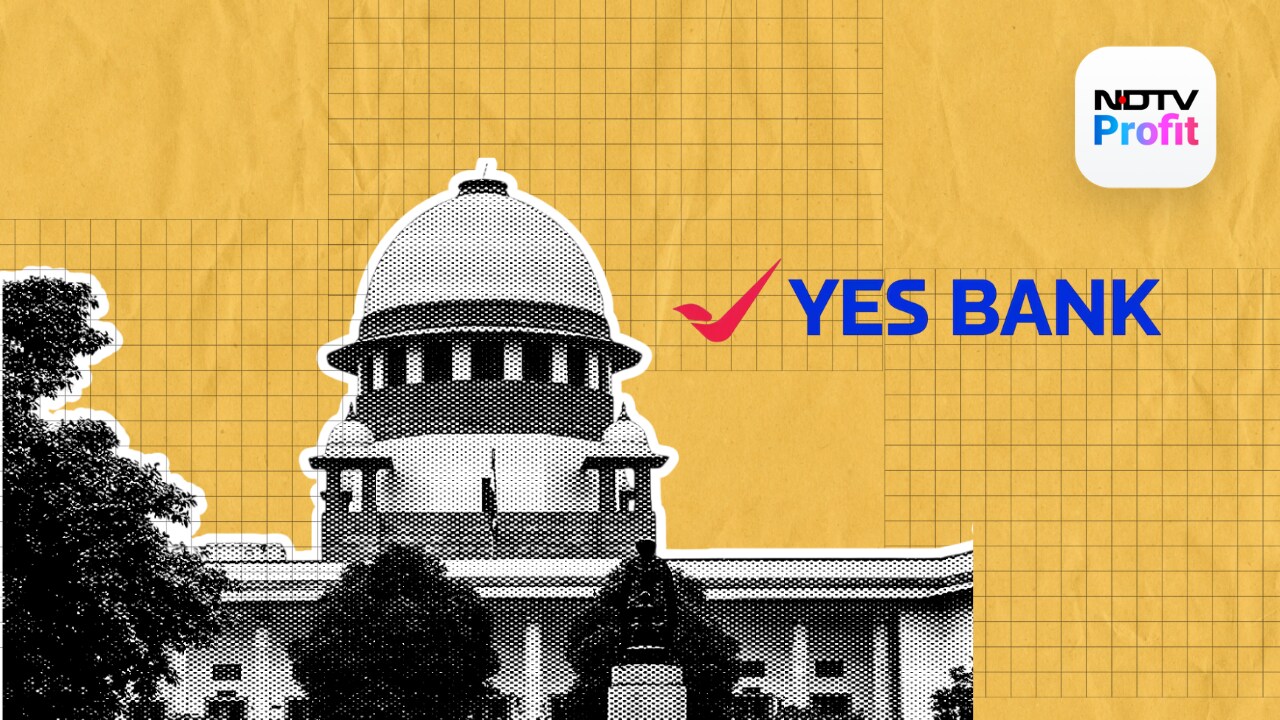
The Supreme Court is scheduled to hear petitions challenging a 2023 Bombay High Court ruling that struck down Yes Bank's decision to write off AT1 bonds in March 2020.
The write-off occurred during a Reserve Bank of India-led rescue plan, which involved a consortium recapitalising the troubled private lender after years of mismanagement and risky exposures.
As part of the resolution, AT1 bonds worth about Rs 8,400 crore were completely written down—before equity holders faced similar losses. Bondholders contested this move before the Bombay High Court, which ruled in their favour.
Yes Bank and the RBI appealed the decision, and the matter has been pending before the Supreme Court since 2023.
If the verdict goes against the bank, it could be required to repay bondholders in full, along with 9% interest from the date of the write-off. Beyond the financial impact on Yes Bank, the judgment could set a precedent for how courts address cases involving regulatory capital instruments that were mis-sold to retail investors.
What Are AT1 Bonds
Called additional tier 1—or AT1—bonds, these are perpetual debt instruments which are used by banks to expand their equity base. AT1 bonds are high quality capital which can act as a fail-safe in case of a bad financial situation. Such bonds also carry higher yields than comparable debt instruments.
Although they are non-equity instruments, AT1 bonds typically also carry a convertible feature which is triggered in case of a contingent—or materially negative—event. Notably, such bonds are also eligible to be written-off.
Introduced under the 2010 Basel III norms, AT1 bonds qualify as regulatory capital and were rolled out to better protect depositors following the global financial crisis of 2008-09. In many ways, banks can break the glass to tap capital via AT1 bonds in case they face a going concern type of situation.
Yes Bank's board of directors was superseded by the Reserve Bank of India in March 2020 following a crisis at the bank due to ballooning bad debt and falling depositor confidence. AT1 bonds worth Rs 8,300 crore were written off as part of the reconstruction plan at the bank following the appointment of Prashant Kumar as administrator.
While retail investors can no longer invest in such bonds, SEBI only put that prohibition in place following the crisis at Yes Bank. Retail bondholders, representing about Rs 300 crore worth of AT1 investments, had filed the petition to quash Yes Bank's write-off decision in the Bombay High Court.
In September 2022, SEBI had also levied a Rs 2 crore fine on Rana Kapoor, the former CEO of Yes Bank, under charges of misselling the bank's AT1 bonds to retail investors as "super FDs" and downplaying the risks of investing in them.
In 2020, the Madras High Court had upheld the RBI's decision to write off the bonds under its AT1 bonds circular after a similar petition was filed by 63 Moons Technologies Ltd., which held bonds worth Rs 300 core.
Essential Business Intelligence, Continuous LIVE TV, Sharp Market Insights, Practical Personal Finance Advice and Latest Stories — On NDTV Profit.