The case involving the alleged weakening of the environmental safeguards protecting the Aravalli Range has again reached the Supreme Court, with environmental activist and lawyer Hitendra Gandhi writing to Chief Justice of India Surya Kant for a review of the "100-metre test" rule.
Gandhi's letter—a copy of which has also been sent to the President of India—seeks a review of the apex court's decision to grant assent to the Environment ministry's recommendation on the definition of Aravalli Hills and Ranges.
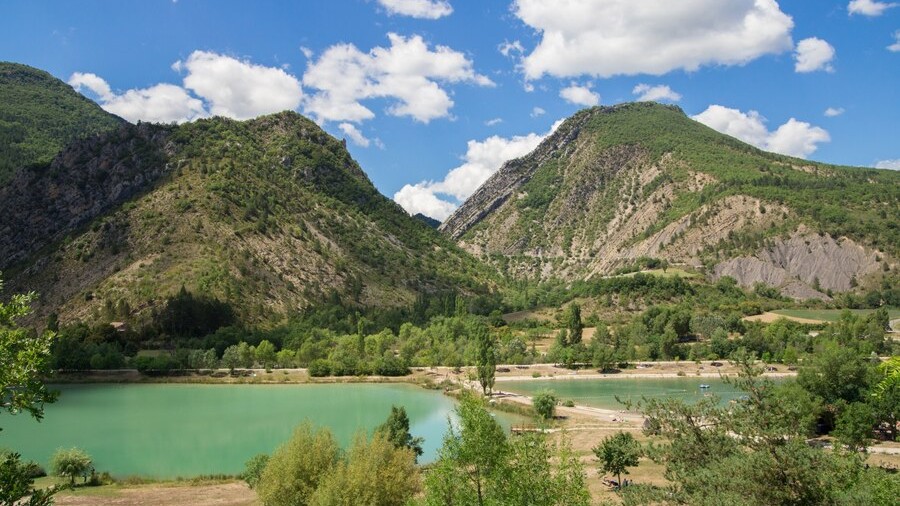
According to the new definition, "Aravalli Hill is any landform in designated Aravalli districts with an elevation of 100 metres or more above its local relief" and an "Aravalli Range is a collection of two or more such hills within 500 metres of each other".
Also Read | Layoffs Are Rising In Tech, But These Skills Are Helping People Unlock Better Pay
This has sparked a major row as environmentalists claim that the new definition could destroy 90% of the range due to lack of legal protection.
"The 100-metre rule risks excluding large ecologically integral parts that may not meet numerical height threshold but remain functionally critical," Gandhi said in his letter, adding that it is crucial to protect low ridges and water-recharge areas.
Gandhi has appealed the CJI to reconsider or clarify the definitional framework adopted for identifying the “Aravalli Hills and Ranges” in its recent order dated Nov. 20, 2025, warning that a narrow, height-based criterion could unintentionally weaken environmental protection across North-West India.
Aravalli Row: Centre Rejects Mining-Push ChargeGandhi, in his letter, emphasised that the Aravallis are an ancient and highly eroded ridge system, where ecological value is not confined to prominent peaks. He argued that low-relief ridges, outcrops, slopes, corridors and recharge-bearing terrains play a vital role in groundwater recharge, dust and desertification buffering, biodiversity connectivity, microclimate moderation and the overall ecological resilience of the Delhi–NCR region.
The advocate cautioned that environmental protection in India is often triggered by legal classification and land records. A narrowly framed definition, he said, could create “grey zones” where enforcement becomes uncertain, enabling land-use conversion, mining and construction in areas that are scientifically part of the Aravalli system.
Such outcomes, he warned, may be irreversible. Linking the issue to public health, the advocate highlighted the severe and recurring air quality crisis in the Delhi–NCR airshed.
He noted that ridge forests and connected scrub landscapes of the Aravallis act as natural barriers against dust movement and help suppress particulate resuspension.
Excluding ridge-connected tracts from protection could aggravate air pollution, deepen groundwater stress, intensify heat extremes, fragment wildlife corridors and heighten climate vulnerability.
Gandhi grounded his submissions in constitutional principles, citing Article 21's guarantee of the right to a healthy environment, along with Articles 48A and 51A(g), which impose duties on the state and citizens to protect the environment. He also invoked established principles of environmental jurisprudence, including the precautionary principle, public trust doctrine, sustainable development and inter-generational equity, arguing that where definitions risk irreversible ecological harm, constitutional institutions must err on the side of protection.
The representation further suggested that the current approach may raise concerns under Article 14, as ecologically similar ridge segments could be treated differently solely due to variations in local relief, despite comparable hydrological and ecological functions.
Seeking a limited but consequential intervention, the advocate requested that the Chief Justice consider placing the matter before an appropriate Bench for clarification or modification. He urged the Court to refine the definition by adopting a multi-criteria framework that accounts for geomorphology, hydrology, ecology and connectivity, rather than relying solely on height.
Among other suggestions, Gandhi called for public auditability of datasets and geo-referenced maps used to identify Aravalli areas, continuation of protection for ecologically connected landscapes pending finalisation of the management plan, and the incorporation of binding constraints on carrying capacity and “no-go” zones in the mining framework.
PM Modi To Launch Special Initiative To Reforest Aravalli Range On World Environment DayEssential Business Intelligence, Sharp Market Insights, Practical Personal Finance Advice, Daily Fuel, Gold and Silver Prices and Latest Stories — On NDTV Profit.