The Union Government informing the Parliament in the last session said that nearly 81% of the railway network in the country have been upgraded to allow trains to run at speeds of 110 kmph and above. According to a report by The Times of India, this is a major increase in the upgradation of railway tracks as compared to 2014.
Officials said around one-fifth of the existing railway tracks are now capable of supporting train speeds of more than 130 kmph. Quoting official data the report mentioned that 84,888 km of tracks out of the total network of slightly less than 1.1 lakh km have been strengthened and upgraded for speeds of 110 kmph and above.
Out of this, 23,477 km of track can support train operations at 130 kmph and higher. The upgrade has taken place across the railway system and is not limited to a few selected corridors.
Also Read | Layoffs Are Rising In Tech, But These Skills Are Helping People Unlock Better Pay
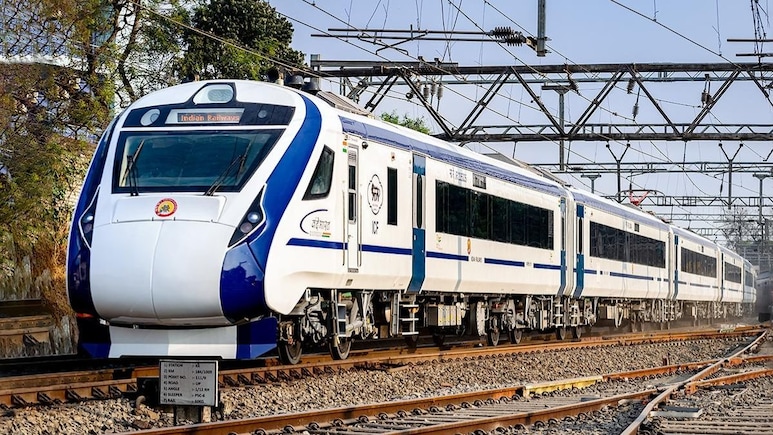
This increase in sectional speeds is aiding the Indian Railways to introduce faster and modern trains like the Vande Bharat Express, including both chair car and sleeper versions, as well as Amrit Bharat Express services.
The Vande Bharat Trains are designed to operate at a maximum speed of 180 kmph, but are currently running at lower speeds at different sections.
ALSO READ | IRCTC Eyes 18% Annual Growth In Tourism Revenue, Says CMD
According to experts quoted by the TOI, India's approach is different from countries such as China, Japan and France, where higher speeds were mainly achieved by building new passenger-only high-speed rail lines.
While in India, the railways has completely focused on upgrading its existing railway tracks that carry both passenger and freight trains.
According to reports, this process is more complex because it requires improving track structure, signalling systems, electrification and safety measures without disturbing daily train operations.
Railway ministry officials stated that India is gradually transforming the large connected stretches of tracks from 110 kmph to 130 kmph and further towards 160 kmph.
"This step-by-step method is creating a laddered speed system" instead of a sharp division between slow conventional lines and separate high-speed routes. This allows trains, signalling systems and crew training to adapt gradually and reduces operational risks," the officials were quoted as saying by TOI.
The upgraded speed range is covers across all railway zones, including freight-heavy zones like the East Central Railway, South East Central Railway and South Central Railway.
The Indian Railways currently operates some of the world's longest freight trains, and carry more than 2.5 crore passengers every day, handle heavy axle loads of 22.9 to 25 tonnes, and run fully electrified routes with long welded rails and is also increasing use of automated signalling.
Officials also said that few railway systems in the world have attempted speed upgrades on such a large scale while managing mixed passenger and freight traffic under these operational conditions.
Essential Business Intelligence, Sharp Market Insights, Practical Personal Finance Advice, Daily Fuel, Gold and Silver Prices and Latest Stories — On NDTV Profit.