The momentum of India's south-west monsoon has diminished sharply only weeks into the season, fuelling fears of below-average rainfall and mounting pressure on water resources. Imagery from weather satellites shows cloud formations thinning over large areas, with monsoon showers losing intensity after spreading across key parts of southern and central India.
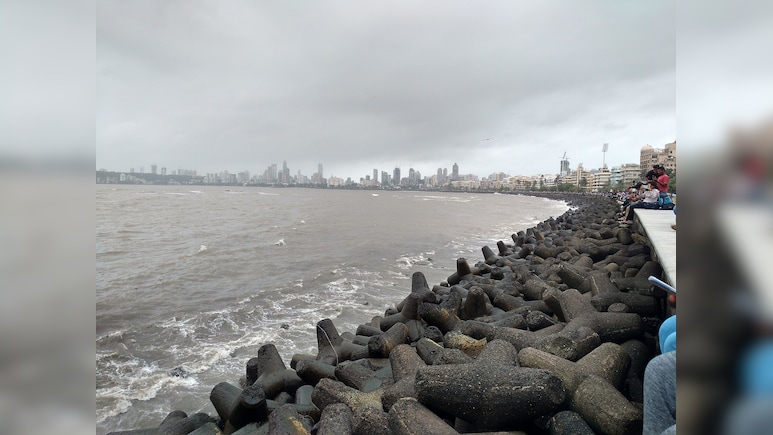
Mumbai is still awaiting the arrival of the south-west monsoon, with the seasonal rains running around over a week behind schedule. The city's usual onset date is June 11, but as of Saturday, the monsoon had yet to make its official entry. “Conditions are favourable for further advance of southwest monsoon into some more parts of Maharashtra” around June 23, according to an India Meteorological Department bulletin dated June 20.
According to IMD data for cumulative rainfall over Santacruz from June 1, Mumbai should have recorded between 300 mm and 350 mm of cumulative rainfall by June 20. However, current tracking shows the city's key suburban gauge is struggling to keep pace with its long-term average for the opening three weeks of June.
The city received over 10 mm of rainfall in the first week of June, but since then, it has hardly received any rain.
Meteorologists have linked the monsoon's sluggish progress to a lack of favourable weather disturbances, which normally help sustain rainfall across the country during the rainy season.
According to an Indian Express report, an IMD official noted that strong monsoon currents had previously fuelled extensive cloud formation and intense precipitation. However, the strength of these currents has diminished in recent days. In addition, weaker low-level south-westerly winds have curtailed the northward movement of moisture, limiting rain-bearing activity over northern Maharashtra and areas further inland.
The IMD has pointed to unfavourable large-scale circulation patterns as a factor behind the monsoon's sluggish progress in Maharashtra. Among them is the Madden–Julian Oscillation, or MJO, which is not presently aligned to support stronger rainfall activity.
The MJO is a moving atmospheric disturbance characterised by clusters of clouds, winds and pressure changes originating over the Indian Ocean. As it migrates eastward through the tropics, it influences weather systems across several continents. Its active phases are known to enhance monsoon rainfall over the Indian subcontinent.
ALSO READ: Mumbai Water Tanker Prices Surge Up To 30% Amid Water Shortage, Delayed Monsoon
Apart from the subdued influence of the Madden–Julian Oscillation, the monsoon's recent slowdown has been attributed to weaker cross-equatorial airflow across the Arabian Sea and adjoining Indian Ocean waters.
According to IMD scientists, these winds serve as a vital channel for moisture feeding into the south-west monsoon. Compounding the situation is the near absence of key weather systems, including offshore troughs and low-pressure formations over the Arabian Sea and Bay of Bengal, which typically help generate sustained monsoon showers.
Essential Business Intelligence, Sharp Market Insights, Practical Personal Finance Advice, Daily Fuel, Gold and Silver Prices and Latest Stories — On NDTV Profit.