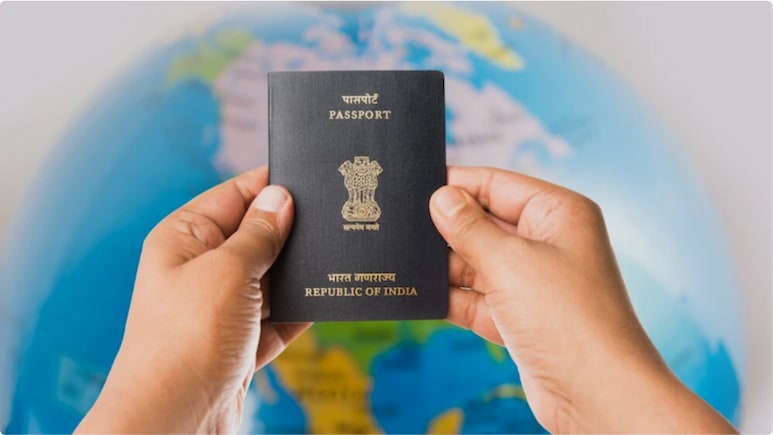
The Ministry of External Affairs' (MEA) clarification that a passport is a travel document and not proof of citizenship has triggered political backlash, with leaders questioning the rationale behind issuing the document without confirming nationality.
Government sources, however, maintain that this position is neither new nor a sudden policy shift.
What Government Sources Are Saying
According to government sources, the position that a passport does not constitute proof of citizenship was not decided this week, nor was it framed over the past 12 years.
Sources said the document has never legally served as citizenship proof, pointing instead to provisions within the Passports Act, 1967, and past judicial rulings as the basis for this stance.
What The Passports Act Actually Says
The Act primarily governs the issuance of passports and travel documents to regulate the departure from India of citizens of India and for other persons and for matters incidental or ancillary thereto.
While Section 6(2)(a) bars issuing a passport to someone who is not an Indian citizen, the law carves out a separate provision for non-citizens.
Section 20 of the Act provides that the Central Government may issue “a passport or travel document to a person who is not a citizen of India if that Government is of the opinion that it is necessary so to do in the public interest".
This provision is central to the government's argument: since the law explicitly allows passports for non-citizens under specific circumstances, the document cannot be treated as conclusive proof of citizenship in all cases.
The Bombay High Court Angle
Government sources also cited a 2013 Bombay High Court ruling that reinforced this interpretation, holding that a passport does not amount to proof of citizenship and instead serves primarily as a travel document confirming identity and nationality status for the purpose of foreign travel.
Why The Issue Resurfaced Now
The clarification gained fresh attention after questions arose over whether individuals excluded from the Election Commission's Special Intensive Revision (SIR) of electoral rolls could use a passport to establish citizenship.
The MEA's response, reiterating the legal position, has reignited debate over what documents can be treated as valid citizenship proof in India, even as critics argue the framing creates confusion among the public over the document's purpose.
ALSO READ: Pune Bizman Murder: Siya Goyal's 'Boyfriend' Chetan's Father Makes Big Claim — 'He Was Standing...'
Essential Business Intelligence, Sharp Market Insights, Practical Personal Finance Advice, Daily Fuel, Gold and Silver Prices and Latest Stories — On NDTV Profit.