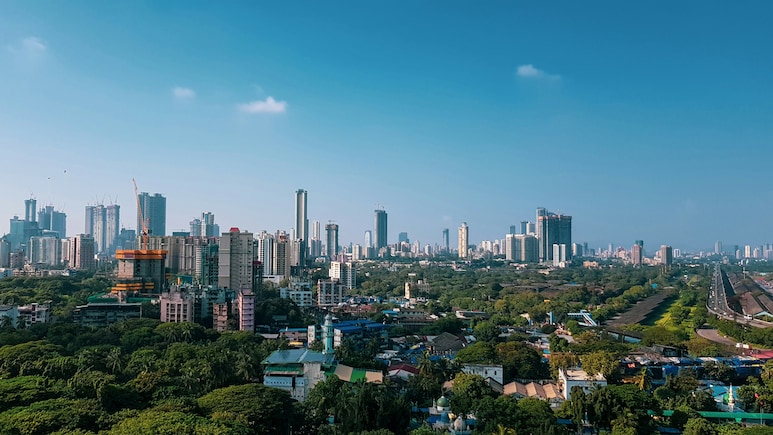
Over the past few months, people have become interested in city politics. It began with Zohran Mamdani's campaign in New York City and, closer home, with Maharashtra finally conducting local body elections after a long gap. As polling unfolds in cities like Mumbai and Pune, one question keeps coming back to me: Does any of this really matter?
The uncomfortable answer is no, not because of who wins, but because of how Indian cities are governed. The institutional design is so flawed that it almost guarantees poor outcomes, regardless of electoral results.
So, if you're thinking about redesigned Indian cities with skylines and megaprojects, it's worth looking into how big cities actually work. Cities like New York, Seoul, Shanghai, and Mexico City teach us a lot about who runs the show, how money gets spent, and who answers to whom.
Also Read | Layoffs Are Rising In Tech, But These Skills Are Helping People Unlock Better Pay
What Global Cities Do Differently?
Mexico City gained state-like autonomy in 2016, giving its head of government direct control over the police, public safety, budget, and administration. This level of authority is uncommon worldwide, especially in police oversight.
Seoul highlights the political upside of empowered cities. Seoul's elected mayor leads one of the world's largest city governments, has complete control over the city and oversees major projects. The role often serves as a stepping stone to national leadership.
Rio de Janeiro shows how a mayor functions inside a messy federal democracy. The mayor initiates the budget, appoints the entire cabinet, enforces policy, and can veto council legislation. This is a classic strong‑mayor system where electoral legitimacy, fiscal authority, and administrative control align to create a powerful and accountable urban executive.
New York shows why visibility matters in a strong-mayor system. The City Council oversees legislation, but executive power lies with the directly elected mayor, who manages the budget, appoints agency heads, can veto laws, and runs city operations. This clear division ensures accountability.
Shanghai shows something else entirely. It shows how cities are treated as economic missions, not bureaucratic departments. The mayor is not elected, but is judged on growth, infrastructure delivery, innovation, and investment outcomes. The city raises money through land, bonds, and investment vehicles.
Bangkok, Jakarta and Hanoi show how centralised states limit city autonomy even when mayors are powerful. Bangkok's governor is directly elected and oversees major services, but the Thai state—especially during military rule—can override local decisions. Jakarta's governor is also directly elected, giving democratic legitimacy, yet Indonesia's unitary constitution restricts independent policymaking. Hanoi represents the most centralised model, where the mayoral equivalent is appointed within the Communist Party and implements both municipal and national directives. While these systems may not be the most inclusive or participatory, they do make sure authority matches responsibility, which helps cities run smoothly.
The Indian Exception: Authority Without Accountability
Indian cities really are the odd ones out. In most global cities, the mayor is the real boss — directly elected, fully in charge, clearly accountable, and front‑and‑centre in everything from budgets, pitching for investments to welcoming foreign delegations.
In India, mayors mostly have a symbolic role — elected corporators pick them, but real power sits with state-appointed commissioners who answer to the state, not the people. As a result, municipal elections have little impact because unelected officials make key decisions.
The 74th Amendment: Promise and Failure
India's 74th Constitutional Amendment (1993) established cities as a third tier of government, requiring municipal elections every five years, state and finance commissions, the devolution of 18 functions to local bodies, and ward and metropolitan planning committees to increase local autonomy.
But the reality is patchy. Municipal elections often get delayed, ward committees hardly set the city's priorities, State Finance Commission suggestions are mostly ignored, and overlapping agencies make city governance complicated.
GST further weakened city finances by excluding urban local bodies from tax sharing. Presently, GST is split evenly between the centre and states. Allocating even 0.5-1% to local bodies could have provided cities with stable revenues, supporting better infrastructure planning without increasing taxes. But unfortunately, that has not happened, which leaves cities stuck relying on uncertain state funds.
Final Take
Cities are now the frontline of global competition, yet the way India runs its cities holds them back at a moment when the world expects more from us. Even a perfect implementation of the 74th Amendment wouldn't cut it today. We need a serious rethink of decentralisation as an economic priority.
And the Mumbai‑as‑Shanghai plans miss the real point. Shanghai didn't rise because of shiny buildings or authoritarianism, but because power, accountability, and incentives were pushed down to the city level. If China can decentralise, there's no reason a democracy like India can't do it better. Until our cities get real self‑rule, municipal elections will remain little more than a ritual.
Disclaimer: The views expressed in this article are solely those of the author and do not necessarily reflect the opinion of NDTV Profit or its affiliates. Readers are advised to conduct their own research or consult a qualified professional before making any investment or business decisions. NDTV Profit does not guarantee the accuracy, completeness, or reliability of the information presented in this article.
Essential Business Intelligence, Sharp Market Insights, Practical Personal Finance Advice, Daily Fuel, Gold and Silver Prices and Latest Stories — On NDTV Profit.