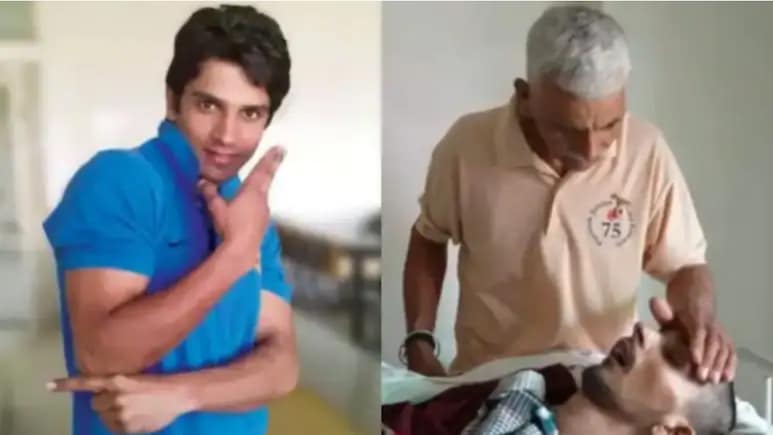
The family of Harish Rana, the first person in India to be allowed passive euthanasia, donated his corneas and heart valves after his death, according to reports. Rana died at AIIMS Delhi on Tuesday at 4:10 p.m., after spending more than 13 years in a coma.
He had been admitted on March 14 for the process, and life support was withdrawn two days later after the Supreme Court permitted it in his case.
Also Read | Harish Rana, India's First Person To Be Allowed Passive Euthanasia, Dies In AIIMS
Harish Rana, the first person to be granted passive euthanasia in India, passed away today at 4:10 PM at AIIMS, New Delhi. pic.twitter.com/j97a3TVLmX
— ANI (@ANI) March 24, 2026
Rana's unfortunate condition began in 2013, when he was a student at Panjab University and fell from the fourth floor of a paying guest accommodation. The fall caused serious brain injuries. He was later discharged, but he never recovered fully and remained in a persistent vegetative state. For years, he depended on a tracheostomy tube for breathing and a feeding tube for nutrition.
The case became a major legal moment because the Supreme Court allowed passive euthanasia for him on March 11, 2026, after his parents asked for withdrawal of life support. The court said the medical report showed no improvement in 13 years and noted that treatment no longer served a useful purpose when there is no hope of recovery.
In its 2018 Common Cause judgment, the Supreme Court held that the right to live with dignity under Article 21 includes the right to die with dignity. It also said passive euthanasia and advance medical directives are legal, and that the guidelines would continue to operate until Parliament brings a specific law.
Also Read | Harish Rana Passive Euthanasia: From Fourth Floor Fall, Vegetative State To SC Verdict — Timeline of Case
In the same line of law, passive euthanasia means withholding or withdrawing medical treatment that artificially prolongs life, unlike active euthanasia, which involves a direct act to end life.
While India legalised passive euthanasia in 2018, active euthanasia — any act that intentionally helps a person kill themselves — remains illegal.
Essential Business Intelligence, Continuous LIVE TV, Sharp Market Insights, Practical Personal Finance Advice and Latest Stories — On NDTV Profit.