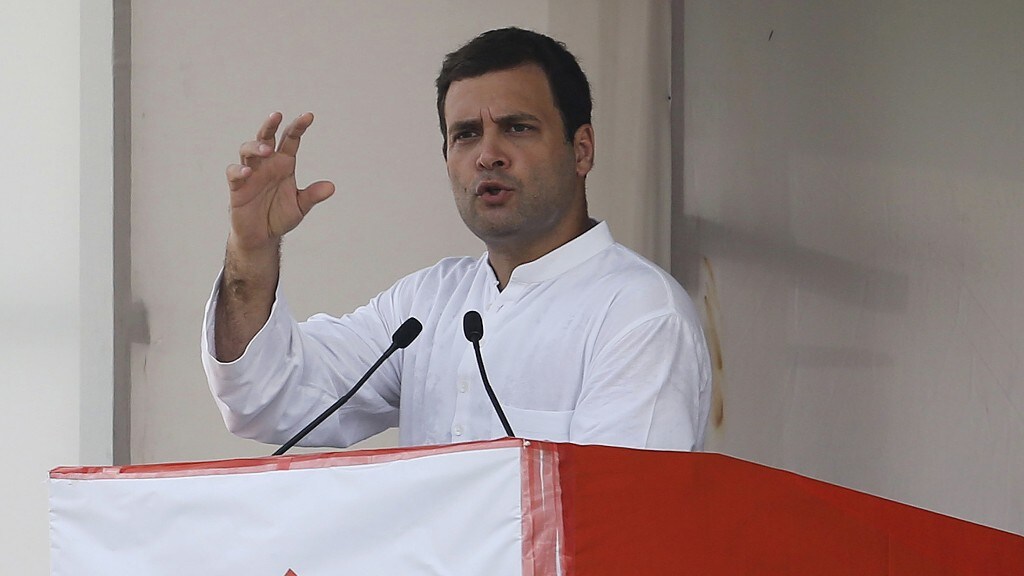
“I've never broken a promise that I've made.”
Congress' 2019 election manifesto opens with this assurance from Rahul Gandhi. As part of it, the party has outlined a Goods and Services Tax regime that “will truly reflect the intent and purpose of a non-cascading, value-added, indirect tax”.
Here are the key proposals from the manifesto:
- Real estate (all sectors), petroleum products, tobacco and liquor will be brought within the ambit of GST 2.0 in a manner and time period not exceeding two years agreed to in the GST Council. To be clear, tobacco is already under the GST net and attracts a 28 percent levy plus cess.
- Essential goods of mass consumption such as food grains, lifesaving drugs, vaccines, etc. and essential services will be exempted from GST or zero-rated.
- All goods and services that are exported will be zero-rated and not subject to GST. Currently too, goods and services that are exported are zero-rated – businesses can either pay GST and claim a refund or export without paying GST on the basis of a letter of undertaking and claim the tax paid on domestic purchases as refund.
- E-way bill will be abolished. Tax evasion will be detected through the risk management mechanism and strengthening the intelligence machinery.
- Endeavour to allocate a share of GST revenues to panchayats and municipalities.
- A taxpayer will be required to file a simple, single quarterly return for his/her business and an annual return. Every taxpayer will be subject to assessment by a single authority based upon turnover.
- The GST Council will be the policy-making body and will be served by a permanent secretariat of tax economists, tax-policy experts and tax professionals. Its minutes will be put in the public domain. Currently, the GST Council consists of representative of the central and state governments.
They may have called it GST 2.0 for political compulsions, but the proposals aren't materially different from what we have now, S Madhavan, co-chairman of the GST Task Force in FICCI, said. The proposals suggest only a fine-tuning of the current model, he said.
On the proposal of abolishing E-way Bill, it's unclear what risk management mechanism they have in mind which will ensure there's no revenue leakage and yet they are able to dispense with the current process. I understand there are several implementation challenges with e-way Bills, but in principle, you cannot critique it.S Madhavan, Co-Chairman, GST Task Force, FICCI
Equally, Madhavan pointed out, there is little clarity on the proposal of sharing GST revenue with panchayats and municipalities. “It'll have to come out from the states' share; I cannot see the central government transferring its sharing to them,” he said.
It's easy to write in the manifesto and it's all very welcome that processes will be simplified but the devil will be in the detail, Madhavan said.
Essential Business Intelligence, Continuous LIVE TV, Sharp Market Insights, Practical Personal Finance Advice and Latest Stories — On NDTV Profit.


















.jpg?im=FeatureCrop,algorithm=dnn,width=350)