The Central Goods and Services Tax (GST) Bill approved by the Lok Sabha on March 30 is different when compared to the draft version - Model GST Law - released months ago.
The key changes are - the exclusion of Jammu and Kashmir from the applicability of Goods and Services Tax (GST), a new definition for works contract, a change in the mechanism of reverse charge and input tax credit reversal.
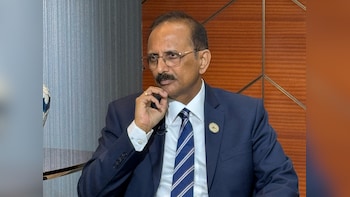
In an interview with BloombergQuint, Badri Narayanan, partner at law firm Lakshmikumaran & Sridharan, explained the impact of these changes.
Exclusion of Jammu & Kashmir
The Central GST Bill says it will apply to the whole of India except the state of Jammu and Kashmir. Narayanan said that he expects the exclusion to be temporary and that the state assembly will soon ratify the constitutional amendment to adopt GST. But he also pointed out that there might be some challenges in the interim period.
The supplies made from the rest of the country to Jammu and Kashmir willbe exempt from GST; in which case, we will again have the same problemsregarding reversal of CENVAT credit or GST input tax credit to the extent of any supply to Jammu and Kashmir and those formulas are complicated.Badri Narayanan, Partner, Lakshmikumaran & Sridharan
On Friday, Haseeb Drabu, the finance minister of J&K, allayed fears when he said that “J&K is likely to take up GST by May”.
Badri's optimistic too. He added that since the J&K finance minister has been engaging with the GST Council, the hope is that the state will be ready for GST implementation with the rest of the country.
Works Contract: New Definition
The Central GST Bill has changed the definition of a ‘works contract' - an agreement that involves supply of services and goods - to say that only contracts related to immovable property are to be considered as a works contract. The definition in the Model GST law included movable property as well.
Narayanan said that the benefit is that GST will apply to a long-term works contract and that portion of the supply on which taxes have been paid under the current indirect tax regime will not be taxed under the new law. He explained that presently a works contract attracts Value Added Tax, service tax and there is a provision for abatement (tax reduction/benefit) for land.
Under the new definition, transaction in land will neither be goods orservices, which means it needs to be excluded from the value of a workscontract. For example, if I do a composite supply of work which includes theland – a development agreement or purchase of under-construction flat – thevalue of land has to be excluded. Calculating the land value is a complexissue; also, a works contract will have an abatement provision – the rates forboth are expected in the rules.Badri Narayanan, Partner, Lakshmikumaran & Sridharan
The ‘Reverse Charge' Change
The Central GST Bill states that a registered person procuring taxable goods or services from an unregistered person will be required to pay tax under a reverse charge basis.
An unregistered entity is someone who makes a supply of goods or services exempt from GST, or someone who is below the registration threshold.
Narayanan explained that when an unregistered person makes a supply to a registered person who has an output tax liability the latter has to fulfill the compliance requirement on behalf of the former.
The registered person will now have to pay the tax, take the credit anddischarge the output tax liability. So, it places the burden of compliance onthe registered entity. For example, when he receives the invoice, he'll have tocheck the nature of services, figure out the applicable rate, pay the tax onreverse charge, ensure he takes credit of it, fulfill the place of supply, timeof supply and various other conditions.Badri Narayanan, Partner, Lakshmikumaran & Sridharan
This will lead to an increase in compliance costs for a registered entity making it less attractive to deal with an unregistered entity. And so, unregistered entities will be forced to take GST registration, he added.
Input Tax Credit 2.0
The Central GST Bill says where the recipient fails to make payment to the supplier of goods or services within 180 days from the date of issue of invoice, an amount equal to input tax credit availed by the recipient shall be added to his output tax liability, along with interest. Earlier the duration was 90 days and was only applicable to services.
In order to be able to avail credit for input goods or services received, one of the conditions is to pay the supplier, said Narayanan, adding that this is to ensure paper invoices are not filed.
Now the law allows you six months to be able to make a payment. So youcan take credit immediately. But if you fail to pay the supplier in six months,you are required to reverse the credit and in addition pay an interestcomponent. And if and when, after six months, you make the actual payment tothe supplier, you'll be eligible to take the credit of the amount you hadoriginally availed but not the interest. So interest will become a cost inthis entire thing.Badri Narayanan, Partner, Lakshmikumaran & Sridharan
This is a welcome step, he added, as it will ensure suppliers get paid.
Essential Business Intelligence, Continuous LIVE TV, Sharp Market Insights, Practical Personal Finance Advice and Latest Stories — On NDTV Profit.