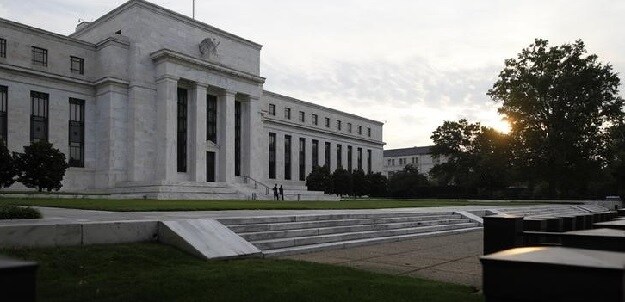
The US Federal Reserve stared down a volatile global economy in October to keep its plans for an eventual interest rate hike on track, and is likely to do so again this week amid plunging oil prices and a potential currency crisis in Russia.
The dramatic fall in Russia's rouble underscored how the oil collapse is shifting wealth and economic expectations around the world, creating a more volatile environment for the US central bank as it prepares to lift rates that have been near zero for six years.
But a number of Fed officials have indicated recently that their emphasis remains squarely on the US economy, which has held up despite troubles elsewhere.
Also Read | Layoffs Are Rising In Tech, But These Skills Are Helping People Unlock Better Pay
Moreover, US growth prospects stand to get a further boost from the big drop in energy costs.
"The growth outlook has actually improved a lot since the summer," Cornerstone Macro analyst Roberto Perli wrote clients.
Still, Russia presents a potential spoiler for the Fed, and will no doubt be a point of discussion at the central bank's two-day meeting that opened on Tuesday.
Fed officials need to decide whether the threat of a full-blown crisis in a large and politically unpredictable nation is enough to shift the balance of risks for the US economy.
But US investors have steadily pared their holdings in Russia since the outbreak of the crisis over Ukraine and the imposition of Western sanctions, curbing the risk of financial contagion. According to the Bank for International Settlements, US bank exposure to Russia has fallen from $43 billion at the start of 2013 to $26 billion recently.
"I don't see the economic linkage between Russia and the US to be large enough to alter the tenor of economic performance here, and in that case not large enough to alter Fed policy," said Neal Soss, chief economist at Credit Suisse USA in New York.
White House economic adviser Jason Furman on Tuesday called the weak global environment a "headwind" for the US economy. But he focused on the euro zone, Japan and China, and noted that US exports to Russia account for only one tenth of 1 per cent of the nation's economic output.
Indeed, many analysts continue to expect that when Fed officials release their statement at 2 p.m. (1900 GMT) on Wednesday, they will have removed language pledging to wait a "considerable time" before raising US interest rates, a long-awaited edit that would show faith in the economy's path.
Russia has thrown the Fed off course before. In 1998, a financial crisis in the country and in Asia prompted the US central bank to cut rates "to cushion the likely adverse consequences," Fed meeting minutes stated at the time.
Another cautionary tale is the so-called taper tantrum last year, in which then-Fed Chairman Ben Bernanke's comments about likely reductions in the central bank's bond purchases caused a fast reshuffling in global financial markets, an event that could make the Fed hesitant to make a major change in its rate guidance until the fallout from the drop in oil prices is clear.
But the Fed has looked through world volatility once already this year. When it last met in October, shortly after US government bond yields collapsed on a weakening global growth outlook, officials determined the spillover was "likely to be quite limited," according to minutes of the meeting.
The drop in oil prices is expected to slow progress towards the Fed's target of 2 per cent inflation, and is already prompting oil companies to trim investment and hiring. But that is likely to be more than offset by the boost lower energy prices already appear to be giving to consumer spending, and the impact they will likely have on the profit margins and investment plans of energy users.
Copyright: Thomson Reuters 2014
Essential Business Intelligence, Sharp Market Insights, Practical Personal Finance Advice, Daily Fuel, Gold and Silver Prices and Latest Stories — On NDTV Profit.