The World’s Top Coffee Producer Is Switching Up Its Beans. What That Means For You
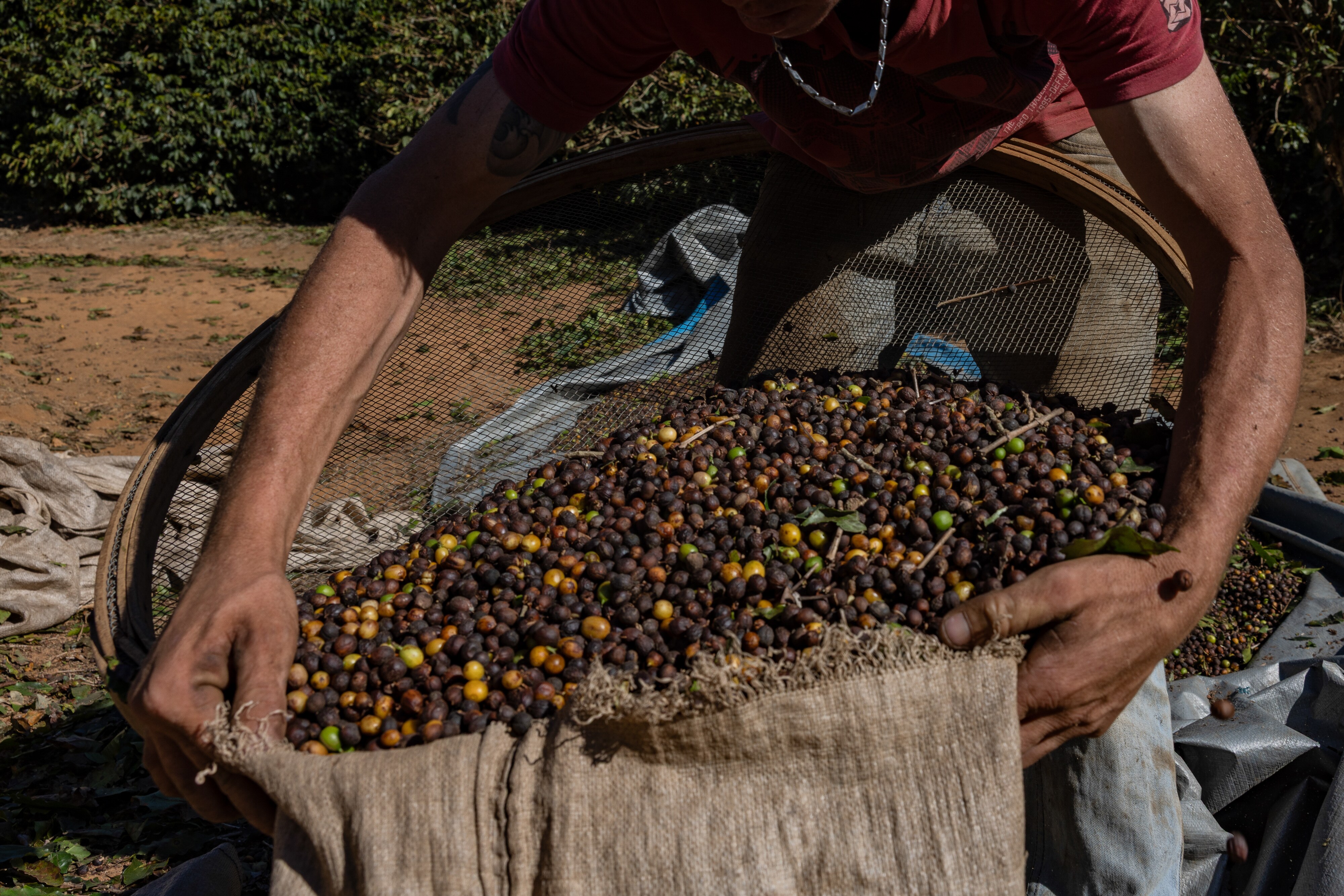
In the coming years, coffee from Brazil might start to taste a bit different.
The South American country is the world's biggest producer of arabica, a mild variety of coffee bean. But as climate change makes it harder to grow those beans, some farmers are investing in robusta, which produces a more bitter bean but can tolerate higher temperatures and is more resistant to diseases.
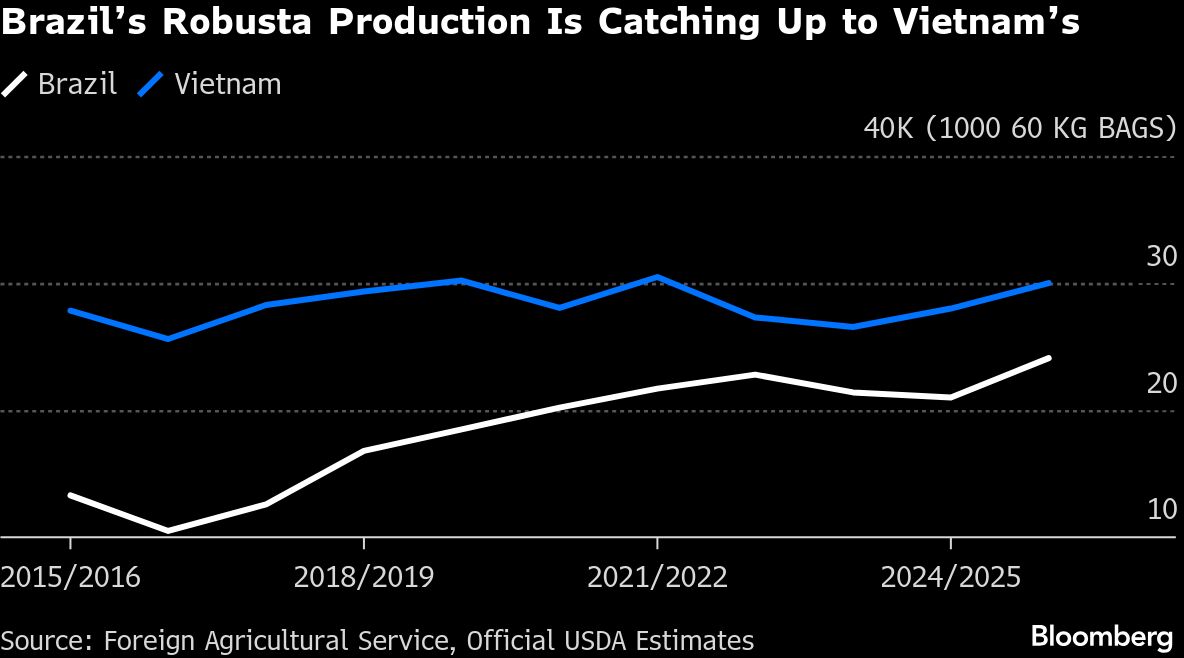
Brazil's traditional coffee growing regions, which largely produce arabica, have been beset by more intense and frequent droughts, and hotter temperatures. Arabica is still the country's main coffee export, but robusta production is now growing at a faster rate: by over 81% over the past 10 years, according to the United States Department of Agriculture, which tracks global coffee production.
For Brazil, robusta provides an opportunity to remain the world's largest coffee supplier in the future even as the effects of climate change intensify, says Fernando Maximiliano, Coffee Market Intelligence Manager at StoneX, a financial services company.
“It wasn't necessarily demand that resulted in the growth of robusta production,” he adds. “In reality, climate problems and losses in arabica were the main factors that contributed to stimulating robusta growth.”
For the past three years, arabica coffee production in Brazil has grown at a rate of around 2% to 2.5% annually, while robusta production has risen about 4.8% annually. This year's growing season, robusta hit a nearly 22% increase, a record harvest, according to StoneX. This means that robusta production has stood out for its ability to better cope with more adverse weather conditions and also for its profitability, analysts say.
In warmer areas of Brazil where arabica can't grow, coffee producers are finding ways to produce robusta and mitigate the impact of hotter temperatures. Planting coffee trees under the shade of native trees and other species is one of these techniques.
“This way it will remain productive, it will stay a little more moist, so it won't degrade so easily,” Jonatas Machado, commercial director of Café Apuí, an agroforestry robusta coffee producer in the Amazon region.
A different bean
Vietnam is the world's biggest robusta producer, but Brazil is catching up, and it could surpass the Southeast Asian country due to a well-structured supply chain, according to analysts at Rabobank, a financial services company.
Robusta has a higher caffeine concentration and a stronger taste than arabica. But younger generations pay less attention to the type of coffee they drink or its roast, and tend to prefer customized options, adding in things like milks, creamers and syrups, which hide the flavor of the beans.
“They're not so much about the origins, the tasting notes,” said Matthew Barry, global insight manager for food, cooking and meals at market research firm Euromonitor International.
If coffee prices keep rising, consumers might also gravitate towards robusta, which costs less.
In Europe, the gap between robusta and arabica prices will likely be even wider in the coming years. A new law will require that imported commodities are certified to show they did not originate from recently deforested or degraded land, though its implementation date is still unclear. Instant coffee, which is mostly made with the robusta variety, is excluded from these rules. That carveout could increase the demand for robusta-based products, according to Rabobank.
The EU is the largest consumer of instant coffee, accounting for almost 50% of global revenue, according to Grand View Research, a business consulting firm.
While robusta tends to be cheaper than arabica, its prices have been reaching record highs.
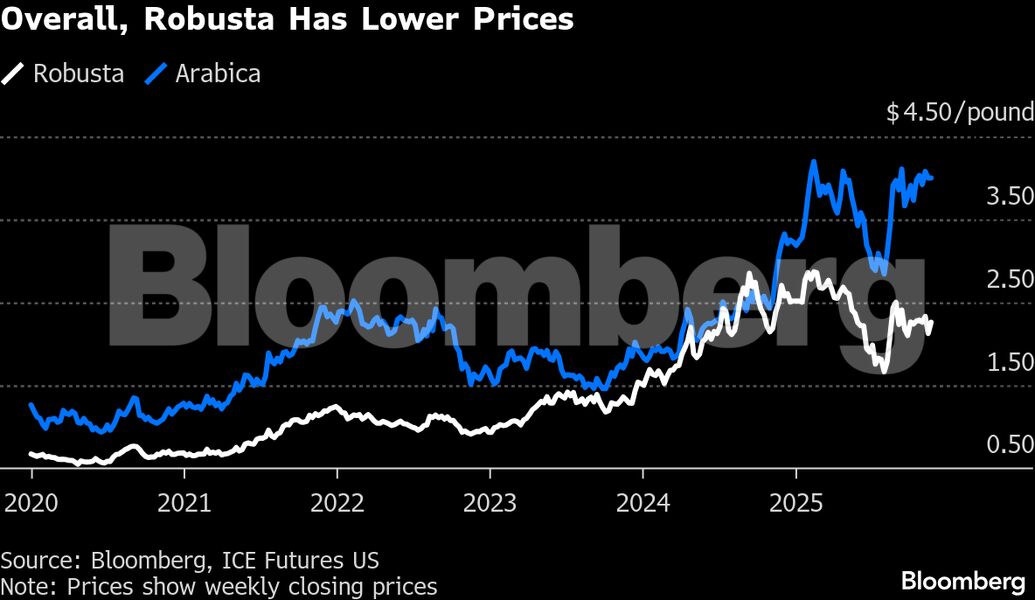
These higher prices and the cultivars being almost twice as productive as arabica varietals have convinced a growing number of Brazilian coffee producers to invest in planting robusta, said Alexsandro Teixeira, coffee researcher at the Brazilian Agricultural Research Corporation.
Robusta producers are also improving the quality of their beans. That has made the varietal more attractive to consumers and led to an uptick in prices, he said.

-
Navigating Friction And Energy Realities: An Analysis Of Marco Rubio's October Visit To India

Occurring at a critical juncture marked by stalled trade negotiations and escalating geopolitical pressures over global energy supplies, the visit offers a profound window into modern US-India relations.
-
India Exports Capital. Why Not Export Trusteeship?
The big question, then, is whether India can build an institution that global borrowers, investors, banks, and lawyers can trust, even without an Indian connection.
-
France's Economy & Politics Are In Crisis | The Reason Why
Let's look at how the French economy and politics evolved under Nicolas Sarkozy, Franois Hollande and Emmanuel Macron.
-
You May Inherit The Business. You Must Earn Its Credibility.
Succession tests the founder's ability to share authority as much as it tests the next generation's readiness to assume it.
-
Signing Deals Is One Thing; Making Them Work Is Another | The Week In Whys
Sometimes, things don't turn out as planned. Indian companies have lost some bids to rivals, some projects won't produce until 2030.
-
FOMC Wall, PERM Suspension, Hospital Stocks | Talking Points This Week
A PERM suspension would directly affect green-card sponsorship rather than H-1B visas, so the near-term earnings impact could remain relatively limited. The key question is whether this marks a new phase in US scrutiny of Indian IT.
-
Everything, Everywhere, All At Once: Dalal Street's Week To Forget | Joining The Dots
Visa curbs, a Starlink spat and cancer drug caps: what connects this week's shocks for Indian markets
-
India Is Going Abroad For Critical Minerals. But It May Take Years To Pay Off | The Reason Why
Although India's steps are in the right direction, they remain modest compared with India's growing dependence.
-
When Everyone Has AI, What Gives You An Edge?
India's young workforce is entering an uncertain world of work where powerful AI tools are becoming widely accessible. The advantage will belong to those who combine deep expertise with digital fluency, and the distinctly human capabilities that technology cannot manufacture.
-
Wrong Labels, High Pesticide Residues Holding Back Agri Exports | The Reason Why
India needs stronger domestic food-safety and labelling standards, with best practices becoming part of everyday business for farmers, traders and food companies.










