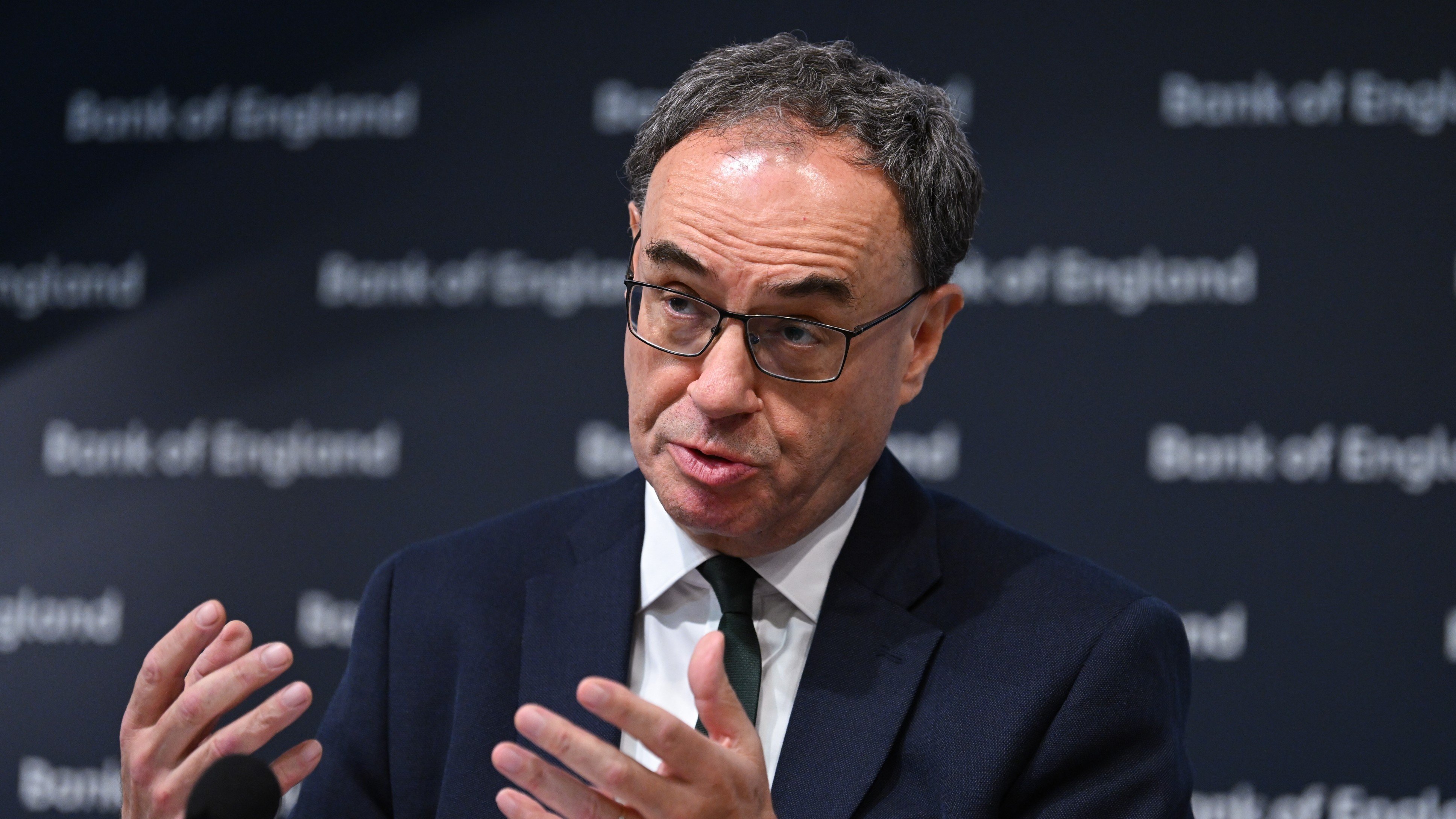
The Bank of England cut interest rates to the lowest in almost three years in a pre-Christmas boost for UK households, and suggested inflation is cooling enough for it to ease policy further in 2026.
The Monetary Policy Committee voted 5-4 to lower the benchmark rate by a quarter point to 3.75%, minutes from its meeting showed on Thursday. It was the first reduction since August after the nine-member panel skipped moves at the previous two decisions.
Governor Andrew Bailey switched sides to back the widely anticipated loosening of policy after a raft of data in recent days showed economic growth, the jobs market and price pressures all on a downward trajectory. The BOE now expects inflation to fall “closer” to its 2% target next spring after consumer price pressures unexpectedly sank to an eight-month low in data this week.
Current evidence suggests borrowing costs will continue to ease next year, the panel said. However, it cautioned in new language that decisions on future cuts will be finely balanced as the central bank edges toward the neutral interest rate - the level which neither pushes up inflation nor drags it down.
“We still think rates are on a gradual path downward,” said Bailey in a statement alongside the minutes. “But with every cut we make, how much further we go becomes a closer call.”
The pound and 10-year gilt yields erased an earlier drop after the decision as traders focused on that guidance. The two-year yield, among the most sensitive to interest-rates, rose three basis points to 3.74%, while the 10-year yield was two basis points higher at 4.49%. The pound traded steady against the dollar at around $1.3383.
The minutes hinted that the BOE is nearing the end of its cutting cycle, warning that policy is less restrictive and the extent of easing next year will “depend on the evolution of the outlook for inflation.”
It comes as traders increasingly bet that other top central banks are all but done with easing policy. The European Central Bank is expected to leave its benchmark rate unchanged at 2% later today with some officials saying the next move will be a hike, while the Federal Reserve has signalled a more cautious outlook for rates.
The BOE's decision to cut rates for a sixth time comes as concerns in Britain shift away from persistent inflation and toward a stuttering economy and labor market. A slew of economic data released in the past week and a benign government budget were seen by traders and economists as sealing the deal on Thursday's decision.
The central bank warned GDP will stagnate in the final quarter of 2025 after previously predicting growth of 0.3%, but said the underlying health of the economy remained unchanged and noted a post-budget pickup in business surveys.
The decision exposed the deep divides on the committee over the outlook for borrowing costs. All four of the hawkish rate-setters stuck to their guns, though Catherine Mann said her vote for no change was “quite finely balanced” and Megan Greene acknowledged that risks to inflation have shifted down.
Of the five that backed a reduction in bank rate, three including Bailey signalled they will keep an eye on wage pressures, while two, dovish officials Swati Dhingra and Alan Taylor, stressed downside risks to growth and inflation.
Inflation dropped to an eight-month low of 3.2% in November, below the 3.4% the BOE had predicted last month.
Chancellor of the Exchequer Rachel Reeves touted her recent budget in an exchange of letters with the governor. She said her decisions to freeze rail fares and prescription prices, as well as taking £150 off annual household energy bills, will lower inflation by 0.5 percentage points, adding: “I know there's more to do.”
Unemployment Rate Falls To 7-Month Low Of 4.7% In NovemberEssential Business Intelligence, Continuous LIVE TV, Sharp Market Insights, Practical Personal Finance Advice and Latest Stories — On NDTV Profit.