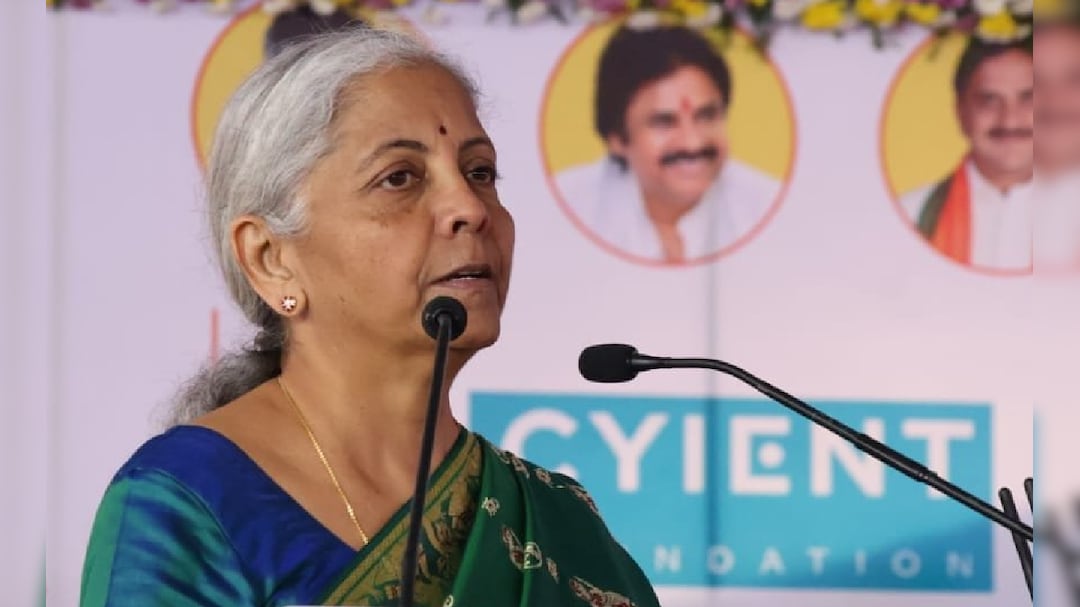
The Budget Session of Parliament starts on Jan. 28 and continues till April 2. Finance Minister Nirmala Sitharaman will present the Union Budget 2026-27 on an unorthodox day of the week, being Sunday, Feb. 1, 2026. The Union Budget is set to be presented on a Sunday for the first time in decades. The Economic Survey was tabled yesterday on Jan. 29.
See you again soon!
Budget 2026 Expectations Live: Inflation-Linked Slabs, Unified Capital Gains Tax, Predictable Dual-Regime Transition, Expects Stellar Innovations
Karthik Narayan, Vice President at Stellar Innovations, says, "Budget 2026 presents the right opportunity to bring about changes that truly reflect simplicity and predictability in India’s dual tax regime." He notes that as a majority of taxpayers opt for the new regime, the next logical step is making tax slabs inflation-linked and pilot-testing Section 87A rebate thresholds. Narayan adds that any changes to the old regime should be introduced gradually to respect India’s savings culture, while a unified approach to taxing capital gains and dividends will enhance financialization for retail investors.
Budget 2026 Expectations Live: Inflation-Linked Slabs, Unified Capital Gains Tax, Predictable Dual-Regime Transition, Expects Stellar Innovations
Karthik Narayan, Vice President at Stellar Innovations, says, "Budget 2026 presents the right opportunity to bring about changes that truly reflect simplicity and predictability in India’s dual tax regime." He notes that as a majority of taxpayers opt for the new regime, the next logical step is making tax slabs inflation-linked and pilot-testing Section 87A rebate thresholds. Narayan adds that any changes to the old regime should be gradual to respect India’s savings culture, while a unified approach to taxing capital gains and dividends will enhance financialization for retail investors.
Budget 2026 Expectations Live: Section 80C Limit Hike, Inflation-Linked Tax Slabs, LTCG Exemption Boost, Expects Vibhavangal Anukulakara Pvt. Ltd.
Siddharth Maurya, Founder & Managing Director of Vibhavangal Anukulakara Pvt. Ltd., says, "With the arrival of Budget 2026, the primary demand is to align the tax structure with the realities of inflation and current income levels." He notes that the Section 80C limit has been stuck at Rs 1.5 lakh for a decade despite rising costs for premiums, EMIs, and education. Maurya adds that hiking the 80C limit to Rs 3 lakh, increasing Section 80D health insurance limits, and raising the income threshold for the 30% slab will provide essential relief to families earning between Rs 10–35 lakh.
Budget 2026 Expectations Live: Redefining 'Housing for All', GST Cuts on Input Services, Expects Vibhavangal Anukulakara Pvt. Ltd.
Siddharth Maurya, Founder & Managing Director of Vibhavangal Anukulakara Pvt. Ltd., says, "Both investors and potential homeowners are viewing Budget 2026 as a signal of India’s seriousness in speeding up urbanisation policies." He notes that making the 1% GST benefit applicable to a broader price range in major cities is a simple yet vital request. Maurya adds that reducing GST on developers' input services will prevent low-quality construction and, alongside infrastructure investments, make real estate a robust source of jobs and wealth creation.
Budget 2026 Expectations Live: Housing as Essential Infrastructure, GST Rationalisation, Focus on Tier 2 Hubs, Expects Goel Ganga Developments
Anurag Goel, Director at Goel Ganga Developments, says, "For a rapidly urbanising India, this budget needs to regard housing as essential infrastructure rather than a treatable asset class." He notes that while PMAY-Urban 2.0 shows great intent, policy fine-tuning is needed to ensure ground-level supply matches that intent. Goel adds that rationalising GST on under-construction homes and extending tax deductions will make projects workable, especially in emerging Tier 1.5 and Tier 2 employment hubs.
Budget 2026 Expectations Live: NCR Homeownership Incentives, Revival of Section 80EEA, Expects RPS Group
Aman Gupta, Director at RPS Group, says, "Budget 2026 is a crucial chance to improve homeownership in NCR and high-growth areas by offering unified incentives to buyers, developers, and lenders." He notes that raising the affordable housing cap to Rs 90 lakh and reviving interest deductions like Section 80EEA will significantly reduce acquisition costs and EMI burdens. Gupta adds that combining these tax measures with sustained investment in metro and expressway infrastructure will ensure stable, long-term growth for the sector.
Budget 2026 Expectations Live: Affordable Housing Re-pricing, GST Reduction on Works Contracts, Expects Forteasia Realty Pvt. Ltd.
Shiv Garg, Director at Forteasia Realty Pvt. Ltd., says, "The real estate sector is looking for a clear signal regarding the alignment of tax policies with new urban housing price realities, as the existing Rs 45 lakh affordable housing limit is no longer realistic." He notes that increasing the price bracket to Rs 80-90 lakh and reducing GST on works contracts from 18% to 12% can revive stalled projects. Garg adds that higher PMAY-Urban allocations and quicker approvals will benefit first-time buyers and improve the supply of ready-to-move-in homes.
Budget 2026 Expectations Live: Geospatial Intelligence, AI-Enabled Surveying for Infrastructure Growth, Expects Matrix Geo Solutions
Rahul Jain, Managing Director at Matrix Geo Solutions, says, "We expect the Union Budget 2026–27 to accelerate India’s infrastructure and digital transformation by strengthening policy support for geospatial technologies and drone-based surveying." He notes that priority should be given to the adoption of LiDAR and AI-enabled analytics across national development programs to improve project accuracy and cost efficiency. Jain adds that integrating geospatial intelligence with Digital Twins and smart infrastructure will enable better decision-making and position India as a global leader in technology-driven engineering.
Budget 2026 Expectations Live: Sovereign AI Stacks, Applied AI Infrastructure for Global Scale, Expects Melooha
Vikram Labhe, Founder & CEO of Melooha, says, "We view the Union Budget 2026–27 as a pivotal moment to accelerate India’s leadership in AI-driven consumer platforms and sovereign data ecosystems." He notes that policy support for multilingual AI and vernacular computing can unlock mass-market personalization at scale across India’s diverse user base. Labhe adds that incentives for AI-led SaaS innovation and simplified tax rationalization for digital-native companies will enable Indian platforms to expand globally while remaining rooted in trust and compliance.
Budget 2026 Expectations Live: Domestic Design and Manufacturing, Global EV Leadership, Expects EVeium Smart Mobility
Sameer Moidin, Founder & CEO of EVeium Smart Mobility, says, "The Union Budget 2026–27 must capitalize on the momentum of India’s electric two-wheeler segment by focusing on vehicles that are designed, manufactured, and scaled domestically." He notes that incentives should drive battery localization and mass-scale production to create jobs and reduce import dependency. Moidin adds that at EVeium, they believe this Budget has the power to turn India’s mobility promise into reality, making EV ownership accessible to all and cementing India’s position as a global EV leader.
Headline: Budget 2026 Expectations Live: Component-Level PLI Support, National Charging Roadmap Key to EV Scale, Expects Zelio E-Mobility
Mr. Kunal Arya, Co-founder & MD of Zelio E-Mobility, says, "We believe India’s electric mobility transition will be driven by two-wheelers, where sustainable growth depends more on long-term structural enablers than short-term subsidies." He notes that the Union Budget 2026–27 should prioritize deeper localization through component-specific PLI support for battery cells and power electronics to reduce import dependence. Arya adds that a clear national charging roadmap, targeting 50,000 public points by 2027, along with low-cost financing, will be essential to building a scalable and resilient EV ecosystem.
Budget 2026 Expectations Live: Structural GST Reforms, Targeted Incentives for Electric Motorcycles, Expects Oben Electric
Madhumita Agrawal, Founder & CEO of Oben Electric, says, "As the Union Budget 2026-27 approaches, we view it as a vital opportunity to strengthen India’s electric mobility journey by addressing the inverted tax structure where finished EVs attract 5% GST, but raw materials are taxed at 18%." She notes that aligning GST on all components to 5% is essential to support domestic manufacturing and make 'Make-in-India' EVs affordable. Agrawal adds that the budget should introduce targeted subsidies for electric motorcycles—a segment that dominates 70% of the market—to unlock the next level of mass-market electrification.
Budget 2026 Expectations Live: Execution Quality, Realistic Fiscal Math Over Near-Term Stimulus, Expects INVasset PMS
Anirudh Garg, Fund Manager and Partner at INVasset PMS, says, "As the Union Budget approaches, we believe markets are far less focused on headline announcements than on the credibility of the underlying framework." He notes that in the current macro environment, the Budget should be viewed as a statement of intent on fiscal discipline rather than a tool for near-term stimulus. Garg adds that investors will be closely evaluating whether revenue assumptions are conservative and whether the borrowing programme is aligned with macro stability to anchor bond markets and reinforce confidence across asset classes.
Budget 2026 Expectations Live: Fiscal Discipline, Transparency Vital for Sovereign Rating Upgrade, Expects CapitalXB
Ajitabh Bharti, Executive Director & Co-founder of CapitalXB, says, "India has made steady progress on fiscal consolidation through improved revenue buoyancy, rationalised expenditure, and a clearer medium-term fiscal glide path." He notes that at this stage, policy continuity is what matters most for the economy. Bharti adds that maintaining discipline on deficits and debt, while preserving transparency in public finances, will be critical as India works towards a sovereign credit rating upgrade and stronger global credibility.
Budget 2026 Expectations Live: Policy Continuity, Enhanced Transmission Capacity Key to 500 GW Target, Expects INOXGFL Group
Devansh Jain, Executive Director of INOXGFL Group, says, "As India accelerates its clean-energy transition, INOXGFL Group’s focus has been on strengthening the foundations of a truly integrated renewable-energy ecosystem." He notes that supportive and consistent government policies have been vital in fortifying ‘Make in India’ and allowing the industry to innovate and execute large-scale projects. Jain adds that for the upcoming Union Budget FY27, expectations remain positive around increasing transmission capacity and resolving execution issues to achieve the 2030 target of 500 GW.
Budget 2026 Expectations Live: Smart Grids, HVDC Corridors and Skilled Workforce as Strategic Enablers, Expects Hartek Group
Mr. Simarpreet Singh, Executive Director & CEO of Hartek Group, says, "Budget 2026 must be the ‘Infrastructure Budget’ for India’s power sector." He notes that the real bottleneck has shifted from capacity creation to whether grids and execution capabilities can reliably move clean power. Singh adds that there is a pressing need to accelerate funding for smart grids, HVDC corridors, and GIS substations, alongside focused skilling programs for high-voltage systems to bridge the urgent gap in workforce readiness.
Budget 2026 Expectations Live: Green Hydrogen Incentives, Modernized Transmission Vital for Climate Goals, Expects Hero Future Energies
Srivatsan Iyer, Global CEO of Hero Future Energies, says, "As India enters the next phase of its energy transition in 2026, the priority must shift from capacity addition alone to building a dispatchable and resilient energy system." He notes that the government has laid a strong foundation, but further strength requires focused investments in energy storage and a diversified clean energy mix. Iyer adds that the upcoming Budget should introduce targeted PLIs and tax incentives for green hydrogen and alternative material ecosystems to reduce risk and improve grid reliability.
Budget 2026 Expectations Live: VGF for Storage, Treating Batteries as Grid Assets Crucial for 24/7 Green Power, Expects Serentica Renewables
Akshay Hiranandani, CEO of Serentica Renewables, says, "India’s clean energy transition is entering a pivotal phase shifting from adding renewable capacity to ensuring 24/7, reliable green power delivery." He notes that transmission constraints have led to curtailment for several players, making budgetary support for Grid India essential to invest in technologies like STATCOMs and grid-forming inverters. Hiranandani adds that batteries must be treated as grid assets, suggesting that VGF-based support for storage under grid control can unlock stable evening load management and long-term energy security.
Budget 2026 Expectations Live: Grid-Linked Infrastructure, Faster Bid-to-PPA Conversion Essential for Capacity Scaling, Expects BluPine Energy
Neerav Nanavaty, CEO of BluPine Energy, says, "India’s renewable energy sector delivered a strong step-up in 2025, with accelerated wind and solar additions taking total installed renewable capacity beyond 247 GW." He notes that while progress reflects sharper execution across land acquisition and permitting, focused investments in transmission and evacuation infrastructure are now vital to maintain momentum. Nanavaty adds that faster conversion of bids into PPAs and PSAs, along with strategic grid expansion and battery storage, will be key to positioning India’s renewable ecosystem for resilient growth through 2026.
Budget 2026 Expectations Live: Outcome-Oriented Spending, AI-First AT Hub Essential for Inclusion, Expects AssisTech Foundation
Prateek Madhav, Co-Founder and CEO of AssisTech Foundation, says, "As we approach the Union Budget 2026–27, persons with disabilities continue to face persistent gaps in access to education, skilling, and employment." He notes that disability-related spending must be evaluated by outcomes—such as completion of education and transition into sustainable employment—rather than just announcements. Madhav adds that the budget should move beyond welfare-led thinking to strengthen the assistive technology (AT) ecosystem through tax breaks for startups, a dedicated AT Impact Fund, and the establishment of an AI-first Assistive Technology Centre of Excellence to build inclusive, affordable solutions.
Budget 2026 Expectations Live: Predictability and Infrastructure-Led Planning Vital for Selective Markets, Expects Sanghvi Realty
Mr. Pakshal Sanghvi, Managing Director of Sanghvi Realty, says, "As the Budget approaches, real estate developers are closely watching how policy responds to the changing economics of urban housing." He notes that while construction, compliance, and capital costs have risen structurally, pricing power remains selective, making predictability more valuable than concessions. Sanghvi adds that the next phase of growth will depend on stable tax policies, faster approval frameworks, and infrastructure-led planning to help the sector plan responsibly rather than reactively.
Budget 2026 Expectations Live: Clarity in Approvals, Sustainability Incentives Key for Urban Safety, Expects Alliance City Developers
Mrs. Ankita Luharuka, CEO of Alliance City Developers, says, "Budgets play a critical role in shaping how cities evolve." For developers working closely with redevelopment communities, she notes that clarity around approval processes, sustainability-linked incentives, and disciplined financial frameworks are essential for transitioning from ageing housing to safer, more livable urban homes. Luharuka adds that a Budget reinforcing transparency and long-term planning does not just support the real estate sector—it directly improves outcomes for residents who place their trust in the redevelopment process.
Budget 2026 Expectations Live: Faster Imports, Insurance Coverage Key For Advanced Care, Expects Terumo India
Shishir Agarwal, President and Managing Director, Terumo India says, "As healthcare needs grow more complex, India’s reliance on advanced medical technologies, especially in critical care, continues to rise." He notes that nearly 70% of medical devices used in critical care remain imported, making efficient customs and regulatory processes essential for uninterrupted patient care. Agarwal adds that broader insurance coverage for specialised procedures can improve access to advanced therapies. Continued investment in reskilling doctors, he says, is vital to ensure innovation delivers better clinical outcomes and strengthens the healthcare ecosystem.
Budget 2026 Expectations Live: Infra, Smart City Push To Drive AV Tech Demand, Expects Keytech Enterprises
Alok K. Chaubey, Founder, Keytech Enterprises says, "For startups in the audio-visual segment, growth is closely linked to infrastructure creation." He expects Budget 2026 to prioritise public infrastructure, digital workplaces and smart city projects, as these directly drive demand for electronic media and AV solution providers. Chaubey adds that increased PSU spending and tech-led urban development can create meaningful opportunities for Indian technology solution companies.
Budget 2026 Expectations Live: Digital Learning, Device Access Key To Bridging Education Divide, Expects ViewSonic India
Muneer Ahmad, Managing Director, ViewSonic India says, "Budget 2026 is an opportunity to strengthen digital learning as India embraces a technology-driven future." He expects policy support for affordable devices, high-speed connectivity and smart classroom solutions. Investing in AI and cloud-based platforms, Ahmad adds, can improve learning outcomes and workforce readiness. Incentives for tech adoption, he says, can help build a digitally empowered education ecosystem.
Budget 2026 Expectations Live: Compute Access, Data Clarity Key For AI At Scale, Expects Findability Sciences
Anand Mahurkar, Founder and CEO, Findability Sciences says, "India’s AI leadership will depend on execution at scale, not intent alone." He expects Budget 2026 to make compute, power and trusted datasets affordable and predictable. Mahurkar adds that outcome-based procurement and targeted compute credits can accelerate enterprise AI deployment. Reducing friction, he says, can shift India from experimentation to AI leadership.
Budget 2026 Expectations Live: Lower GST, Outcome-Based Funding Needed In Education, Expects PhysicsWallah
Prateek Maheshwari, Co-founder, PhysicsWallah says, "Education must be made more affordable and accountable in Budget 2026." He expects a reduction in the 18% GST on educational services to ease the burden on families. Maheshwari adds that shifting toward outcome-based budget allocation can improve learning outcomes and employability. Linking funding to impact, he says, can build a truly skilled nation.
Budget 2026 Expectations Live: Crypto Tax Reset, Regulatory Clarity Key For Blockchain Growth, Expects Polygon Labs
Aishwary Gupta, Global Head of Payments, Polygon Labs says, "The crypto and blockchain sector is seeking a pragmatic policy reset in Budget 2026." He expects a sharp reduction in the 1% TDS on VDA transactions and a review of the 30% tax on gains, including loss set-offs. Beyond taxation, Gupta adds that regulatory clarity for real-world use cases like stablecoins and asset tokenisation is critical. Such steps, he says, can support innovation and position India as a global blockchain hub.
Budget 2026 Expectations Live: AI-Driven Growth, Ethical Digital Frameworks Needed, Expects Bee Online
Hiren Joshi, Founder and CEO, Bee Online says, "India’s UI/UX and digital SEO sectors are at an inflection point amid AI-driven change." He expects Budget 2026 to encourage investment in AI-enabled tools, mobile-first design and ethical data practices. Joshi adds that supporting GenAI adoption, zero-click search capabilities and advanced analytics can help Indian firms compete globally. Policy backing, he says, can unlock the next wave of digital-first unicorns.
Budget 2026 Expectations Live: Income Tax Relief, LTCG Clarity To Boost Participation, Expects PlusCash
Pranav Koomar, Founder and CEO, PlusCash says, "Ahead of Budget 2026, there are strong expectations for income tax reforms benefiting the middle class and long-term investors." He says higher standard deductions or simpler tax rates can lift disposable income and consumption. Investors are also looking for clarity or relief on long-term capital gains to encourage sustained market participation. A balanced approach, Koomar adds, can support households without undermining fiscal stability.
Budget 2026 Expectations Live: GST Predictability, Manufacturing Support Needed For Footwear Sector, Expects Paragon Footwear
Sachin Joseph, Executive Vice President – Marketing and IT, Paragon Footwear says, "For consumer-facing sectors like footwear, Budget 2026 can strengthen everyday consumption." He says recent GST revisions are a positive step, but greater clarity and predictability are needed to support affordability in Tier II and III markets. Simplifying compliance and supporting labour-intensive domestic manufacturing, Joseph adds, can improve efficiency. Logistics and infra investments, he says, will further reduce distribution costs.
Budget 2026 Expectations Live: Solar Irrigation, Clean Agri Infra Key To Rural Resilience, Expects Oswal Pumps
Vivek Gupta, Managing Director, Oswal Pumps says, "The Economic Survey highlights the growing role of agriculture-linked manufacturing and decentralised infrastructure in sustaining growth." He points to policy-backed adoption of solar pumps under PM-KUSUM as a proven driver of rural resilience. Scaling efficient, India-made clean agri-infrastructure, Gupta adds, can reduce diesel dependence, strengthen supply chains and support farm incomes. Sustained support, he says, will convert public investment into long-term competitiveness.
Budget 2026 Expectations Live: R&D Incentives, Global Collaboration Needed For Space Sustainability, Expects Cosmoserve Space
Chiranjeevi Phanindra, Founder and CEO, Cosmoserve Space says, "Budget 2026 is an opportunity to strengthen support for homegrown space-tech innovators." He expects strategic incentives for R&D, testing facilities and collaboration with global operators. Phanindra adds that targeted policy backing for orbital debris mitigation can attract global partnerships and high-value engineering jobs. With the right focus, he says, India can lead not just in launches but in sustainable space operations.
Budget 2026 Expectations Live: Tech-Led Operations, Blue-Collar Skilling Key For Infra Reliability, Expects Bluspring Enterprises
Kamal Pal Hoda, CEO and Executive Director, Bluspring Enterprises says, "India’s next infrastructure leap will depend on how reliably assets are operated, not just built." He expects Budget 2026 to support digital asset management, predictive maintenance and integrated operations. Hoda adds that investing in vocational skilling, formalisation and social security for blue-collar workers can improve safety and productivity. Incentivising compliance-first, tech-enabled integrators, he says, can deliver long-term lifecycle value.
Budget 2026 Expectations Live: GST Simplicity, PLI Support To Help D2C Brands Scale, Expects Frido
Ganesh Sonawane, Co-founder and CEO, Frido says, "GST rationalisation and tax predictability have helped ease everyday consumption and boost confidence." He expects Budget 2026 to build on this momentum through simpler GST compliance and better access to working capital. Extending PLI incentives to consumer and wellness categories, Sonawane adds, can help D2C brands invest deeper in local manufacturing and supply chains. Stability, he says, enables long-term product quality and consumer value.
Budget 2026 Expectations Live: Policy Stability, R&D Support Key For Lab-Grown Diamonds, Expects Solitario
Ricky Vasandani, CEO and Co-founder, Solitario says, "India has a once-in-a-generation opportunity to lead the global shift toward ethical, lab-grown diamonds." He says recognition of the sector under Make in India and removal of customs duty on diamond seeds has already improved margins and boosted innovation. Vasandani expects continued policy stability, expanded R&D incentives and easier access to financing in Budget 2026. Indigenous technology support, he adds, can cut production costs and strengthen exports, jobs and India’s position as a trusted global hub.
Budget 2026 Expectations Live: Tax Certainty, Faster GST Refunds Key To Lift Confidence, Expects Wells Fargo
Santanu Sengupta, Global Banking & Board Leader and former Managing Director, Wells Fargo says, "The upcoming Budget must shift from optics to execution." He says industry is looking for regulatory simplicity, faster GST refunds and customs rationalisation to unlock investment. Sengupta adds that "exporters hit by US tariffs need certainty on remission schemes, quicker refunds and interest subvention to ease working-capital stress. Markets are also seeking tax certainty, clarity on capital gains and relief from perceived double taxation via STT and capital gains to stem FPI outflows. A fiscally credible Budget can lift confidence amid global trade tensions."
Budget 2026 Expectations Live: Tax Relief, Higher Deposit Insurance In Focus For FD Investors, Expects Stable Money
Saurabh Jain, Co-founder and CEO, Stable Money says, "Ahead of Budget 2026, fixed deposit investors are keenly watching for measures that improve post-tax returns, such as a higher income-tax exemption limit or an increase in the TDS threshold on interest income." He adds that there is renewed expectation around enhancing the DICGC insurance cover, currently capped at ₹5 lakh per depositor. Any investor-friendly move on taxation or deposit protection, Jain says, would strengthen the appeal of FDs, especially at a time when small finance banks are offering higher deposit rates.
Budget 2026 Expectations Live: GST Fix, Duty Protection Needed For EV, Solar Manufacturing, Expects Zenergize
Navneet Daga, Co-founder and CEO, Zenergize says, "To advance Atmanirbhar Bharat, energy infrastructure such as EV chargers and solar inverters must be treated as vital national assets." He expects Budget 2026 to address the inverted GST structure on these products to improve affordability and adoption. Daga adds that lowering duties on essential electronic components, while increasing duties on partially or fully assembled imports, can strengthen domestic manufacturing. Such measures, he says, will boost local value addition and reduce import dependence.
Budget 2026 Expectations Live: Flexible Climate Finance To Empower Cities, Expects Mumbai Climate Week Convenor
Shishir Joshi, Founder and CEO, Project Mumbai, and Convenor, Mumbai Climate Week says, "India’s urban centres are central to economic growth, but climate adaptation must be embedded in development strategies." He says Budget 2026 should move from prescriptive schemes to flexible, outcome-based finance that allows cities to respond to local needs. Such an approach, Joshi adds, can "improve air quality, water security and infrastructure resilience while de-risking private investment. Clear frameworks for green bonds and blended finance can help cities lead climate action and long-term resilience."
Budget 2026 Expectations Live: Tax Parity For Business Insurance To Boost MSME Resilience, Expects BimaKavach
Tejas Jain, CEO and Founder, BimaKavach says, "Budget 2026 is an opportunity to rethink tax support for business risk protection." He says tax benefits are skewed toward life and health insurance, while essential commercial covers lack parity. Clear deductions and a simpler framework, Jain adds, can improve insurance adoption among MSMEs. This would help businesses view insurance as a growth enabler rather than a compliance cost.
Budget 2026 Expectations Live: Apprenticeships As Core Workforce Strategy, Expects TeamLease Degree Apprenticeship
Nipun Sharma, CEO, TeamLease Degree Apprenticeship says, "Apprenticeships should be positioned as a central pillar of India’s workforce strategy in Budget FY27." He says experiential learning improves employability, productivity and socio-economic mobility. Sharma expects "targeted tax incentives to encourage MSMEs and women apprentices. Greater alignment between NAPS and NATS frameworks and stronger industry–academia collaboration can formalise skilling and improve outcomes."
Budget 2026 Expectations Live: Execution, Private Participation Key For Infra Momentum, Expects J Infratech
Mohit Jandu, Managing Director, J Infratech says, "Infrastructure is emerging as a strategic national asset rather than just a growth driver." He says continued focus on transport, energy, green infrastructure and multimodal logistics is strengthening resilience. Jandu adds that timely approvals, stable policy frameworks and deeper private participation are critical to sustain momentum. Effective execution, he says, can enhance competitiveness, jobs and quality of life.
Budget 2026 Expectations Live: City-Scale Planning To Drive Commercial Real Estate Growth, Expects Team One Architects
Aditya B Yamsanwar, Director, Team One Architects says, "Urban infrastructure investments and SEZ reforms have made Indian cities more predictable and investment-ready." He says Budget 2026 should deepen capital allocation toward transit-led corridors and integrated city planning. Yamsanwar adds that "enabling tier-2 markets to evolve into GCC and innovation hubs will define the next phase of commercial real estate growth. Execution at scale will be key to durable value creation."
Budget 2026 Expectations Live: Founder-Friendly Regulation, Patient Capital Needed For Startups, Expects Beyond 8
Raji Naveen, Co-founder, Beyond 8 says, "India’s startup ecosystem has matured from speed-focused growth to building resilient, long-term businesses." She expects Budget 2026 to reduce friction through simpler compliance, predictable taxation and access to patient capital. Support for deep-tech, climate innovation and long-cycle ventures, Naveen adds, is critical. Strengthening founder pipelines from education to incubation, she says, can deliver durable innovation and job creation.
Budget 2026 Expectations Live: Policy Stability, Infra Push To Support Luxury Auto Demand, Expects Audi India
Balbir Singh Dhillon, Brand Director, Audi India says, "Union Budget 2026 is an opportunity to reinforce consumer confidence amid global uncertainty." He says the luxury auto segment benefits from macro stability, rising incomes and a buoyant investment climate. Dhillon adds that continued infrastructure development, especially roads and charging networks, along with GST and duty rationalisation, can accelerate growth. A stable long-term policy framework, he says, will support sustained consumption.
Budget 2026 Expectations Live: ESOP Tax Reform, Circular Electronics Push Needed, Expects Cashify
Subodh Garg, CFO, Cashify says, "Budget 2026 can help shift India’s electronics sector from scale to sustainable value creation." He expects ESOP taxation to be aligned with actual monetisation and greater consistency in capital gains treatment for unlisted shares. Garg adds that "recognising certified refurbishment and recommerce can reduce import dependence. Moving from ‘Make in India’ to ‘Make it Last in India’ can multiply long-term economic returns."
Budget 2026 Expectations Live: PLI Continuity, Component R&D Key For Electronics Growth, Expects GOBOULT
Varun Gupta, Co-founder, GOBOULT says, "India’s audio and wearables sector has transitioned from assembly-led to capability-led manufacturing, supported by PLI-driven scale." He says the next growth phase depends on deeper investment in component manufacturing and R&D. "Continued PLI support, targeted incentives for high-value components and export-linked benefits", Gupta adds, "can help Indian manufacturers move up the value chain. Strengthening these levers can position India as a global electronics innovation hub."
Budget 2026 Expectations Live: Regulatory Clarity Needed For Tech-Led MSME Logistics, Expects Porter
Uttam Digga, CEO, Porter says, "India’s logistics sector is entering a phase of meaningful transformation, driven by MSME growth, infrastructure investment and GST rationalisation." He says tech-enabled road logistics is becoming a critical competitiveness lever for MSMEs. Digga adds that "ambiguity in regulatory and tax interpretation across app-based and traditional logistics models risks raising compliance costs. Clearer distinctions between logistics models can support MSME efficiency, formalisation and lower intracity logistics costs."
Budget 2026 Expectations Live: Manufacturing Push, Demand Stimulus Key To ‘Viksit Bharat’, Expects Godrej Enterprises
Anil G Verma, Executive Director and CEO, Godrej Enterprises Group says, "Union Budget 2026–27 should further strengthen manufacturing as India’s primary growth engine." He expects continued policy support for PLI schemes, the National Manufacturing Mission and improved MSME credit access. Verma adds that deeper supply-chain integration, better logistics and technology-enabled manufacturing are essential for global competitiveness. "Supporting Industry 4.0 adoption, skilling at scale and simplified taxation", he says, "can drive domestic demand and unlock a strong manufacturing multiplier."
Essential Business Intelligence, Sharp Market Insights, Practical Personal Finance Advice, Daily Fuel, Gold and Silver Prices and Latest Stories — On NDTV Profit.