Budget 2026 Expectations Live: Focus On Skilling, Digital Healthcare Push And More
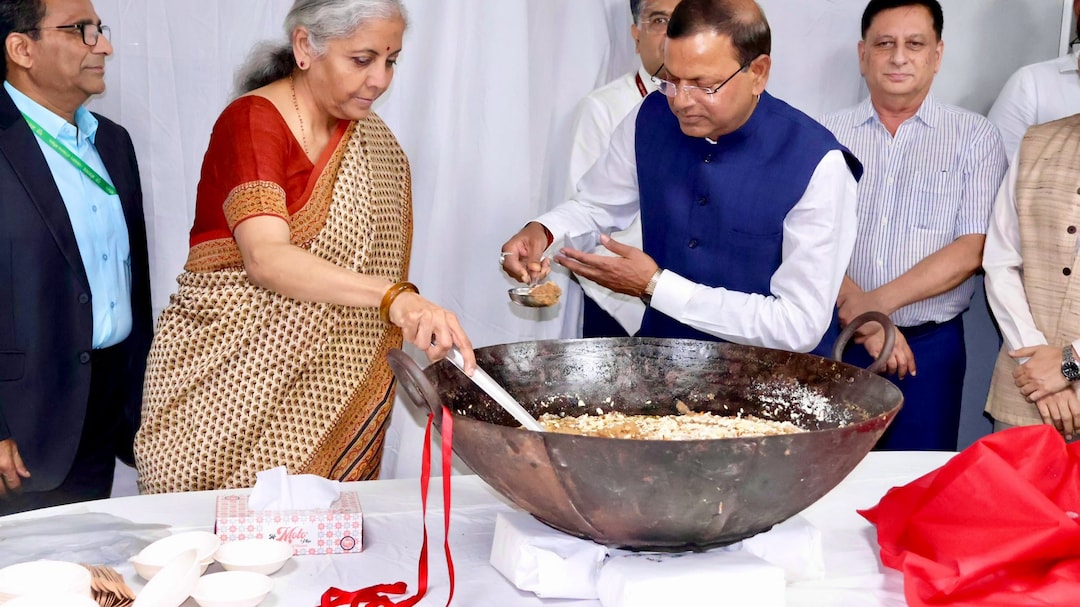
Today, the finance ministry will hold the Halwa ceremony, marking the beginning of the most confidential phase of preparations for the Budget.

Welcome to the Budget Expectations live blog!
Here, NDTV Profit will take you through what different sectors and industries are expecting from the 2026 Union Budget.
Today, the finance ministry will hold the customary halwa ceremony, marking the beginning of the final and most confidential phase of preparations for the Union Budget 2026-27.
The Budget Session of Parliament will start on Jan. 28 and continue till April 2. Finance Minister Nirmala Sitharaman will present the Union Budget 2026-27 on an unorthodox day of the week, being Sunday, Feb. 01, 2026. The Union Budget is set to be presented on a Sunday for the first time in decades. The Economic Survey will be tabled on Jan. 20, before the budget is presented.
Stay tuned for more updates.
Budget 2026 Expectations Live: Solitario Calls For Reducing Indigenous Diamonds Production Costs Down 30%
"In the upcoming Budget, continued policy stability, expanded R&D incentives and easier access to financing for manufacturers will be critical to helping India become the world’s largest hub for sustainable diamond production. With indigenous technology — including initiatives such as the IIT Madras seed programme — India could reduce production costs by 20–30% over the next two years, making lab-grown diamonds more affordable globally while strengthening exports and job creation," Ricky Vasandani, CEO and co- founder, Solitario.
Budget 2026 Expectations Live: IMEA Recommends Easing Capital Gains Reinvestment Limits
"The Budget should focus on measures that support premium consumption and investment in high-end real estate. Key priorities include easing capital gains reinvestment limits under Sections 54 and 54F- particularly raising the Rs 10 crore cap- to facilitate smoother transactions in ultra-premium properties and attract greater NRI and institutional capital," Priya Rustogi, Leader managing director, India, LIXIL IMEA.
"Rationalization of transaction costs, streamlined TDS norms for NRI sellers, and stable policies to mitigate rupee volatility would also help control input pricing pressures in imported premium components," Rustogi said.
Budget 2026 Expectations Live: Grip Invest Calls For Incentivising Secondary-Market Trading
"The upcoming Budget can accelerate bond adoption by reducing friction and improving liquidity. Key steps include incentivising secondary-market trading, strengthening repo and market-making frameworks, and expanding credit enhancement mechanisms so issuances are not restricted only to top-rated entities. These measures would make bonds more competitive with equities as scalable, long-term investment options," Nikhil Aggarwal, Founder & Group CEO, Grip Invest said.
Budget 2026 Expectations Live: Birla Fertility And IVF Calls For Fertility Screening Integration Into Preventive Heatlh Programmes
"Budget 2026 has an opportunity to enable earlier and more efficient fertility care through practical measures. Integrating fertility screening into preventive health programmes and extending insurance coverage to diagnostics and early stage interventions would allow people to seek care sooner, when treatment is more effective and costs are better controlled," Abhishek Aggrawal, Chief Executive Officer, Birla Fertility and IVF.
Budget 2026 Expectations Live: Birla Nu Anticipates Sustainable, Updated And Resource-Efficient Infra Improvement
"As the sector moves into its next phase of growth, equal emphasis must be placed on how this infrastructure is built. Encouraging the adoption of resource-efficient materials, circular manufacturing practices and lower-emission construction solutions will help ensure that growth remains sustainable over the long term. Continued support for technology upgradation, domestic manufacturing, skilling and logistics efficiency will strengthen the industry’s ability to deliver at scale while maintaining quality and cost discipline," Akshat Seth, Managing Director and CEO at BirlaNu said.
Budget 2026 Expectations Live: Educators Call For Capability Building And Targeted Funding Over Launching Schemes
"Budget 2026 should focus less on launching schemes and more on building capability. Institutional infrastructure, faculty training, and digital system integration must be treated as core investments", Preethi Rajeev Nair, Principal – CBSE, Lancers Army Schools said.
"Many schools and higher education institutions still struggle to meet Outcome-Based Education requirements due to outdated facilities and fragmented Faculty Development Programmes. Targeted funding in these areas is not only policy-aligned but operationally effective," Nair said.
Budget 2026 Expectations Live: Indian School of Hospitality Recommends Indigenous AI Tool Develpment To Improve Rural Schools
"Budget 2026 must place education in the everyday vocabulary of the country and give it a seat at the highest decision making table. This requires absolute priority over the next two decades, starting with a fundamental reset of primary education, particularly in rural India where outcomes remain uneven," Kunal Vasudeva, Managing Director and Co-founder at Indian School of Hospitality.
"One practical lever is the development of indigenous AI tools that strengthen teachers’ everyday effectiveness and enable rural classrooms to meet the same functional standards as private schools. If India is serious about Viksit Bharat, this is the only credible path forward," Vasudeva added.
Budget 2026 Expectations Live: Blue Dart MD Calls For Deeper Infra Planning And Investment, Wider Adoption Of Digital Enablers
"Building on the progress made in recent years, the next phase of growth will depend on deeper integration of infrastructure planning across air, road, rail, and multimodal networks, supported by faster adoption of digital platforms that enable seamless coordination across the logistics value chain," Balfour Manuel, Managing Director, Blue Dart said.
"For the express logistics sector, sustained investments in airport infrastructure, cargo handling capacity, and regional air connectivity will be critical to improving turnaround times and supporting high-value, time-sensitive shipments. In parallel, wider adoption of digital enablers such as unified logistics platforms, data-driven visibility, and paperless processes - can further enhance predictability, transparency, and ease of doing business for exporters and MSMEs alike," Manuel added.
Budget 2026 Expectations Live: Dr Batra's Healthcare Anticipates Re-Orientation Of Healthcare Delivery Towards Early Intervention
"As we look ahead to Budget 2026-27, there is a significant opportunity to build on this (public health expenditure) momentum by re-orienting healthcare delivery towards prevention, early intervention, and personalized care. Equally important, however, is the judicious utilization of allocated funds and a clear assessment of their on-ground impact on beneficiaries—effective implementation must go hand-in-hand with budgetary planning," Mukesh Batra, Founder-Chairman Emeritus, Dr Batra’s Healthcare said.
Budget 2026 Expectations Live: CoinSwitch Calls For Reducing TDS On Virtual Digital Asset Transactions
A reduction in Tax Deducted at Source on Virtual Digital Asset transactions from 1% to 0.01% could improve liquidity, ease compliance, and enhance transparency while preserving transaction traceability. Raising the TDS threshold to Rs 5 lakh would help protect small investors from disproportionate impact, Ashish Singhal, Co-founder, CoinSwitch
Budget 2026 Expectations Live: EcoGuard Anticipates Emphasis On Decarbonisation
"A well-structured domestic carbon pricing and measurement ecosystem can soften EU’s Carbon Border Adjustment Mechanism exposure, reduce the risk of double taxation, and help Indian industry compete in carbon-constrained markets. Policymakers should focus on alignment. India’s carbon market architecture must meet global standards for verification and traceability so that decarbonization becomes a trade advantage instead of a trade barrier," Yashodhan Ramteke, Chief Executive Officer, EcoGuard said.
Budget 2026 Expectations Live: Shalimar Paints Expects Higher Premium Paint Consumption
"Rationalized customs duties on raw materials such as titanium dioxide, resins, pigments and additives will reduce input costs and improve value for money for end-users. If the budget continues with favourable measures that support household demand through reduced GST and tax relief, the industry can see a reduced repainting cycle and higher consumption of premium paints." Kuldip Raina, Managing Director and CEO, Shalimar Paints said.
Budget 2026 Expectations Live: CA Firms Call For Encouraging Investor Confidence, Clarifying International Tax-SEP
"Practically, we expect the Budget to include: (i) clear statements on tax-policy stability (explicitly limiting ad-hoc rate changes and signaling multi-year tax roadmaps), (ii) administrative measures to speed dispute resolution and reduce retrospective risk, and (iii) regulatory steps to make domestic financial hubs and GIFT City more investment friendly (parity, faster approvals," Dhruv Chopra, Managing Partner, Dewan PN Chopra And Co. said.
"The government should use the Budget to: (i) issue authoritative clarificatory guidance on Signficant Economic Presence ratings' intended reach (digital/remote transactions with India-user nexus), (ii) clarify interaction with existing business-connection rules and treaty commitments to reduce double-tax risk, and (iii) signal administrative procedures (safe-harbours, simplified compliance) for nonresident taxpayers," Chopra said.
Budget 2026 Expectations Live: Centre Expected To Promote Secure 'Home Grown' AI For Financial Sector
"As India navigates its journey to become a Global AI leader, Budget 2026 should focus on promoting safe, secure, and home-grown AI innovation, particularly in the financial sector where trust and data security are essential. Government projections indicate that AI may contribute as much as $1.7 trillion to India's economy by 2035, with banking and financial services being some of the primary sectors reaping the rewards of its integration," Vishal Maru, Global Processing Head, Financial Software and Systems said.
"Although approximately 87% of Indian businesses utilize AI in various capacities, merely 26% have reached maturity at scale, underscoring a disparity between adoption and innovation," Maru added.
Budget 2026 Expectations Live: Godrej Enterprises Calls For Continued Support To PLI Schemes
"As we look ahead to the Union Budget 2026–27, we hope it builds further momentum towards the vision of Viksit Bharat by strengthening the most important engine of growth – manufacturing. Continued policy support for initiatives such as the PLI schemes, the National Manufacturing Mission, and improved access to credit for MSMEs will be critical to sustaining India’s manufacturing competitiveness, " Anil G. Verma, ED and CEO, Godrej Enterprises Group said.
Budget 2026 Expectations Live: GST Rationalisation, Consumption Push Key For FMCG Growth, Expects Mars Snacking
Prashant Peres, General Manager, India, Mars Snacking says, "Budget 2026 is crucial for the FMCG sector as consumption returns to focus." He expects measures that lift middle-class spending capacity and ease input-cost volatility caused by inverted duty structures. Peres adds that support for food innovation, processing and supply-chain infrastructure can help India move from commodity exports to high-value food products.
Budget 2026 Expectations Live: GST, Customs Relief Can Expand Affordable Eye Care Access, Expects ASG Eye Hospital
Dr Arun Singhvi, MD and Group CEO, ASG Eye Hospital says, "GST 2.0 reforms have lowered costs on ophthalmic equipment and supported affordable eye care." He expects further relief through zero-rated healthcare or ITC eligibility to address embedded taxes. Singhvi adds that reducing customs duties on advanced medical equipment and supporting AI-led diagnostics can expand access to quality eye care in Tier 2 and Tier 3 cities.
Budget 2026 Expectations Live: Multi-Year Capex Visibility, Execution Focus Key For Infra Growth, Expects Salasar Techno Engineering
Shashank Agarwal, Joint Managing Director, Salasar Techno Engineering Ltd says, "India’s infrastructure growth requires sustained public capex with multi-year predictability rather than one-time spending spikes." He expects greater focus on roads and urban mobility to reduce logistics costs and improve productivity. Agarwal adds that "support for power transmission, renewables, telecom and faster execution through streamlined approvals will keep infrastructure growth on track."
Budget 2026 Expectations Live: Harmonised TCS Framework Needed For Overseas Spending, Expects BookMyForex
Gagan Malhotra, COO, BookMyForex says, "While the higher LRS TCS threshold has reduced upfront tax burden, disparities across international spending instruments remain." He says forex cards continue to attract TCS while international credit cards do not, creating an uneven playing field. "A harmonised and clearly defined TCS framework," Malhotra adds, "would improve transparency, ease liquidity pressures and ensure fair treatment for Indian travellers."
Budget 2026 Expectations Live: Farm Incomes, Agri Infra Support Vital For Consumption Growth, Expects AWL Agri Business
Angshu Mallick, Executive Deputy Chairman, AWL Agri Business Ltd says, "Budget 2026 comes at a key moment for consumption-led sectors linked to farm incomes and food security." He expects continued emphasis on agri-infrastructure and rural demand to sustain growth. Mallick adds that "policy support for domestic oilseed cultivation can reduce import dependence and strengthen self-reliance, supported by a predictable policy environment."
Budget 2026 Expectations Live: R&D Push, PPP Models To Boost Smart Protein Sector, Expects GFI India
Sneha Singh, Managing Director, GFI India says, "With rising demand for affordable and sustainable protein, Budget 2026–27 should support smart proteins through public-private partnerships and institutional procurement pilots." She expects higher investment in agri R&D for underutilised pulses, indigenous crops and plant-based value chains. "Continued support for BioE3 policy, shared biomanufacturing infrastructure and workforce skilling can position India as a global hub for next-generation proteins."
Budget 2026 Expectations Live: Travel Incentives, Forex Rule Review To Boost Tourism Spend, Expects BLS International
Shikhar Aggarwal, Joint Managing Director, BLS International says, "India’s travel ecosystem has benefited from policy support for global mobility and ease of travel." He expects the Budget "to raise disposable incomes and introduce targeted travel incentives to boost domestic and international tourism." Aggarwal adds that reviewing foreign exchange limits and taxes on forex transactions could ease cash-flow pressures and unlock long-term value for the sector.
Budget 2026 Expectations Live: Lower Cost Of Capital, Refinance Window Key For MSME NBFCs, Expects UGRO Capital
Shachindra Nath, Founder and Managing Director, UGRO Capital says, "The Budget should move beyond short-term stimulus to focus on lowering the cost of capital and improving liquidity access for MSME financiers." He expects "measures that enable efficient risk-sharing and promote cash-flow based lending through digital public infrastructure and co-lending frameworks." Nath adds that a dedicated NBFC–MSME category and predictable refinance funding via SIDBI could stabilise funding cycles and protect MSME-led jobs and supply chains.
Budget 2026 Expectations Live: Insurance Cover, Preventive Screening To Strengthen Fertility Care, Expects Birla Fertility and IVF
Abhishek Aggrawal, Chief Executive Officer, Birla Fertility and IVF says, "Fertility care needs to be formally integrated into India’s broader health and family planning framework." He expects Budget 2026 "to enable earlier intervention by including fertility screening in preventive health programmes and extending insurance coverage to diagnostics and early-stage treatments." Aggrawal adds that national standards for fertility laboratories, structured training for embryologists and consistent clinical protocols are essential to ensure quality outcomes. Such targeted investments, he says, can support demographic stability and strengthen long-term healthcare resilience.
Budget 2026 Expectations Live: Creative Skills, Financing Support Can Unlock India’s Creative Economy, Expects Aliens Tattoo School
Sunny Bhanushali, Lead Artist and Founder, Aliens Tattoo School says, “India has a rapidly growing but undervalued creative economy, and tattoo art is now a serious career path." He expects Budget 2026 "to strengthen future-forward skills in niche creative fields through incentives for vocational institutions and easier access to student financing." Integrating modern art forms within Skill India frameworks, he says, can build a globally competitive talent pipeline and unlock sustainable creative careers.
Budget 2026 Expectations Live: Higher Public Health Spend, Preventive Care Incentives Needed, Expects ManipalCigna CFO
Srikanth Kandikonda, CFO, ManipalCigna Health Insurance says, “Medical inflation remains one of India’s biggest healthcare challenges, at 11.5%–14%." He expects Budget 2026–27 "to address affordability through higher public health spending, which remains below global benchmarks." Kandikonda adds that "preventive healthcare through enhanced tax benefits for OPD and screenings beyond Section 80D can reduce long-term costs. A prevention-led approach is critical amid an ageing population and rising chronic diseases."
Budget 2026 Expectations Live: Sustainable Infra, Policy Stability Key For Construction Ecosystem, Expects BirlaNu
Akshat Seth, Managing Director and CEO, BirlaNu says, "The true measure of Budget 2026 will lie in execution quality and durability of infrastructure assets." He says "consistent access to quality materials, efficient supply chains and policy stability are essential for long-term planning." Seth adds that encouraging resource-efficient materials, circular manufacturing and low-emission construction can align growth with sustainability goals. Support for technology upgradation, skilling and logistics efficiency, he says, will strengthen productivity and resilience.
Budget 2026 Expectations Live: Fiscal Discipline, Clear Deficit Path In Focus, Expects Jiraaf Co-founder
Saurav Ghosh, Co-founder, Jiraaf says, "Retail and bond investors are keenly watching fiscal consolidation and credible deficit guidance in Budget 2026. A disciplined glide path can help keep government bond yields stable and support corporate bond market growth." He adds that increased corporate borrowing via bonds can boost capital formation and economic growth. On taxation, Ghosh does not expect major changes beyond clarifications, given recent reforms in both direct and indirect taxes.
Budget 2026 Expectations Live: Infra Status, GST Rationalisation To Boost Tourism Growth, Expects EaseMyTrip
Rikant Pittie, Co-founder and CEO, EaseMyTrip says, “Optimism remains strong in the travel and tourism sector ahead of Budget 2026, supported by continued focus on destination development and infrastructure." He expects measures such as infrastructure status for hospitality, GST rationalisation and higher overseas marketing spends. Pittie adds that "airport expansion and better connectivity to emerging destinations can diversify tourism growth. Policy clarity will strengthen employment generation and economic resilience."
Budget 2026 Expectations Live: Infra, GST Relief, Skilling Key For Tier 2, 3 Housing Growth, Expects Amrawati Group
Rajnikant Mishra, Founder and Chairman, Amrawati Group says, “There is strong expectation that Budget 2026–27 will push growth beyond metros into tier two and tier three cities." He says these markets need sustained investment in roads, transport, drainage and urban services to support long-term settlement. Mishra adds that while GST 2.0 has eased some pressure, under-construction projects still face cost stress and need further rationalisation. "Focused labour skilling and worker support", he says, "can improve quality, timelines and employment generation."
Budget 2026 Expectations Live: Tax Parity, Rural Affordability To Deepen Insurance Penetration, Expects Bajaj Life
Tarun Chugh, Managing Director and CEO, Bajaj Life Insurance says, "The Budget offers an opportunity to strengthen life insurance as a long-term savings and retirement solution through consistent policy support." He says "aligning tax treatment of annuities with pension products and bringing parity between traditional and ULIP policies can simplify decision-making." Chugh adds that rationalising transaction costs and improving affordability in rural and social insurance segments can deepen penetration and improve financial resilience.
Budget 2026 Expectations Live: Infra-Led Urban Growth To Support Housing Demand, Expects Bricks and Milestones
Kiran Venugopal, CEO and Founder, Bricks and Milestones says, "India’s housing sector will benefit most from a Budget that strengthens the fundamentals of urban growth. Sustained investment in transport, connectivity and planned city expansion can create long-term momentum for housing demand." He adds that steady focus on urban services such as water, power, mobility and governance is critical for liveability and property value. Policy consistency and predictable financing, Venugopal says, will boost buyer confidence and support balanced urban growth.
Budget 2026 Expectations Live: Manufacturing-Led Support Over Short-Term Incentives, Expects Chupps' Founder
Yashesh Mukhi, Founder, Chupps says, “The real opportunity in Budget 2026 lies in strengthening the foundations of consumer manufacturing rather than relying on short-term incentives." He expects continued support for domestic manufacturing, MSMEs and local value chains, especially for digitally native brands. Mukhi adds that targeted policy support for material R&D, compliant manufacturing infrastructure and simplified regulations can boost global competitiveness. He believes rewarding quality-led and sustainable manufacturing can help shift the sector from volume-led to value-led growth.
Budget 2026 Expectations Live: Infra Push, Incentives To Boost Premium Housing In Tier 2 Cities, Expects Trident Realty
Parvinder Singh, CEO, Trident Realty says, "He expects continued policy support for the premium housing segment, particularly in Tier 2 cities where a lifestyle transformation is underway. With rising demand for larger homes and better amenities, incentive-linked funding and higher investment in urban infrastructure can strengthen buyer confidence. Singh adds that luxury housing in these markets goes beyond premium living, helping create jobs, attract talent and build future-ready urban ecosystems."
Budget 2026 Expectations Live: GST Clarity, Single-Window Clearances For Startups, Expects Uppal Brewers
Ankur Sachdeva, CEO & Co-Founder, Uppal Brewers and Distillers (UBD) says, “As India’s retail sector moves towards a $1.9 trillion milestone by 2030, startups in value-added manufacturing can benefit from a sharper focus on ease of doing business." He expects greater GST clarity and rationalisation, along with a single-window digital clearance system, to accelerate innovation. Sachdeva adds that interstate regulatory consistency will reduce compliance burdens and enable startups to scale responsibly. Streamlining approvals, he says, "can help Indian-origin brands compete globally and support the ‘Viksit Bharat’ vision.”
Budget 2026 Expectations Live: Stronger KYC, Stable Funding Key For Microfinance, Expects MFIN
Alok Misra, CEO & Director, Microfinance Industry Network (MFIN) says, "The microfinance sector, which touches nearly 30 crore low-income people, needs policy support through a robust KYC framework for accurate borrower verification and responsible credit reporting. In light of the Supreme Court judgement restricting Aadhaar use, solutions such as last-four-digit storage or tokenisation need to be enabled." He also expects "steps to ensure more stable funding mechanisms, as excessive dependence of NBFC-MFIs on bank funding has led to stress and nearly 50 lakh clients exiting formal finance over the past year. Misra adds that improving credit discipline and an early announcement on the proposed credit guarantee scheme could restore lender confidence and support financial inclusion."
Budget 2026 Expectations Live: Strengthening Digital Healthcare, And Eldercare As A Priority, Expects Anvayaa
Prashanth Reddy, Founder & MD, Anvayaa says, "As India prepares for Budget 2026, it is crucial to strengthen the digital healthcare ecosystem while formally recognising eldercare as a priority sector. Policy support through tax incentives for senior care services, wider insurance coverage for preventive and assisted care, and incentives for digital health platforms will enable scalable, home-based care models. Such measures can significantly improve senior well-being while building a sustainable, technology-driven healthcare and eldercare ecosystem."
Budget 2026 Expectations Live: Incentives For Upskilling, And Entrepreneurship, Expects UpGrad's Ronnie Screwvala
Ronnie Screwvala, Entrepreneur, Investor & Co-founder, upGrad & Swades Foundation says, “I think we are in a good place. I think the world is in a rocky place and I think we have behaved in a very mature manner." He expects the focus needs to be "the skilling mantra, which over the last two-three years has actually gathered momentum. We have to offer much more skilled people. I’m not talking about skilled labour alone. The focus over the next five years has to be to upskill people, build self-entrepreneurs and entrepreneurship in a very different manner. For AI, I don’t think over-capitalising the sector is a good idea. The right mix of capital investment is important, with large investments going into data centres, while innovation in areas like healthcare, education and skilling builds step by step."
Budget 2026 Expectations Live: Halwa Ceremony To Be Held Today
The ceremony, a long-standing tradition in India's budgetary process, symbolises the transition from drafting and deliberations to the finalisation of the Budget document. It is expected to be attended by Finance Minister Nirmala Sitharaman and senior officials of the ministry, along with staff who have been closely involved in the Budget-making exercise.
Following the halwa ceremony, around 60-70 officials directly associated with the preparation and finalisation of the Union Budget will enter the lock-in period.
During this phase, they will remain cut off from all external communication until the Budget is presented in Parliament. The lock-in is a critical confidentiality measure aimed at preventing any leakage of sensitive fiscal information, including tax proposals, expenditure allocations, and policy measures.
Essential Business Intelligence, Sharp Market Insights, Practical Personal Finance Advice, Daily Fuel, Gold and Silver Prices and Latest Stories — On NDTV Profit.