- Indonesia is the world's largest nickel producer and a major palm oil and coffee exporter
- The Jakarta Composite Index plunged over 11% after MSCI proposed downgrading Indonesia's market
- MSCI cited low free float, opaque shareholding, and investment restrictions as key concerns
For many of us, unfortunately, Indonesia only means a nice holiday in Bali. But Indonesia is much more than a holiday destination. It is the world's largest nickel producer, a major palm oil exporter and one of the world's biggest coffee producers.
For years, Indonesia has benefited from a young workforce, steady economic growth and a reputation for fiscal discipline. Now, that reputation is under pressure. Its stock market has suffered a historic sell-off, its currency is weakening, and international investors are questioning the government's economic policies. So, what has gone wrong with it?
What Happened Last Week?
Also Read | Layoffs Are Rising In Tech, But These Skills Are Helping People Unlock Better Pay
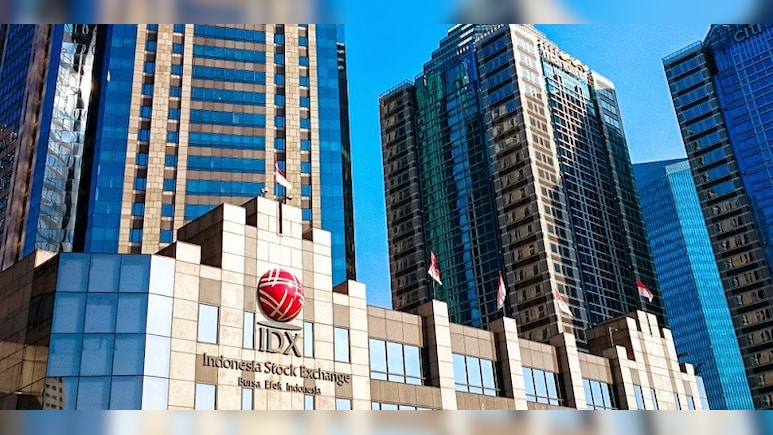
On October 16, Indonesia's Jakarta Composite Index (JCI) plunged more than 11%, its steepest daily fall in 28 years, after global index provider MSCI proposed moving the country from emerging-market to standalone status. The index fell another 3.6% on October 19 before rebounding the following day. Despite the recovery, the market remained down roughly 40% in 2026.
A downgrade means Indonesian stocks will be excluded from benchmarks such as the MSCI Emerging Markets Index. It will be placed alongside Zimbabwe, Ukraine and Lebanon, the other standalone markets.
MSCI's move was not a surprise. It had raised concerns about Indonesia's market transparency and accessibility earlier, but reforms remained slow and inconsistent. The final decision is expected by June 2027. The proposal has already shaken investor confidence and contributed to foreign selling. If Indonesia loses its emerging-market status, more outflows will follow.
ALSO READ: After MSCI Warning, Indonesian Stocks Suffer Worst Single-Day Fall In 28 Years
What are MSCI's objections?
So why does MSCI want to move Indonesia to standalone markets?
Indonesia's stock market has several structural weaknesses. In many listed companies, controlling families retain most shares. That leaves free float, the proportion available for public trading, in single digits. Low free float makes prices more volatile and can make valuations less reliable.
MSCI has also flagged concerns about opaque shareholding structures, unreliable shareholding data, weak regulatory enforcement and suspected coordinated trading, locally known as goreng-goreng saham.
Earlier, it had also flagged practical problems for foreign investors. These include limited information in English, difficulties converting currencies, restrictions on foreign-exchange transactions, and limits on how investors can settle trades, transfer shares, etc. These rules make investing in Indonesia more difficult and costly.
Indonesia has announced reforms, including disclosure of shareholders holding more than 1%, improved investor classifications, measures to identify concentrated ownership and a roadmap towards a 15% minimum free float. However, MSCI wants to see proof that these changes are being implemented effectively before it changes its assessment.
The Market Sell-Off Has Exposed Deeper Risks
Usually, investors are happy to ignore economic weaknesses when markets keep going up. But all it takes is one trigger to change the mood. That is what happened in Indonesia.
In 2025, the JCI rose 22%. In January 2026, MSCI warned that Indonesia could lose its emerging market status. That triggered a sell-off, and the market hasn't yet recovered.
Throughout the year, investors are reviewing their positions in Indonesian markets. They have also started assessing the economy. Three broader risks emerge: the government's ability to manage its finances, the independence of economic institutions and growing public discontent.
Fiscal Credibility Is Under Pressure
President Prabowo Subianto's flagship free nutritious meals programme has become a major budget commitment. For 2026, the government allocated Rp335 trillion, which is around 9% of total government expenditure. It was subsequently cut to Rp229 trillion.
The country's budget deficit reached 2.9% of GDP in 2025. The legal limit is 3%. It could still be able to stay within the limit in 2026. But that leaves a little room to wiggle if it has to spend more in case oil prices move up sharply.
Recently, Moody's and Fitch have revised their sovereign rating outlooks to negative. They have raised concerns around policy credibility rather than an imminent sovereign default.
So foreign investors will keep an eye on the fiscal deficit figure and evaluate the productivity of government spending.
Why Central Bank Independence Matters
Investors are also watching developments relating to institutional credibility.
The concerns increased when Prabowo replaced a respected finance minister, Sri Mulyani Indrawati, in 2025. Later, he also appointed his nephew, Thomas Djiwandono, as a deputy governor of Bank Indonesia, the country's central bank. That has raised questions about the independence of economic institutions.
In 2025, Bank Indonesia and the finance ministry agreed to share interest costs associated with government bonds financing public housing and village cooperatives. It also purchased government securities in the secondary market and entered into debt-switch arrangements with the finance ministry.
These steps do not prove that the central bank has lost its independence. But they raise doubts about its ability to remain one in the future. For investors, this matters as much as monetary policy decisions.
Economic Growth Has Yet to Deliver for Everyone
Last August, protests erupted over generous allowances for lawmakers and escalated after a police vehicle killed a motorcycle-taxi driver during clashes.
The anger reflected deeper economic frustrations. Despite GDP growth of around 5%, nearly 9.5 million people fell out of the middle class between 2019 and 2024, while four in five new jobs created during the period were informal.
After protests, stock market indices fell while the rupiah weakened. Bank Indonesia even intervened in currency markets to limit the rupiah's fall. At the time, however, analysts viewed the sell-off largely as a short-term reaction to uncertainty rather than a fundamental shift in Indonesia's growth outlook.
The government responded by withdrawing those allowances and announcing stimulus measures. However, discontent persists, and this month, we have also seen protests in some places. Also, Prabowo's approval ratings have been declining for over a year.
Final Take
The government is under pressure on several fronts. It must keep the budget under control, address public discontent, help more people move out of poverty and restore confidence in financial markets and economic institutions.
Compared with these challenges, financial market reforms may be the easier problem to solve. Indonesia's macroeconomic fundamentals remain strong despite the recent turmoil. The bigger challenge is to ensure that economic growth translates into better jobs, higher incomes and greater security for ordinary Indonesians.
ALSO READ: Unhedged Position: Can India See An Indonesia-Style Time Correction?
Essential Business Intelligence, Sharp Market Insights, Practical Personal Finance Advice, Daily Fuel, Gold and Silver Prices and Latest Stories — On NDTV Profit.