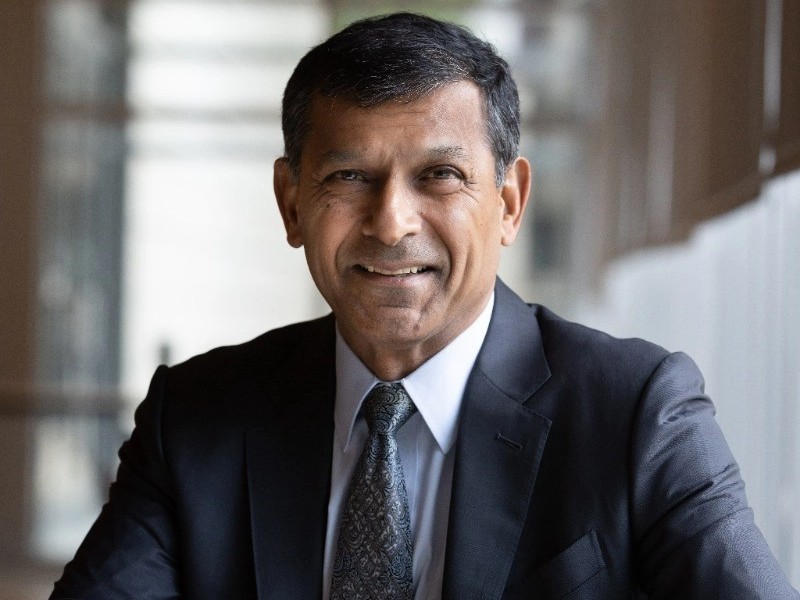
Former Reserve Bank of India (RBI) Governor Raghuram Rajan spoke candidly about India's economic prospects at a recent public forum, offering a critical view on the nation's aspirations to become a global leader.
Rajan highlighted the cautious optimism among Indians regarding the country's growth trajectory. He said that Indians are hopeful that the current 6% growth rate could rise to 8% if the economic environment is right, eventually allowing the country to catch up with the two dominant global powers, the United States and China.
“Indians are hoping that 6% growth right now reaches 8%, which will allow India to catch up to America and China. But with those kinds of growth rates, it will be 15, 20 or 30 years before that happens,” Rajan said during his address at the UBS Centre for Economics in Society at the University of Zurich on Dec. 4. He added, “So, India is still quite small.”
Also Read | Layoffs Are Rising In Tech, But These Skills Are Helping People Unlock Better Pay
"Indians are hoping that 6% growth right now reaches 8%, which will allow India to catch up to America and China. But with those kinds of growth rates, it will be 15-20 or 30 years before that happens. So India is still quite small," says Raghuram Rajan pic.twitter.com/h84Ucr0IwP
December 8, 2025At the same forum, Rajan also offered insights into the reasons behind US President Donald Trump imposing a steep 50% tariff on India. Discussing trade tensions and the evolving diplomatic relationship between India and the United States, he said that the tariffs were not connected to India's imports of Russian oil.
“....Pakistan played Trump the right way. They said the ceasefire was due to Trump. India said the deal was reached without him. The net effect is that Pakistan has a 19% tariff and India has a 50% tariff,” Rajan said.
He was referring to the brief escalation between India and Pakistan in May 2025, which followed the Pahalgam terrorist attack. In retaliation, India launched Operation Sindoor, targeting terrorist infrastructure across Pakistan.
Though a ceasefire was achieved after a few days of tension, Trump claimed credit for brokering it, a claim India firmly rejected. Initially, Pakistan's foreign minister, Ishaq Dar, also denied that Trump had played any role in the mediation. Later, however, Pakistan's Prime Minister Shehbaz Sharif claimed that Trump had been instrumental in ending the hostilities.
Essential Business Intelligence, Sharp Market Insights, Practical Personal Finance Advice, Daily Fuel, Gold and Silver Prices and Latest Stories — On NDTV Profit.