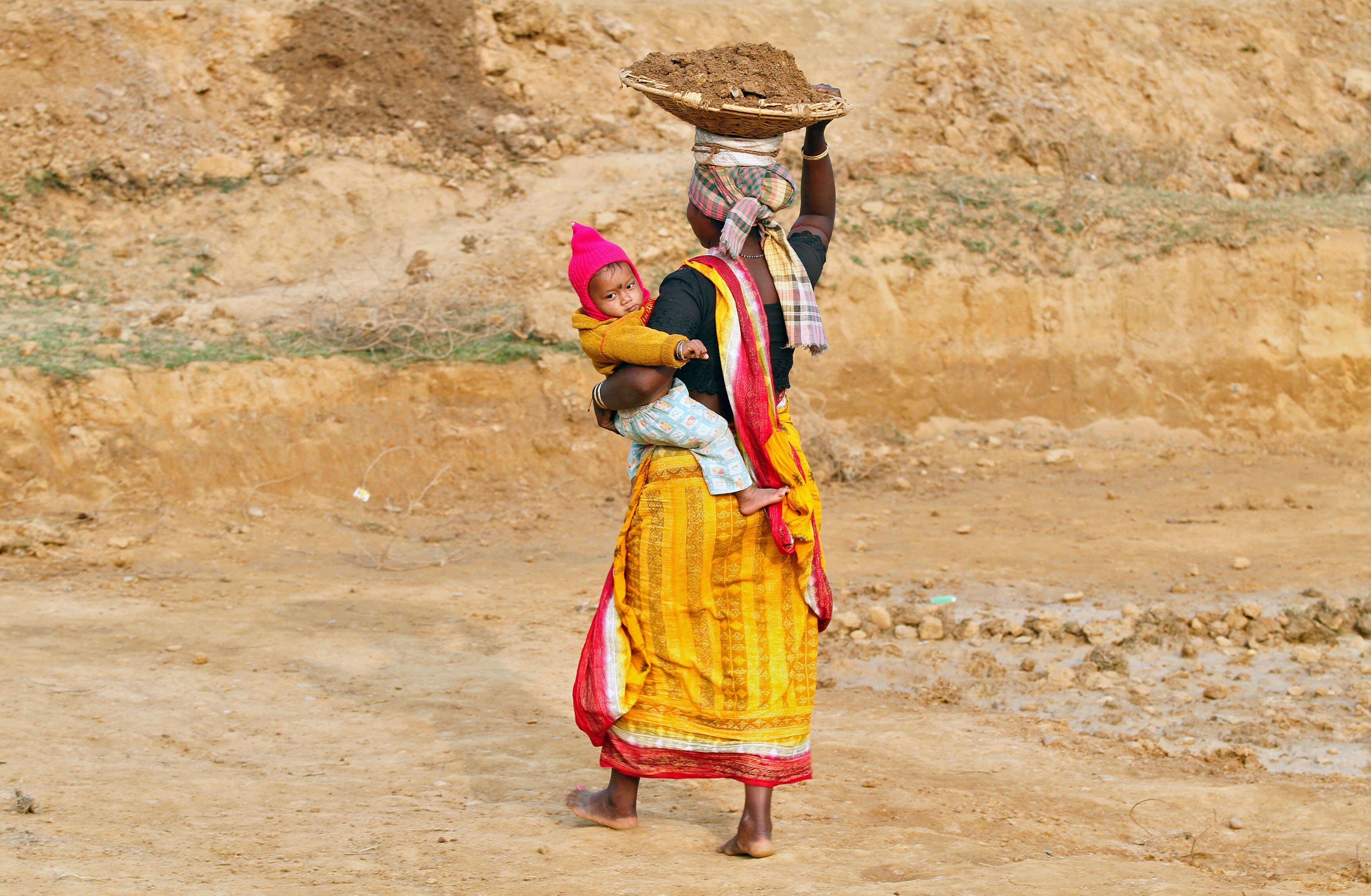
Demand for work under the government's rural employment guarantee scheme has once again risen. The increased demand, though seasonal, remains above pre-pandemic levels, even though the broader economy is recovering.
Close to 3.2 crore households demanded work under the Mahatma Gandhi National Rural Employment Guarantee Scheme in June, according to data by the Ministry of Rural Development.
While this was 6.2% lower than the demand for work in June last year, it was 27.2% higher than the demand for work in June 2019, before the pandemic hit. Demand for work in May was 15.4% higher compared to May 2021 and 22.8% above work demanded in May 2019.
Demand for work under the scheme remains high, Nikhil Dey, MGNREGA activist and founder of the Mazdoor Kisan Shakti Sangathan said. During the pandemic, the supply of work increased, causing demand to pick-up as well, he said. "There is still lots of distress in rural areas."
Actual demand is even higher and remains artificially suppressed, Dey said. For instance, states such as West Bengal have not paid any wages since the start of the current financial year, deterring demand.
According to Dey, after a few months of decline, demand has picked up reflecting the flow of money. Several states released payments in April, encouraging more workers to apply for work in May and June. Demand for work under the scheme is at its peak in April, May and June, Dey said.
Rajendran Narayanan, professor at Azim Premji University, said that the government has now put in place a National Mobile Monitoring Software that has added to workers' woes.
The app was introduced to monitor attendance at the worksite. While attendance is taken twice a day, workers would tend to leave the site after they completed work, since several of them would work elsewhere as well for sustenance, Narayanan said. Having to stay on is discouraging workers from taking up work.
"Despite new-found obstacles, such as the app, the fact that demand is still rising shows desperation for work," said Dey.
Radhicka Kapoor, fellow at the Indian Council for Research on International Economic Relations, said that demand for work under MGNREGA is high during this time of the year, since there is not much agricultural work to do. Still, the work demanded under the scheme shows the labour market remains weak.
The rise in demand for work under the government's minimum employment guarantee scheme shows why not to get swayed by the headline unemployment rate.Radhicka Kapoor, Fellow, Indian Council for Research on International Economic Relations
According to high-frequency data by the Centre for Monitoring Indian Economy, the unemployment rate saw a modest rise at 7.8% in June, compared to 7.12% in May.
While unemployment in urban areas declined, it rose in rural areas. Unemployment rose to 8.03% for rural areas—the highest since February this year. In urban areas, it eased to 7.3% in urban areas—the lowest in at least a year.
Essential Business Intelligence, Continuous LIVE TV, Sharp Market Insights, Practical Personal Finance Advice and Latest Stories — On NDTV Profit.