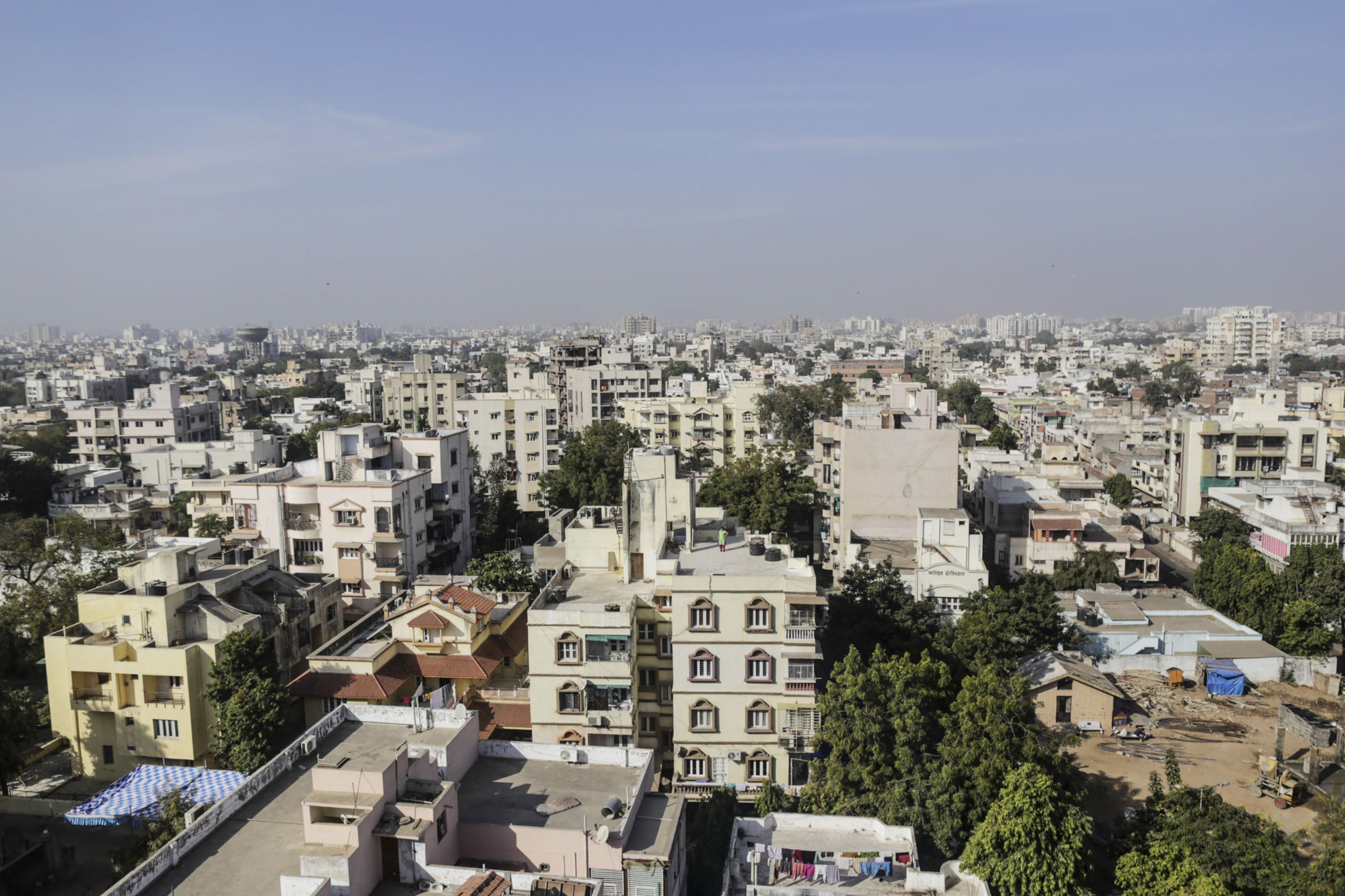
The World Bank has projected a 5-percent growth rate for India in 2019-2020, but said it was likely to recover to 5.8 percent in the following financial year.
The growth rate for Bangladesh has been projected to remain above seven percent through the forecast horizon and, in Pakistan, it is projected to languish at three percent or less through 2020 as macroeconomic stabilisation efforts weigh on economic activity, the bank said in its latest edition of the Global Economic Prospects.
“In India, where weakness in credit from non-bank financial companies is expected to linger, growth is projected to slow to five percent in the fiscal year 2019-20, which ends March 31, and recover to 5.8 percent the following fiscal year," the World Bank said on Wednesday.
The global economic growth is forecast to edge up to 2.5 percent in 2020 as investment and trade gradually recover from last year's significant weakness, but downward risks persist, it said.
The U.S.' growth is forecast to slow to 1.8 percent this year, reflecting the negative impact of earlier tariff increases and elevated uncertainty. The Euro area's growth is projected to slip to a downwardly revised one percent in 2020 amid weak industrial activity, the bank said in the report.
“With the growth in emerging and developing economies likely to remain slow, policymakers should seize the opportunity to undertake structural reforms that boost broad-based growth, which is essential to poverty reduction,” World Bank Group Vice President for Equitable Growth, Finance and Institutions, Ceyla Pazarbasioglu, said.
“Steps to improve the business climate, the rule of law, debt management, and productivity can help achieve sustained growth,” Pazarbasioglu said.
In the report's India section, the World Bank said tighter credit conditions in the non-banking sector are contributing to a substantial weakening of the domestic demand in the country.
“In India, activity was constrained by insufficient credit availability, as well as by subdued private consumption,” the report stated.
The bank said the regional growth in South Asia is expected to pick up gradually, to six percent in 2022, on the assumption of a modest rebound in domestic demand.
“Growth in India is projected to decelerate to five percent in FY20 amid enduring financial sector issues. Key risks to the outlook include a sharper-than-expected slowdown in major economies, a re-escalation of regional geopolitical tensions, and a setback in reforms to address impaired balance sheets in the financial and corporate sectors,” the report said.
In India, economic activity slowed substantially in 2019, with the deceleration most pronounced in the manufacturing and agriculture sectors, whereas government-related services sub-sectors received significant support from public spending, the bank said.
GDP growth decelerated to five percent and 4.5 percent in the April-June and July-September quarters of 2019, respectively, the lowest readings since 2013, it said.
Sharp slowdowns in household consumption and investment onset, the rise in government spending. High-frequency data suggest that activity continued to be weak for the rest of 2019, the World Bank said.
The bank, in the report, praised India's efforts to gradually eliminate subsidies on LPG. In India, starting in 2012, the government reformed its subsidy regime for liquified petroleum gas (LPG).
LPG subsidies to households encouraged the formation of black markets where subsidised LPG distributed to households was diverted to the commercial sector.
The government gradually increased the price of LPG for households while implementing a large-scale targeted cash transfer mechanism, the bank said.
“The programme successfully eliminated distortions in the LPG market, with limited adverse consequences for the poor, and the fiscal savings obtained from the reduction in subsidies fully offset the costs of the targeted cash transfer,” the report stated.
Essential Business Intelligence, Continuous LIVE TV, Sharp Market Insights, Practical Personal Finance Advice and Latest Stories — On NDTV Profit.