Scan to Download
Economic Survey 2019: Key Highlights Including Focus on MSMEs, Judicial Capacity, Minimum Wages
Agriculture policies should focus on dairying as India is the largest producer of milk; livestock rearing particularly of small ruminants and the fisheries sector, as India is the second largest producer there, the document said.
It added that the thrust should be on micro-irrigation to improve water use efficiency.
Economic Survey 2019: Private Investment Key To Sparking Off A ‘Virtuous Cycle’ For Indian Economy
Economic Survey 2019: Redesigning India’s Minimum Wage System
Despite being one of the youngest countries in the world in terms of average age of the population, India's policy makers need to prepare for those who are ageing, the survey said.
Economic Survey 2019: Existing Incentives Encourage Dwarf MSMEs Instead of Large Firms
The survey proposed a reduction in policy uncertainty by the way of keeping the policy consistency with the forward guidance and assuring quality of processes in government department.
One of the biggest hurdles to #Economy5trillion is poor enforcement of contracts and dispute resolution. Steps to speed up legal process should be top priority. #EcoSurvey2019 shows that required efficiency gains & appointments are large but achievable 5/5
— K V Subramanian (@SubramanianKri) July 4, 2019
India Expects Economy to Rebound This Year
The Economic Survey highlighted the importance of reviving investment in the economy, saying that it creates a "virtuous cycle". “The higher capacity utilisation and uptick in business expectations should increase investment activity,” Krishnamurthy Subramanian writes in the survey, according to Bloomberg.
Investment in the economy has been weak due to deleveraging of corporate balance sheets. In the economic survey for last year, former CEA Arvind Subramanian had also highlighted the urgent need to revive investment.
"The ratio of gross fixed capital formation to GDP climbed from 26.5 percent in 2003, reached a peak of 35.6 percent in 2007, and then slid back to 26.4 percent in 2017," Arvind Subramanian had written.
The Economic Survey, tabled on Thursday, said that India’s Monetary Policy Committee framework has been successful in containing inflation.
The new monetary policy framework was adopted in 2015 amid high retail inflation. Helped by factors such as low oil prices, inflation has since come down sharply. For two consecutive financial years, average inflation has remained close to the MPC’s target of 4 (+/- 2) percent.
India expects economic growth to rebound this year from a five-year low, Bloomberg reports. pic.twitter.com/lJzuIw75pb
— BloombergQuint (@BloombergQuint) July 4, 2019
When was the last time you looked at the blue, unfettered sky and wondered about the power of the unfettered "blue sky" thinking? #EcoSurvey2019
— K V Subramanian (@SubramanianKri) July 3, 2019
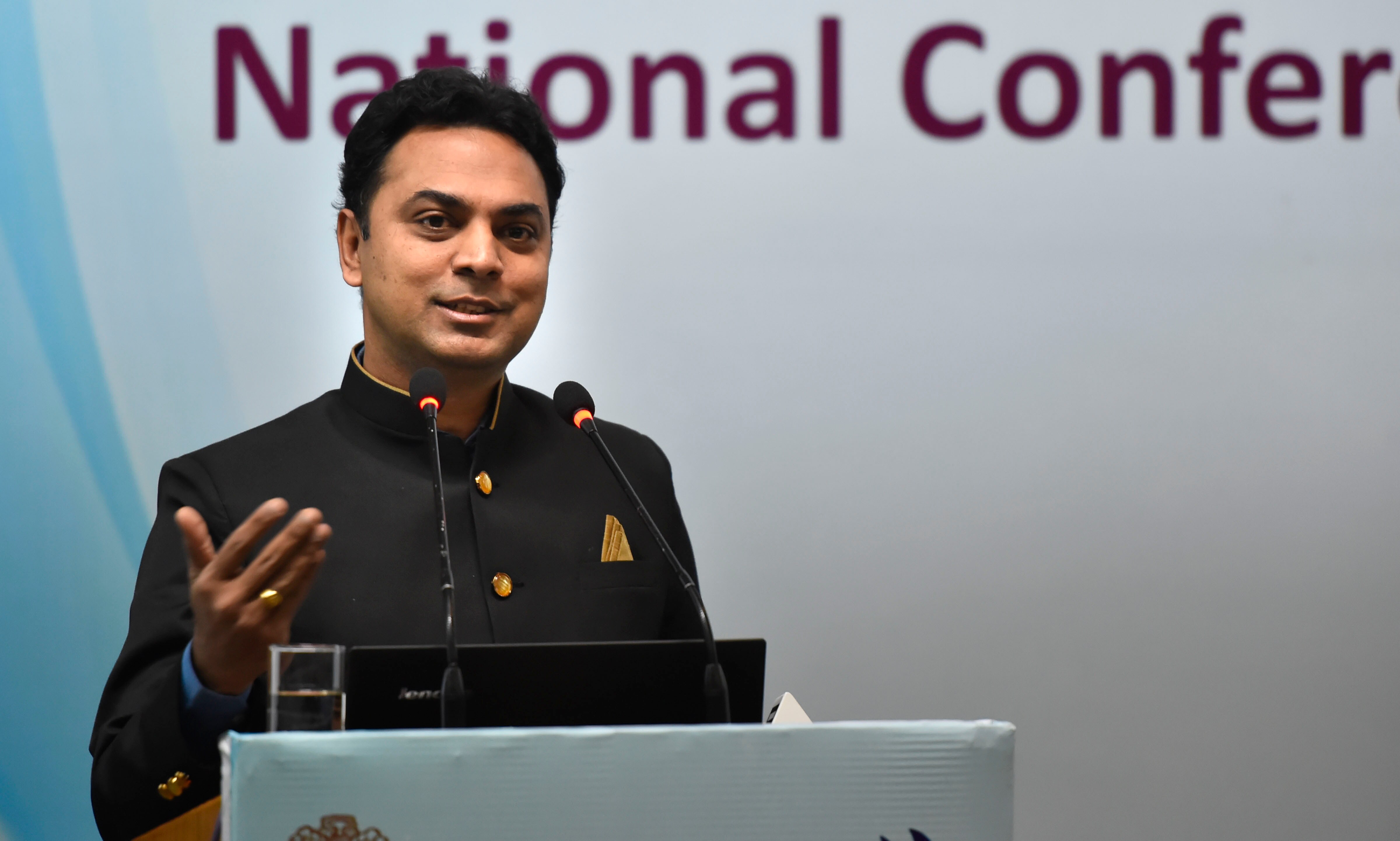
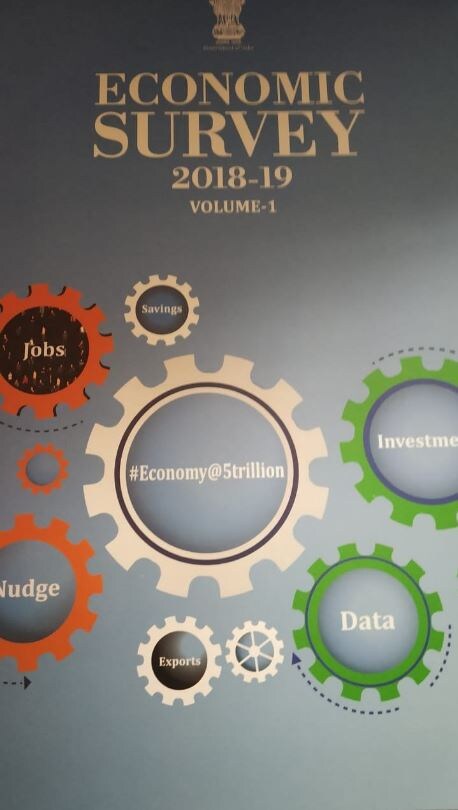
India’s 2018-2019 economic survey - a document authored by the Chief Economic Advisor to the government - has been tabled in the parliament today by Finance Minister Nirmala Sitharaman.
Newly appointed CEA Krishnamurthy Subramanian along with his team will address a press conference at 1:15 p.m. thereafter.
The annual document acts as a platform to pitch larger economic ideas and concepts which the government may or may not act upon. For example, former CEA Arvind Subramanaian restarted the debate on Universal Basic Income and its application in India. He also started the debate on the use of Reserve Bank of India’s excess reserves for narrowing the fiscal deficit.
Essential Business Intelligence, Continuous LIVE TV, Sharp Market Insights, Practical Personal Finance Advice and Latest Stories — On NDTV Profit.