After weeks of anticipation, Idea Cellular Ltd. and Vodafone India Ltd. announced that the two companies will merge, creating India's largest telecommunication company.
The merger is structured such that Vodafone Group Plc. will own 45.1 percent of the combined entity after selling a 4.9 percent stake to Aditya Birla Group. Aditya Birla Group will own 26 percent and have the right to increase its stake by buying more shares from Vodafone over the next four years. If Birla doesn't make any purchase then Vodafone will have to sell down shares to equalise its shareholding to that of the Aditya Birla Group.
Vodafone and Aditya Birla Group will have joint control of the company, each having the right to appoint three directors on the board. Kumar Mangalam Birla, group chairman of Aditya Birla Group, will be appointed chairman of Idea, whereas Vodafone will have the sole right to appoint the chief executive officer.
The transaction is expected to close during 2018.
Also Read: Vodafone India-Idea Cellular Merger To Create India's Largest Telecom Operator
Did the entry of Reliance Jio prompt this merger? And if yes, will this combination help Vodafone and Idea put up a stronger fight?
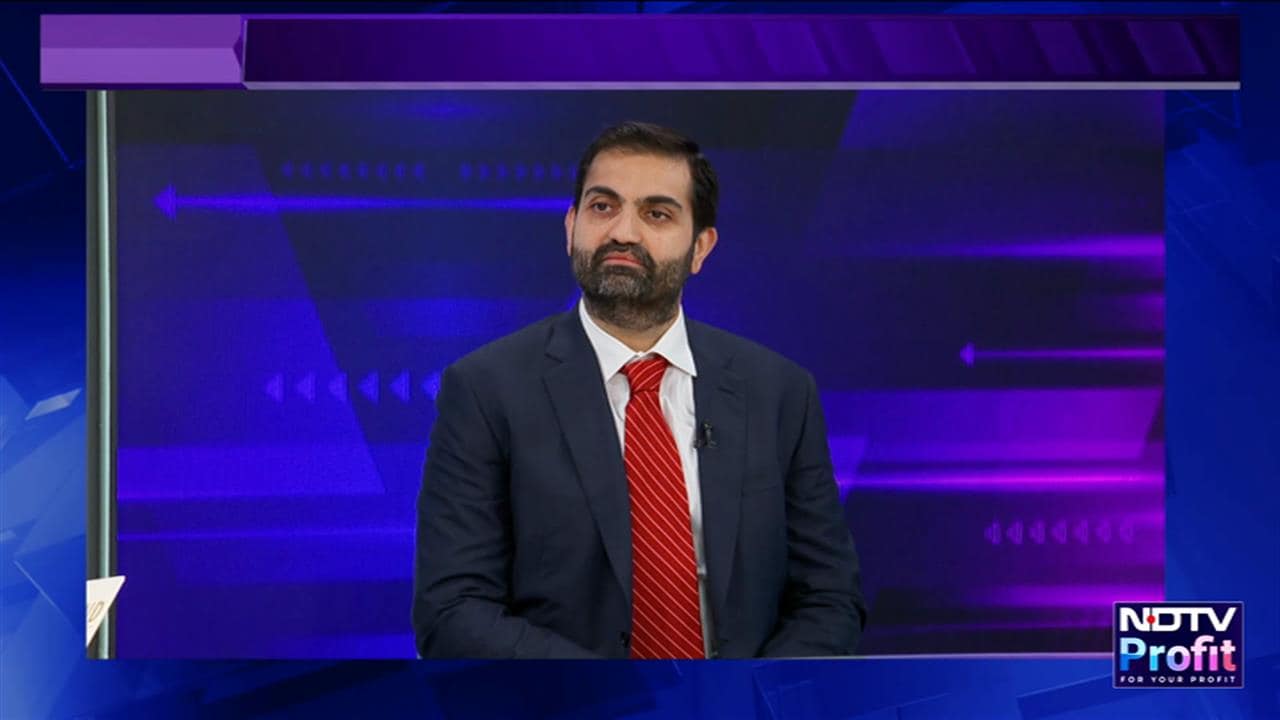
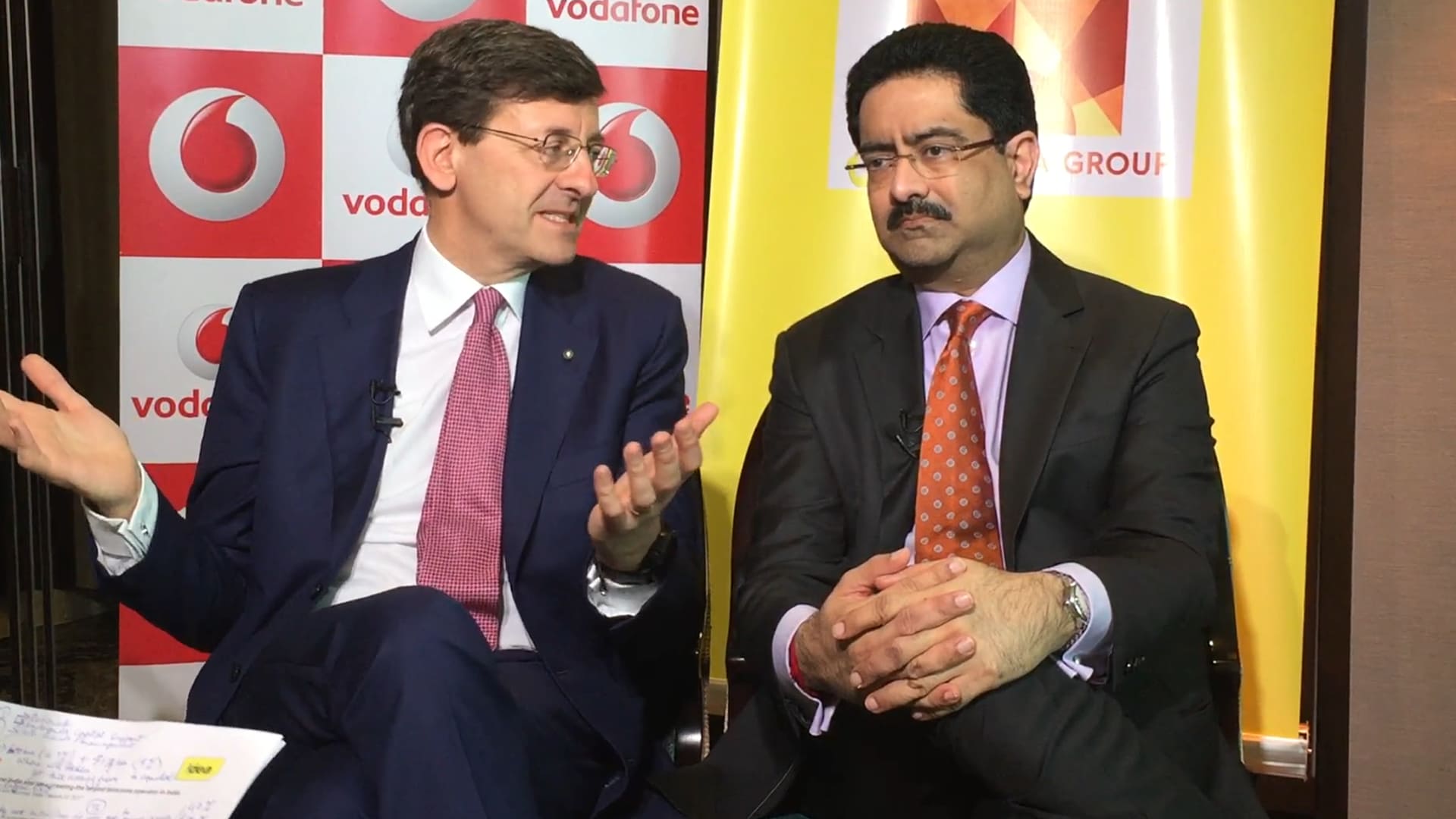
BloombergQuint's Menaka Doshi speaks to Kumar Mangalam Birla, chairman of Aditya Birla Group and Vittorio Colao, chief executive of Vodafone Group Plc.
What is the underlying rationale for this deal? Clearly the entry of Jio has led to considerable capital burn in this sector. Will this merger result in a stronger balance sheet and the ability to allocate more capital to the business?
Kumar Mangalam Birla: So I think morethan the fact that you have a large competitor, what is more important is thefact that the underlying industry logic of both of these companies and businessescoming together is rock solid. We'll have 40 percent market share across the country, 35 percent share of customersacross the country, 1850 megahertz (MHz) of spectrum, which is very large by any standard,the fact that we'll have lightning speeds for data in at least 12 of our leadership circles. I could go on and on but I think that gives a flavour of where I'm coming from. A huge complementarity in terms of, we have strengths in certain markets, Vodafone has strength in some others, so a very powerful combination driven by business logic. Thefact that we have got a very strong competitor obviously has been a trigger, if at all that has hastened the process, but that is not the fundamental reason for us to cometogether.
On the issue of a stronger balance sheet – the media statement says the merged entity will be self-funded. I assume any further capital infusion will come from the Aditya Birla Group? Will Vodafone Group Plc want to put inmore capital given that it is diluting stake?
Vittorio Colao: First of all thecompany will be self-funded. The company will start with a high debt level butit will deleverage quickly because we have assets – the Indus Towers stake that can be disposed. We have $10 billion in synergies and these are synergies mostly on the network equipment, on the towers, on electricity, on things that we can make it happenpretty quickly. And of course, we also think that the market will improve overtime. So the deleveraging of this company will be done pretty quickly and thepartners are committed to supporting the company, but we think that the companywill be self-supported.
Let me go back to the rationale – you almost seem to imply that the logic is because there is a new competitor, but first of all let's also give credit to the old competitors which are still there and they are still pretty good and pretty tough, so it's not that there is just a new competitor in the market, it has always been very competitive. To some extent, this merger is born out of the success of two companies. We have been very successful in certain circles, Idea has been very successful in other circles and we both have around 900 MHz of spectrum and certainly the complementarity, in the moment of date and in the moment where Digital India implementation requires a lot of spectrum, makes this logic very compelling. And certainly we'll be able to offer broadband in rural, in urban, in metros, thanks to a lot of spectrum. Nowhere do we have a market share lower than 10 percent. In the whole of India we are number 1 or number 2. So this is really an industrial logic, it is not in reaction to any old or new competitor.
At a time when you need to be at your agile best your management teams for the next two years will befocussed on integrating these two businesses, they will be focused on merging cultures. That's a huge distraction for any telecomplayer that needs to be able to react quickly to what's going on in the current competitive scenario. So again I question, on the basis of that, the rationalefor this transaction.
Kumar Mangalam Birla: So typically in a situation like this, and I'm sure Vittorio has gone through many more such situations than we have, we have a separateintegration team that works only at intergration 24/7, and the operating team isactually not really burdened with the whole operation of integration. That'show it's typically done. And you know, I think it's more about connecting to thehearts and minds of people eventually. It's all about people, and as long as both our sets of employees are convinced that this is the right thing to do for the companyand them, I think that that's where the crux really lies.
Mr Colao I want you to respond to that question? Also isVodafone Group Plc committed to bringing in more capital? Because your initial press statement said very clearly that you want to deconsolidate the business. Your progressive reduction in ownership of the combined entity seems to me as if this is a clear exit from India, eventhough you will continue to stay invested as a shareholder in the combinedentitity.
Vittorio Colao: Let me put this straight and simple. This is notVodafone's exit from India. We used to own like a company which was goodbut had a 22 percent market share, now we own the same amount in a company whichis bigger. So it is not an exit from India, it is a strengthening of our presencein India. This is the clear message that I want to give everybody and I gave today to my employees.
Back to the question about integration. The first thing I said this morning to our employees, using a football metaphor – I'm not into cricket – keep your eyes on the ball and don't forget who is the competitor, who is the opponent. And I'm sure Kumar is doing the same. They have been very agile, we have been very agile commercially. Together our job is to make the best management team. Most agile, most reactive in the industry.
Will you commit to more capital and investment in this business?
Vittorio Colao: We are committed to invest whatever is needed tomake sure that with this 1,800 MHz of spectrum and the largest network in thecountry and the largest customer base in the country we deliver broadband servicesto the whole of India. I think this is the commitment of the two parties.
So you are committed to investmore capital in India?
Vittorio Colao: We are committed to continue toinvest more in India.
Kumar Mangalam Birla: If I can add, I don't think that, looking at the projections of the combined company, it seems that you would require a whole lot of capital. Because the self-generation of funds is very strong. But to echo what Vittorio said, both Vodafone and Aditya Birla Group completely stand behind this company, whether it's in terms of management time, focus and obviously in terms of funds as well.
Mr. Birla, you will need a considerable amount ofcapital to shore up your promoter stake in the merged entity, from the current 26 percent to anequal percentage – which is 35 percent. We estimate that to cost somewhere between $600 million for the first 4.9 percent stake and another $1-1.5 billion for the remaining 9 percent stake. That's over $1.6 billion. How will you raise these funds over the next four years?
Kumar Mangalam Birla: So I think it is importantto clarify, the second tranche of 9 percent is an option. It is not something we arecommitted to do, we would want to do but we'll have to see how it goes, in terms of funding for example. Vodafone has committed that if we don't take up our holdingthen the excess holding Vodafone has will have ‘restricted' voting and they will shed theexcess shareholding over a period of time so that we are equalised and we move aheadin true spirit of an equal partnership.
Where will you raise the funds from?
Kumar Mangalam Birla: We are not looking for funds from the listed companies of the Group, so it will have to come from the promoter owned entities.
Your views on the entry of Jio and the competitive scenario?
Vittorio Colao: Thank you for this questionbecause this is really the essence of it. Now of course you live in India andyou see this Jio thing and everybody thinks this is a completely unseen andunprecedented phenomenon. It is a remarkable new competitor. But to be honest we haveseen new competitors coming in many, many markets. Clearly India is bigger so the committment that the new competitor has made, in terms of money, is large. Eventually, they will need to startcharging something and eventually they will need to have service and otherelements of normal media and communication operations and that's where our strength comes. Because we are strong brand, we have strong distribution, we have strong care and we will have the biggest,and I hope the best, network in the country. So is it a tough competitivesituation? It is a competitive situation but it is as tough as other situations you see around the world.
Kumar Mangalam Birla: Jio is comparatively huge, with deep pockets, great execution and not someone to be taken lightly, obviously. It's basically about competing in the market and getting a share of the customer's wallet.
Essential Business Intelligence, Continuous LIVE TV, Sharp Market Insights, Practical Personal Finance Advice and Latest Stories — On NDTV Profit.