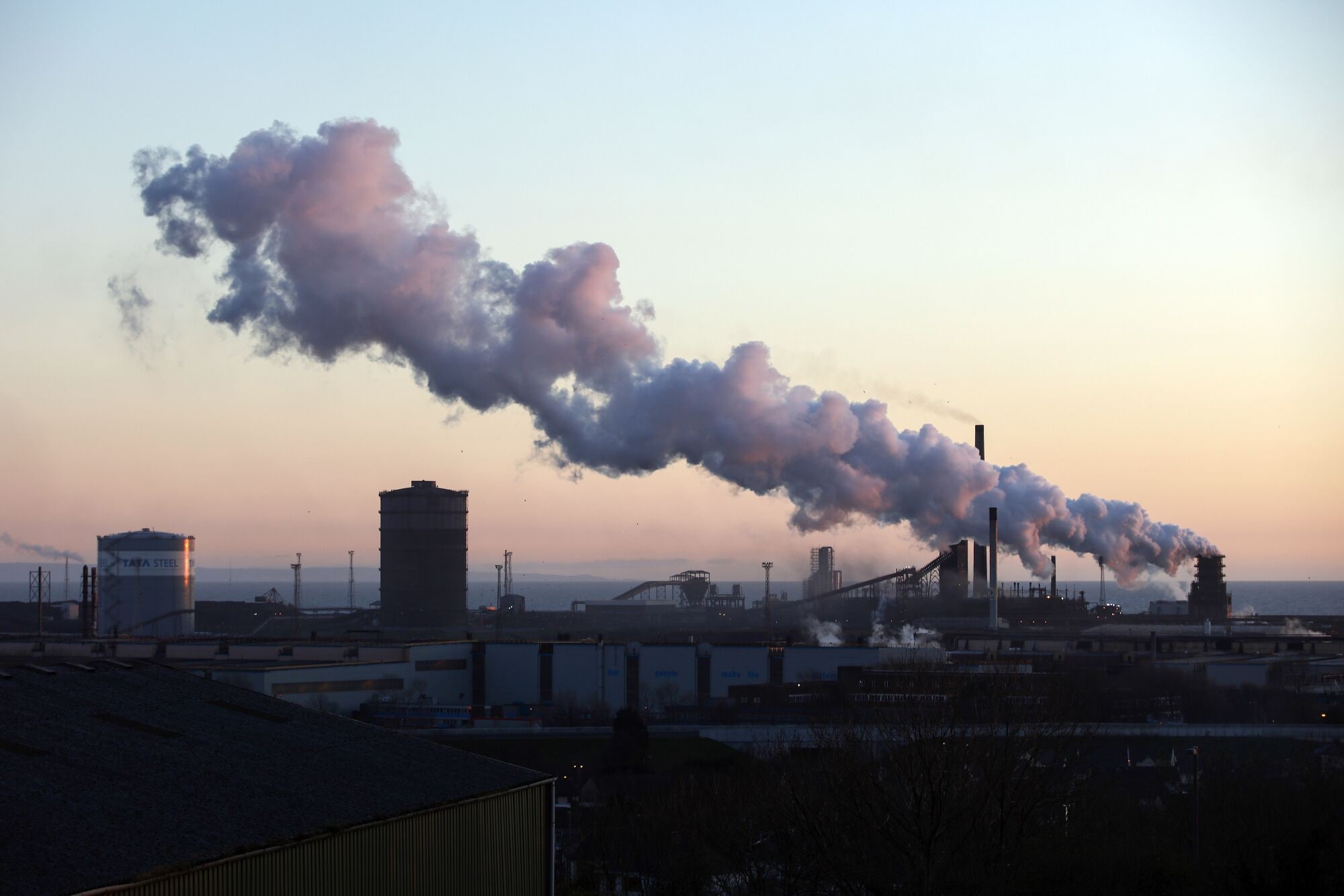
(Bloomberg Opinion) -- Britain has entered a bout of hand-wringing over the future of its steel industry. Everyone, it seems, has found something to hate in Tata Steel Ltd.'s plan to close its two blast furnaces at Port Talbot in South Wales and replace them with less-polluting technology. For conservative commentators, the announcement is evidence of the damage wrought to business by the UK's net-zero targets. Trade unions and opposition politicians, meanwhile, lament the loss of up to 2,800 jobs and the Indian company's refusal to countenance a more gentle transition.
The end of traditional steelmaking is neither an act of corporate villainy nor an example of out-of-control environmental wokery. It reflects competitive pressures and the march of technological progress — brutal in its local effects, to be sure, but ultimately unavoidable. Port Talbot is a community built on steelmaking, and the shedding of almost three-quarters of the factory's remaining workers will devastate the town of 32,000. It isn't alone. British Steel Ltd., owned by China's Jingye Group, said in November it would close its remaining blast furnaces at Scunthorpe in eastern England and replace them with electric arc furnaces.
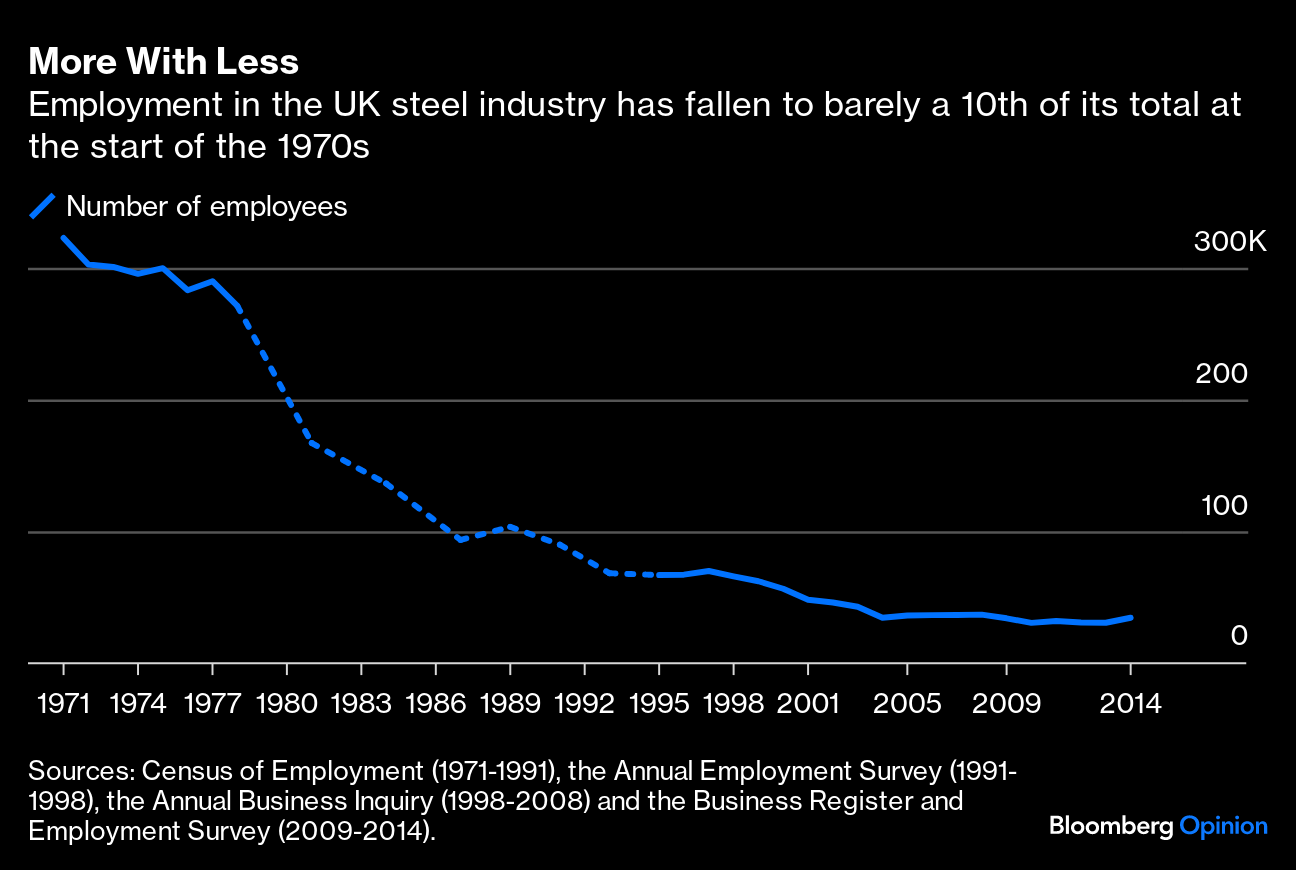
The wider context here is of an industry that has been in decline for half a century, punctuated by periodic crises and under constant pressure to do more with less. Employment peaked at more than 320,000 at the start of the 1970s, and has since declined to barely a 10th of that. Steel production has also dropped, partly as a result of competition from newly industrializing countries where wages are significantly lower, but by a lesser magnitude, falling to around a fifth of its peak. On this measure, labor productivity has roughly doubled.
Despite this, it's still tough to turn a profit making steel in Britain. Tata, a unit of the Mumbai-based conglomerate, has invested £4.7 billion ($6 billion) in its UK business since winning a takeover battle for the former Corus Group Plc in 2007 and is sitting on tax losses of more than £2 billion, according to a September analysts' call. It tried to sell the business, for which it was widely seen to have overpaid, in 2016, only to shelve the plan after the Brexit vote deterred bidders. Eight years later, Tata is still here. The company can't be accused of cutting and running.
Blast furnaces use iron ore and coking coal to produce pig iron, and then blow air through the metal to create tougher and more durable steel. This process releases a lot of carbon into the atmosphere, and the UK has a target of net zero emissions of greenhouse gases by 2050. Electric arc furnaces, by contrast, use scrap metal and far less iron ore and coal, and are consequently much cleaner. They're also a lot less labor-intensive. Tata says adopting the newer technology will cut the carbon emissions of its British steel business by 85%, and lead to a 1.5% decline in the UK's overall emissions.
Some of the criticisms leveled at Tata's plan don't stand up to scrutiny. One is that the switch won't help to cut global emissions because locally made steel will simply be replaced with imports of metal from blast furnaces in producers such as China. Ignoring the fact that all countries will have to reduce emissions eventually (at least if the planet is to avoid a climate catastrophe), this will only be true temporarily. Tata Steel plans an electric arc furnace with a capacity of 3 million metric tons per annum, versus 3.2 million tons for the existing works. So while the labor force will fall, output should be roughly the same.
Moreover, UK conditions are well suited for this steelmaking method. The country is the world's second-biggest exporter of scrap steel, after the US. Instead of sending that metal abroad for processing and then re-importing, it makes sense to recycle at home.
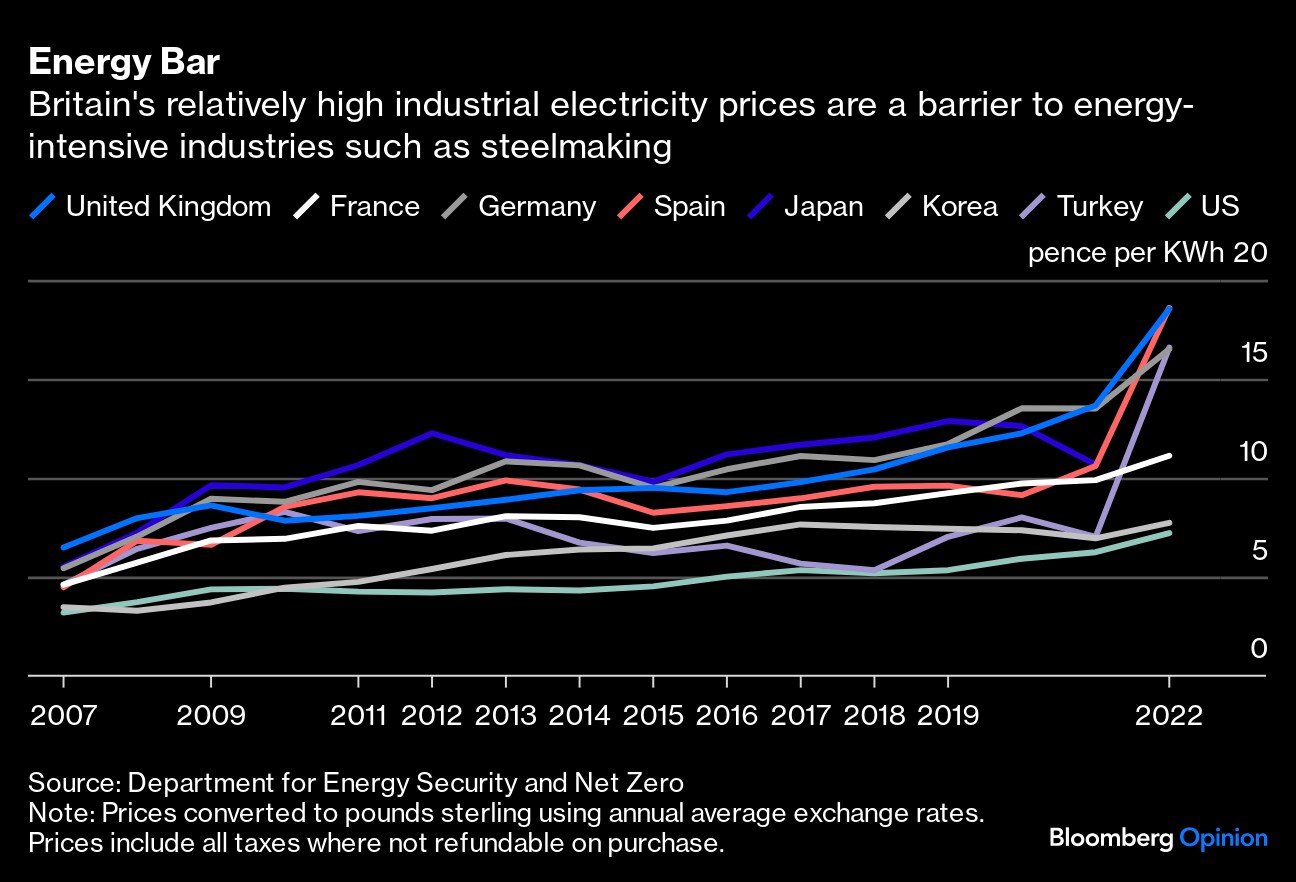
The argument that the UK's net-zero commitments have hobbled its steel industry by driving up energy costs is similarly untenable. Britain's energy costs are indeed much higher than in some steelmaking rivals, but the contribution of climate policies is marginal. Even if these were rolled back completely, it is most unlikely that labor-intensive steelmaking methods would suddenly become competitive. After all, Britain's steelmakers were losing money for decades before the nation adopted the net-zero target.
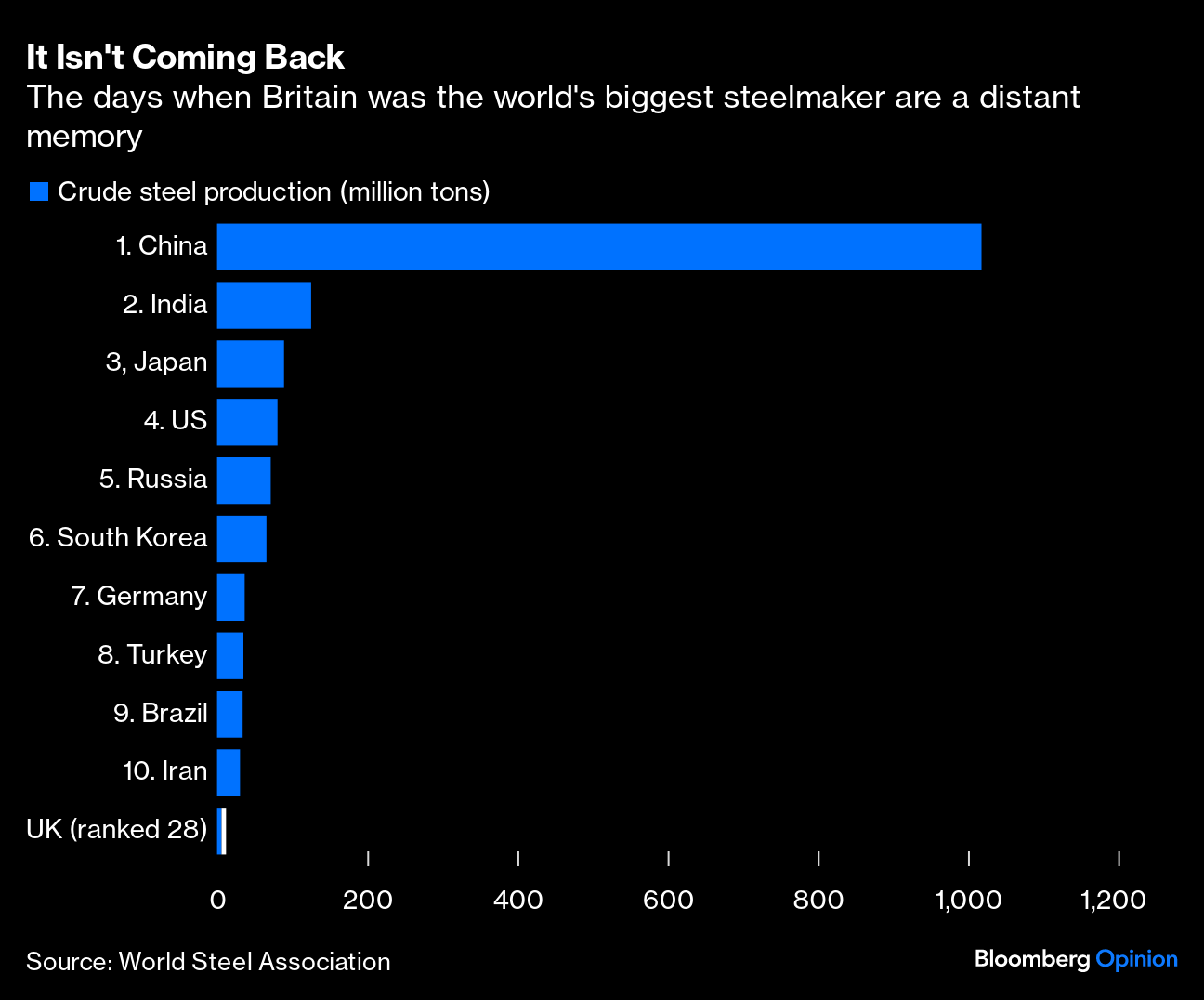
For an industry that accounts for 0.1% of UK economic output, the Port Talbot plan has generated an inordinate amount of outrage and resistance. This speaks to the emotional power of steel as a symbol of industrial might, the material that drove the Industrial Revolution and formed the backbone of bridges, railways, ships and machines. Britain made 40% of the world's steel in the late 19th century, having invented the process that enabled cheap mass production of the alloy. Now, China makes more than 35 times the UK's record production — every year. Each steel plant that closes or lays off employees in a British community is a reminder of that lost industrial leadership. But those days are gone, and aren't coming back.
That isn't to understate the human tragedy of a community that loses its employment mainstay. Port Talbot deserves support — but in transitioning to a new economic model, rather than hanging on to an aging and polluting technology that looks destined for obsolescence.
More from this writer for Bloomberg Opinion:
-
The Number That Hijacked the UK Housing Crisis: Matthew Brooker
-
Britain's Dysfunction Runs on Multiple Tracks: Matthew Brooker
-
London Didn't Need a Las Vegas Death Star: Matthew Brooker
This column does not necessarily reflect the opinion of the editorial board or Bloomberg LP and its owners.
Matthew Brooker is a Bloomberg Opinion columnist covering business and infrastructure. Formerly, he was an editor for Bloomberg News and the South China Morning Post.
More stories like this are available on bloomberg.com/opinion
©2024 Bloomberg L.P.
Essential Business Intelligence, Continuous LIVE TV, Sharp Market Insights, Practical Personal Finance Advice and Latest Stories — On NDTV Profit.